
Trees
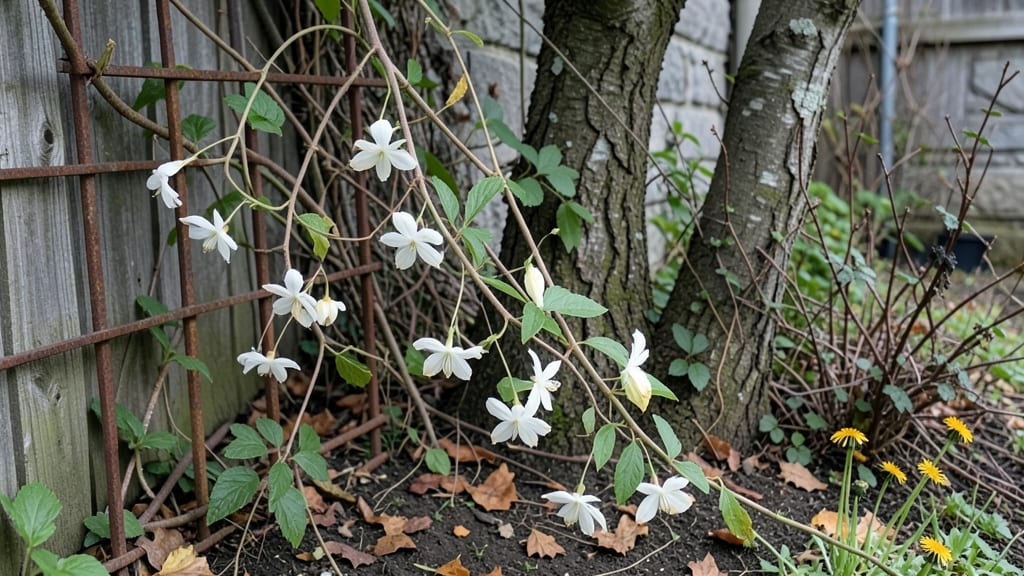
Small white-flowered clematis transforms Pacific Northwest gardens into ethereal, hummingbird magnets with their delicate blooms and intoxicating scent. 🌿 I’ve watched these vines turn shady corners into dreamy focal points—whether climbing a rustic wooden trellis or spilling over a stone border.
Their late-season flowers arrive when most gardens are fading, offering a quiet, romantic finale to summer.
The real magic happens when you pair them with complementary plants. Nearby lavender or salvia echoes their silvery foliage, while deep purple coneflowers create striking contrast. In cottage gardens, they drape over arbors, while modern landscapes use them as vertical accents against clean lines.
Their fragrant blooms even attract hummingbirds when other flowers have gone dormant.
You’ll create a garden that feels alive well into autumn, with vines heavy enough to sway in the breeze but fine enough to dance in the lightest wind. The white flowers glow against evergreen shrubs or dark foliage, and their lingering fragrance turns evening strolls into sensory experiences.
This is how you make a garden feel like a secret sanctuary.
Works beautifully in partial shade, along fences, or as a border plant—no special conditions required. The key is giving them something to climb on, whether it’s a trellis, arbor, or even a sturdy branch. Let’s make your garden the talk of the neighborhood with these effortless, show-stopping vines.
📚 In This Guide
- What you need
- Instructions
- Tips and common mistakes
- Wrapping up and next steps
What you need
- ● Clematis plant: A Clematis variety with small white flowers (e.g., Clematis montana or Clematis armandii ‘Snowdrift’). Choose a healthy, potted specimen with at least 3-5 mature stems.
- ● Garden soil: Well-draining, slightly acidic to neutral soil (pH 6.0–7.0). Amend with compost or peat moss if your soil is heavy clay.
- ● Support structure: A trellis, arbor, or obelisk (at least 6–8 feet tall for climbing varieties).
- ● Tie-down clips or soft garden twine to secure vines as they grow.
- ● Mulch: 3–4 inches of organic mulch (e.g., wood chips or straw) to retain moisture and regulate soil temperature.
- ● Watering can or hose: With a gentle spray nozzle for deep but controlled watering.
- ● Pruning shears: Sharp, bypass pruners (sterilized with rubbing alcohol).
- ● Fertilizer: Balanced, slow-release fertilizer (e.g., 10-10-10) or a phosphorus-rich option (e.g., 5-10-10) for root and bloom development.
- ○ Bone meal or compost tea (optional, for extra phosphorus).
- ● Epsom salt: 1 tablespoon per gallon of water (monthly spray for magnesium, which boosts flower production).
- ● Moss or ground cover: To shade the base of the plant (clematis roots prefer cooler conditions).
- ● Hummingbird-friendly companion plants: Like penstemon or salvia to attract pollinators and enhance your garden’s charm!
- ● Slow-release fertilizer spikes: For hassle-free nutrition over the growing season.
Step-by-Step guide to planting and caring for small white-flowered clematis
Here’s how to create a thriving hummingbird magnet in your Pacific Northwest garden.
🌱 Step 1: Choose the Perfect Planting Site
Small white-flowered clematis thrives in partial shade to full sun, but in the Pacific Northwest’s damp climate, I always opt for morning sun and afternoon shade—this prevents leaf scorch while keeping blooms abundant. Pick a spot with well-draining soil (they hate soggy roots) and 6 feet of vertical space for their vines to climb.
I dig a hole twice as wide as the root ball but only as deep as the container’s roots—clematis roots are shallow but sensitive to burial too deep. Mix in compost (about 1/3 of the hole’s volume) to enrich the soil naturally. This ensures strong root establishment right away.
☀️ Step 2: Plant with Proper Support and Mulch
Install a trellis, arbor, or sturdy fence before planting—clematis vines need something to cling to as they grow. I use metal or wooden lattice because it lasts longer than plastic and won’t rot in our wet winters. Plant the clematis 12–18 inches from the support so vines can reach it easily.
Backfill the hole with soil, pressing gently to remove air pockets but not compacting too tightly. Water deeply to settle the roots, then spread 2–3 inches of mulch (like wood chips or bark) around the base, keeping it 6 inches away from the stem to prevent rot. This mimics the forest floor’s natural moisture retention.
💧 Step 3: Water Deeply and Monitor Soil Moisture
Clematis need consistent moisture, especially in the first year. Water deeply once a week (about 1 gallon per plant) until the top 6 inches of soil feel damp—not soggy, just moist. In summer, I check soil moisture every 3–4 days because our PNW heat can dry out roots faster than expected.
Here’s the thing—overwatering is worse than underwatering. If leaves yellow or stems look mushy, you’re watering too much. Clematis are drought-tolerant once established, but they won’t forgive waterlogged roots. A soaker hose or drip irrigation keeps water at the roots without wetting the foliage, which prevents fungal issues.
✂️ Step 4: Prune for Late-Season Blooms and Hummingbird Traffic
Small white-flowered clematis bloom on old and new wood, so pruning is all about shape and airflow. In late winter or early spring, I cut back last year’s growth by 1/3 to encourage fresh, vigorous shoots. Remove any dead, crossing, or weak stems—this keeps energy focused on strong, fragrant blooms.
Throughout the season, I deadhead spent flowers (snip just above a leaf node) to redirect energy into new blooms. By mid-summer, the vines should be fully trained on their support, with plenty of open space for hummingbirds to dart between flowers. This pruning style ensures late-season blooms, which is when hummingbirds are most active in the PNW.
🪴 Step 5: Feed and Protect for Long-Term Growth
In early spring, I apply a balanced, slow-release fertilizer (like 10-10-10) around the base, keeping it away from the stem. This gives the plant a nutrient boost without burning tender roots. I also side-dress with compost in early fall to prepare for winter.
Clematis are hardy to Zone 4, but in the PNW’s mild winters, I still mulch heavily (4–6 inches) around the base to protect roots from freezing. If heavy rains are forecast, I tie vines loosely to their support to prevent wind damage. By late spring, the vines will be lush, fragrant, and buzzing with hummingbirds.
Tips & tricks for perfect small white-flowered clematis planting
These little tricks will help you create a thriving hummingbird haven in your Pacific Northwest garden without the common pitfalls.
Location is Everything: In Step 1, when choosing your planting site, pay close attention to the morning sun/afternoon shade balance. I've learned the hard way that even a few hours of hot afternoon sun can scorch leaves in our damp climate. Look for spots where the sun hits before noon and fades by mid-afternoon. This balance is what keeps those delicate white blooms looking fresh and vibrant all season.
Root Care Matters: The shallow root system mentioned in Step 1 is actually one of clematis' biggest strengths when planted correctly. When digging your hole in Step 1, resist the urge to bury the roots too deep—this can cause rot. Instead, plant so the crown sits just above soil level. I like to make a small mound of soil at planting time to ensure the roots stay properly elevated as they settle.
Support System Strategy: For Step 2, don't just install any trellis—choose one that will last through our wet winters. I've had terrible luck with plastic trellises that rot within a few years. Opt for metal lattice or pressure-treated wood that can withstand both rain and wind. Also, position your support so the clematis can reach it within 12-18 inches—this prevents the vines from stretching too much, which can weaken them.
Watering Wisdom: The consistent moisture mentioned in Step 3 is key, but timing matters just as much. Water in the early morning so the foliage has time to dry before evening. This simple habit prevents fungal issues that can plague clematis in our damp climate. I set a reminder on my phone for that weekly deep watering—it's easy to forget when you're busy, but those roots need that consistent moisture to establish properly.
Pro Tips for Small White Flowered Clematis
- These little tricks will help you create a thriving hummingbird haven in your Pacific Northwest garden without the common pitfalls.
- Location is Everything: In Step 1, when choosing your planting site, pay close attention to the morning sun/afternoon shade balance.
- Root Care Matters: The shallow root system mentioned in Step 1 is actually one of clematis' biggest strengths when planted correctly.
Frequently asked questions
Got questions about your small white-flowered clematis?
You’re not alone! Here are answers to the most common queries from gardeners in the Pacific Northwest and beyond—whether you’re a first-time grower or a seasoned enthusiast.
When is the best time to plant small white-flowered clematis in the PNW?
Plant your clematis in early spring or early fall (March–April or September–October) when soil is workable but not frozen. The PNW’s mild, wet winters mean fall planting is ideal—roots establish before winter, and blooms arrive earlier the next season. Avoid summer heat stress!
How long does it take for small white clematis to bloom after planting?
Patience is key! Most clematis take 1–3 years to establish and flower, depending on growing conditions. In the PNW’s cool climate, they often bloom late summer to fall (August–October), rewarding you with fragrant, hummingbird-friendly blooms. Prune wisely to encourage growth.
Why aren’t my clematis flowers attracting hummingbirds?
Hummingbirds love white, tubular flowers with nectar—your clematis should be a magnet! If they’re ignoring it:
- Check for pesticides (even natural ones can repel them).
- Ensure blooms are healthy and open (deadhead spent flowers).
- Add a shallow water source nearby (they’ll stop by!).
- Plant companion flowers like bee balm or columbine for variety.
How do I prune small white clematis for more blooms?
These clematis are Group 3 (late bloomers), so prune in early spring:
- Cut back last year’s growth to 12–18 inches above the ground.
- Avoid heavy pruning in fall—it can reduce next year’s blooms.
- Remove dead or crossing stems to improve airflow.
Pro tip: Wear gloves—clematis vines can be spiky!
Are small white clematis drought-tolerant in the PNW’s rainy climate?
While they love moisture, they’re not drought-proof. In the PNW:
- Water deeply 1–2 times per week during dry spells (even with rain, soil can dry out).
- Mulch 3–4 inches around the base to retain moisture.
- Watch for yellowing leaves—a sign of over- or under-watering.
They thrive with well-draining soil, so amend heavy clay with compost.
What’s a good alternative if my clematis isn’t thriving?
If your small white clematis struggles, try these PNW-friendly, hummingbird-loving alternatives:
- Clematis ‘Jackmanii’ (purple, vigorous, late blooms).
- Honeysuckle (Lonicera spp.) (fragrant, fast-growing, drought-tolerant).
- Penstemon ‘Husker Red’ (drought-resistant, tubular flowers).
- Salvia ‘May Night’ (dark blooms, attracts pollinators).
All pair beautifully with ferns and hostas in shaded gardens!
Wrapping up and next steps
Incorporating a small white flowered clematis into your Pacific Northwest garden isn’t just about adding beauty—it’s about creating a thriving ecosystem that hummingbirds, bees, and you will adore. 🌸 With its fragrant late-season blooms, low-maintenance care, and stunning foliage, this vine is a dream for both novice and experienced gardeners alike.
Ready to transform your outdoor space? Start by choosing the perfect variety for your climate, then gather the right tools and a little patience—your garden’s new star is just a few steps away! 🌿