Pruning
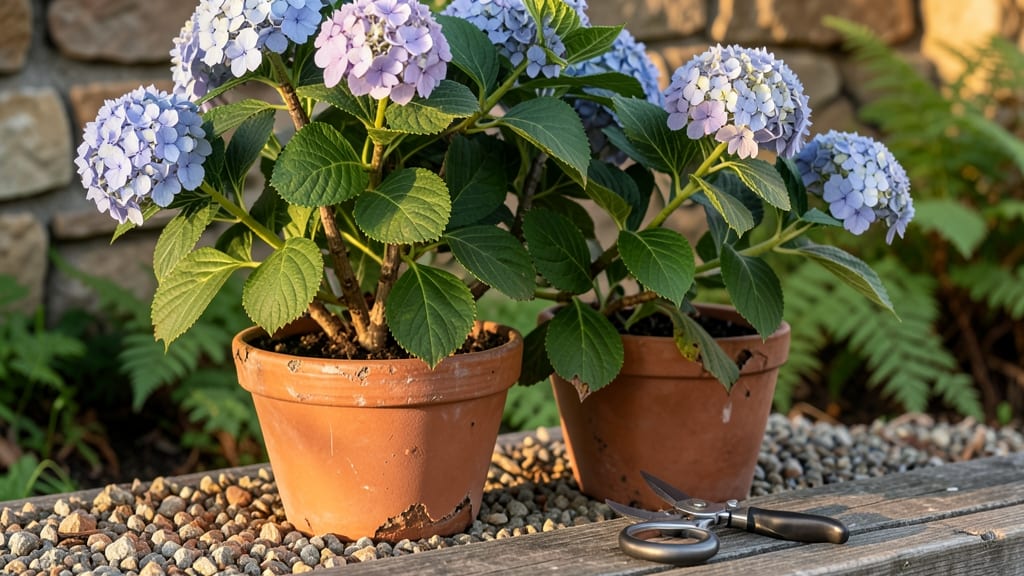
Pruning hydrangea flowers transforms your plants from floppy, overgrown shrubs into vibrant, bushy showstoppers—and the timing is everything. I’ve spent years perfecting the technique for bigleaf, panicle, and oakleaf varieties, and the difference in blooms is nothing short of dramatic.
The key lies in understanding each type’s unique growth habits: bigleaf hydrangeas bloom on old wood, while panicle and oakleaf thrive on new growth. One wrong cut can mean no flowers next season.
You’ll need just three basic tools: sharp pruning shears, clean gloves, and a small bucket for clippings. The real secret? Pruning at the right time—dormant season for old-wood bloomers, late winter for new-wood types.
I’ll walk you through the exact cuts to make, how to shape the plant without sacrificing next year’s blooms, and why some gardeners end up with bare stems every summer. This method guarantees healthier plants, fuller blooms, and fewer headaches—no more guessing games.
By the end, your hydrangeas will burst with larger, more abundant flowers and a shape that turns heads in the neighborhood. The first year might take patience, but the payoff—season-long color and structure—is worth every minute.
Whether you’re dealing with leggy panicles or sparse bigleaf blooms, this approach works. Let’s get those shears ready and turn your hydrangeas into the star of the garden.
We’ll also cover variety-specific adjustments, like when to prune oakleaf hydrangeas for fall color or how to revive an over-pruned bigleaf plant. Small tweaks make all the difference, and I’ll share the exact language to use when describing cuts to visualize success.
Your hydrangeas deserve better than random snips—let’s make them thrive.
📚 In This Guide
- What you need
- Instructions
- Tips and common mistakes
- Wrapping up and next steps
What you need
- ● Pruning shears (bypass or anvil type) – Choose sharp, clean shears with a 4- to 6-inch blade for precision cuts. Disinfect with rubbing alcohol before and after use to prevent disease spread. (1 pair required)
- ● Hand pruners (for smaller stems) – Ideal for trimming thin, woody stems (e.g., panicle or smooth hydrangeas). Look for ergonomic grips for comfort. (1 pair recommended)
- ● Loppers (for thicker stems) – Use for stems ½-inch or thicker, especially in oakleaf or bigleaf hydrangeas. Opt for bypass loppers for cleaner cuts. (1 pair required if needed)
- ● Garden gloves – Heavy-duty, cut-resistant gloves (e.g., nitrile-coated) to protect against thorns and sap. (1 pair)
- ● Disinfectant (rubbing alcohol or 10% bleach solution) – 1 small spray bottle to sterilize tools between cuts.
- ○ Marking twine or flags – Optional but helpful: Use to tag stems you plan to remove for easier identification.
- ● Know your hydrangea type – Pruning methods vary! Research whether your plant is bigleaf, panicle, smooth, or oakleaf (e.g., Hydrangea macrophylla vs. Hydrangea paniculata).
- ● Check the season – Prune dormant hydrangeas (late winter/early spring) or after blooming (late summer), depending on the variety.
- ● Weather conditions – Wait for a dry, overcast day to avoid stressing the plant. Avoid pruning in extreme heat or frost.
- ● Safety first! – Wear closed-toe shoes and avoid pruning near power lines or in wet conditions.
Step-by-Step guide for pruning hydrangeas for year-round blooms
Here’s how I prune hydrangeas to guarantee thick, vibrant blooms—no dead wood, no missed buds.
Identify Your Hydrangea Type and Bloom Cycle
Hydrangeas bloom on either old wood (last year’s growth) or new wood (current year’s growth), and pruning wrong can mean no flowers. Bigleaf hydrangeas (Hydrangea macrophylla) bloom on old wood, while panicle and smooth hydrangeas (Hydrangea paniculata, Hydrangea arborescens) bloom on new wood. Check your plant’s blooms: if they appear on last year’s stems, prune after flowering; if they grow on current year’s stems, prune in late winter.
I always wait until late spring or early summer to prune old-wood bloomers because cutting too early removes next year’s flower buds. For new-wood bloomers, I prune in late winter or early spring before new growth begins. Watch for dormant buds along stems—these are your clues.
Remove Dead, Weak, or Crossing Branches First
Start by cutting out any dead, diseased, or weak branches at the base with clean, sharp pruners. These stems won’t produce flowers and can harbor pests. Next, remove any branches that cross or rub against others—this prevents wounds and improves airflow. I always make cuts just outside the bud or branch collar (the swollen area where the branch meets the stem), never leaving stubs.
If a branch is thicker than your wrist, use a pruning saw for clean cuts. The goal here is to open up the center of the plant so light and air reach all parts. You’ll see healthier, fuller growth within weeks of this first step.
Shape the Plant for Optimal Bloom Display
For old-wood bloomers, cut back only the oldest stems—these are the thickest, woody branches. Remove up to one-third of the oldest stems at the base to encourage new growth and more flowers. For new-wood bloomers, cut back last year’s stems by half their height to stimulate fresh, flowering branches.
Step back often to visualize the shape. I aim for a rounded, balanced silhouette with no bare spots. Avoid cutting into the center of the plant—this creates a "donut hole" that blocks light. If you’re unsure, prune conservatively: better to leave a few extra stems than over-prune.
Thin Out Overcrowded Stems for Better Airflow
Hydrangeas produce more vibrant blooms when they’re not overcrowded. Look for stems that are too close together or growing inward. Remove every other stem in dense areas to improve air circulation and reduce humidity-related diseases like powdery mildew. I focus on the outer edges of the plant first, then work inward.
Thinning also helps prevent flower buds from competing with foliage for energy. You’ll notice fewer but larger, more robust blooms after this step. If your hydrangea has more than 10-12 strong stems, it’s time to thin—older plants often get leggy and overgrown.
Clean Up and Apply Post-Pruning Care
After pruning, sterilize your tools with rubbing alcohol to prevent spreading disease. Rake up and dispose of clippings (don’t compost if they’re diseased). Water the plant deeply to help it recover, then apply a balanced fertilizer (10-10-10) to support new growth. For old-wood bloomers, I also add a slow-release fertilizer in early spring to encourage bud formation.
Mulch around the base with 2-3 inches of organic mulch to retain moisture and regulate soil temperature. Avoid piling mulch against the stem—keep it 2-3 inches away to prevent rot. Within 4-6 weeks, you should see fresh, vigorous growth. If you don’t, check for pests or nutrient deficiencies.
Tips & tricks for pruning hydrangeas for year-round blooms
A few key tricks will help you avoid common mistakes and ensure your hydrangeas thrive after pruning.
Timing is Everything: In Step 1, when you're identifying bloom cycles, mark your calendar for the exact timing. Old-wood bloomers like bigleaf hydrangeas need to be pruned after flowering—never before! This is when flower buds for next year are already set. For new-wood bloomers, prune in late winter or early spring before new growth begins. I always check for dormant buds along stems as my cue—these tell me exactly when to prune.
The 45-Degree Cut: When you're making cuts in Step 2 and Step 3, angle your pruners at a 45-degree angle just outside the bud or branch collar. This creates a natural water-shedding surface that prevents water from pooling and causing rot. I've seen too many plants suffer from improper cuts that lead to disease—this small detail makes all the difference. Always sterilize your tools with rubbing alcohol between cuts to prevent spreading pathogens.
Visualize the Shape: Step back often during Step 3 and Step 4 to visualize your plant's silhouette. Aim for a rounded, open shape that allows sunlight to penetrate all the way to the center. I imagine my hydrangeas as a lush, full dome rather than a dense center with bare spots. This approach maximizes airflow and light exposure, which are crucial for vibrant blooms. If you're unsure, prune conservatively—it's always easier to remove more later than to fix over-pruning.
Post-Pruning Recovery: After completing all steps, focus on recovery. The 4-6 week window mentioned in Step 5 is critical for new growth. Water deeply immediately after pruning to help the plant recover, then apply a balanced 10-10-10 fertilizer to support new shoots. I've found that mulching with 2-3 inches of organic material—keeping it 2-3 inches away from the stem—helps maintain moisture and regulate soil temperature perfectly. This care routine ensures your hydrangea rebounds strongly.
Pro Tips for Prune Hydrangea Flowers
- A few key tricks will help you avoid common mistakes and ensure your hydrangeas thrive after pruning.
- Timing is Everything: In Step 1, when you're identifying bloom cycles, mark your calendar for the exact timing. Old-w...
- The 45-Degree Cut: When you're making cuts in Step 2 and Step 3, angle your pruners at a 45-degree angle just outside...
Frequently asked questions
Got questions about pruning hydrangeas?
You’re not alone! Here are the most common concerns—plus clear, actionable answers to keep your blooms thriving.
When is the best time to prune hydrangeas?
Timing depends on your hydrangea type! For bigleaf and oakleaf varieties, prune right after flowering (late summer/early fall). Panicle and smooth hydrangeas bloom on new growth—prune in late winter or early spring (before buds swell). Always avoid pruning in mid-winter (below 20°F/-7°C) to prevent frost damage.
How much should I cut back my hydrangea?
For most hydrangeas, aim to trim back 1/3 of the plant’s height—but focus on dead, diseased, or crossing branches first. Bigleaf hydrangeas can be pruned to the ground if overgrown, while panicle types may need only light shaping. Never remove more than 1/3 in one season to avoid stressing the plant.
Will pruning affect next year’s flowers?
Pruning correctly won’t hurt future blooms—in fact, it encourages them! If you prune at the wrong time (e.g., cutting back bigleaf hydrangeas in spring), you’ll sacrifice next year’s flowers. Always match your pruning to your hydrangea’s blooming habit (old wood vs. new growth) to avoid disappointment.
What if my hydrangea isn’t blooming after pruning?
Check these first:
- Wrong timing: Did you prune bigleaf hydrangeas in spring? Wait until late summer/fall.
- Over-pruning: If you cut too aggressively, the plant may need a year to recover. Reduce cuts next time.
- Environmental stress: Poor soil, drought, or extreme heat can stunt blooms. Ensure your hydrangea gets morning sun and well-draining soil.
Can I prune hydrangeas in containers?
Yes! Container hydrangeas follow the same rules but may need more frequent pruning due to limited space. Trim back leggy stems in early spring to encourage bushier growth. Repot every 2–3 years to refresh soil nutrients, and prune deadheads year-round to redirect energy to new blooms.
What’s the worst mistake beginners make?
The #1 error? Pruning at the wrong time—especially cutting back bigleaf hydrangeas in spring. This removes next year’s flower buds! Always research your specific variety first. Another mistake? Using dull shears, which crush stems. Invest in sharp, bypass pruners for clean cuts.
Wrapping up and next steps
Pruning your hydrangeas might seem tricky, but with the right technique—like timing, tool selection, and understanding your plant’s type—you’ll unlock vibrant, year-round blooms! 🌸 Whether you’re reviving old growth or encouraging fresh flowers, a little effort now means stunning results later. Ready to transform your garden?
Take the next step: grab your pruners and schedule a pruning session this weekend! Start small—even one bush at a time—and watch your garden thrive. Happy pruning! 🌿✨