
Flowers
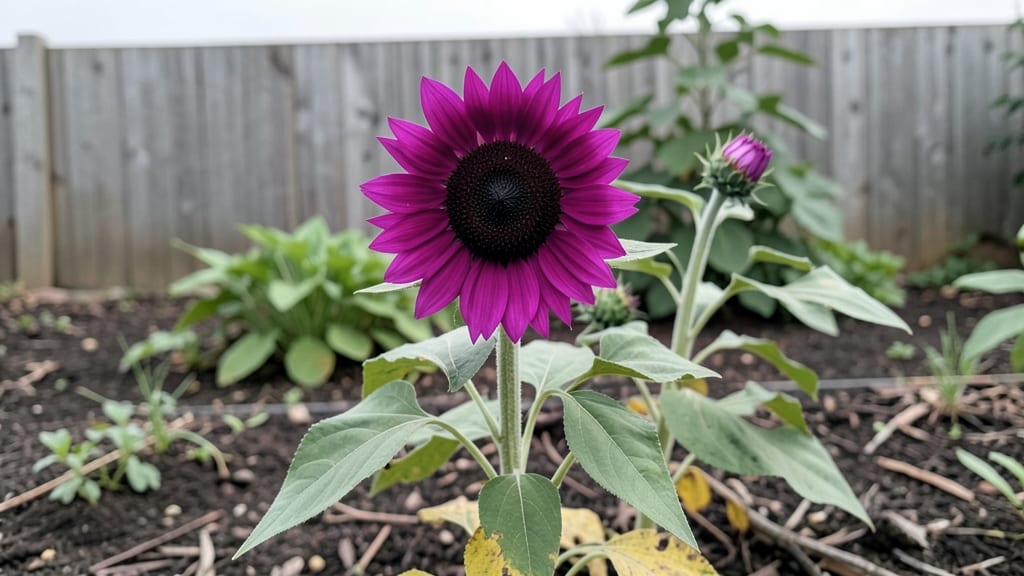
Growing purple sunflowers transforms your garden into a bold, sun-drenched masterpiece that lasts from summer through frost. 🌻 These towering beauties aren't just striking—they're surprisingly hardy, thriving even when temperatures dip.
My first batch reached 8 feet tall by August, and they kept blooming until the first hard freeze, providing weeks of color when other annuals had faded.
The secret to their height and resilience lies in well-draining soil, full sun, and consistent moisture—not too much, just enough to keep roots happy.
You'll need a sunny spot with at least 6-8 hours of direct light daily, and spacing plants 18-24 inches apart gives them room to grow without competing for nutrients.
Most gardeners overlook the importance of deep watering, but purple sunflowers reward you with bigger blooms when you water at the base rather than overhead.
What you'll end up with is a garden centerpiece that attracts pollinators all season while requiring minimal fuss. The deep purple blooms stand out against green foliage, and the sturdy stems make them perfect for cutting—long-lasting arrangements that last 5-7 days in a vase.
Even better, they're disease-resistant, so you won't spend your summer fighting mildew or pests like you might with other sunflowers.
Whether you're planting in a backyard border, containers, or even as a windbreak, these sunflowers adapt beautifully. For advanced gardeners, try succession planting every 2-3 weeks to extend the blooming season even further.
The key is patience—they grow fast, but the payoff is worth every minute of waiting for those dramatic blooms to open.
📚 In This Guide
- What you need
- Instructions
- Tips and common mistakes
- Wrapping up and next steps
What you need
- ● Purple sunflower seeds – Choose frost-resistant varieties like 'Moulin Rouge' or 'Autumn Booster' (10–20 seeds per plant, depending on spacing).
- ● Well-draining potting mix – A blend of garden soil, compost, and perlite (equal parts) for containers or raised beds.
- ● Containers or garden bed – At least 12" deep and wide (for containers) or full sun exposure (6+ hours/day) in garden soil.
- ● Watering can or hose – With a gentle spray nozzle for seedlings.
- ● Fertilizer – Balanced (10-10-10) or organic options like compost tea or worm castings.
- ● Plant labels & markers – To track varieties and planting dates.
- ● Garden trowel or transplanting tool – For digging and spacing seeds.
- ● Row cover or frost cloth – To protect young plants from late frosts (if planting early).
- ● Stakes or trellis – For taller varieties (3–5 ft) to prevent flopping.
- ● Mulch (straw or shredded leaves) – To retain moisture and suppress weeds.
- ● Pruning shears – For deadheading spent blooms to encourage reblooming.
- ● Gloves & knee pads – For comfort during planting and maintenance.
Step-by-Step instructions for growing purple sunflowers
Here's how I grow tall, vibrant purple sunflowers that thrive through frost and keep blooming until late fall.
🌱 Step 1: Choose the Right Variety and Planting Location
Select a dwarf or semi-dwarf purple sunflower variety like 'Moulin Rouge' or 'Purple Sunbird'—these stay sturdy in wind and grow 4-6 feet tall without staking. Purple sunflowers need full sun (6+ hours daily) and well-draining soil. I always test my soil pH first—aim for 6.0-7.0—since purple hues deepen in slightly acidic conditions.
Sunflowers are frost-resistant, but they grow best in USDA zones 3-10. If you're in a cooler zone, plant seeds 2-3 weeks after your last frost date for maximum height. In warmer climates, you can start seeds as early as February for continuous blooms. I mark my calendar for April 15th in my zone 5 garden—just after the soil warms to 50°F.
🌱 Step 2: Prepare Soil and Sow Seeds Directly
Sunflower seeds germinate best in loose, fertile soil. Mix 2 inches of compost into the top 6 inches of your planting area to encourage strong root development. I avoid transplanting sunflowers because their taproots get damaged easily—direct sowing gives them the best start.
Plant seeds 1 inch deep and 12 inches apart in rows 24 inches apart to allow airflow and prevent mildew. I like to plant 4 seeds per hill and thin to the strongest seedling after germination. Water deeply right after planting to settle the soil around the seeds. Keep the soil moist but not soggy—sunflower seeds rot if overwatered.
☀️ Step 3: Provide Consistent Water and Sunlight
Sunflowers need 1-1.5 inches of water per week, but they're drought-tolerant once established. I water deeply 2-3 times per week in the first month, then taper to once a week once the plants reach 12 inches tall. Water at the base in the morning to prevent fungal diseases from evening moisture.
Purple sunflowers grow toward the sun, so rotate your plants a quarter turn every few days to keep them upright. If you notice stems leaning heavily, it's time to stake them—use 3-foot bamboo stakes driven 6 inches deep beside each plant and tie stems loosely with soft twine. This prevents breakage from wind or rain.
✂️ Step 4: Deadhead and Encourage Continuous Blooms
To keep your purple sunflowers blooming all season, deadhead spent flowers by snipping the stem just below the bloom head with clean pruners. This redirects the plant's energy to new buds instead of seed production. I do this every 2-3 weeks once the first flowers open.
Sunflowers are heavy feeders, so side-dress with 1 tablespoon of 10-10-10 fertilizer around each plant 4-6 weeks after germination. Purple varieties especially benefit from a light application of iron sulfate if the leaves start turning yellow—this keeps the foliage vibrant and supports strong blooms. Mulch with 2 inches of straw to retain moisture and suppress weeds.
🌿 Step 5: Harvest and Enjoy Frost-Resistant Blooms
Cut sunflowers for arrangements when 10-20% of the petals open—this ensures they last 5-7 days in a vase. Hold the stem under warm water for 10 minutes before cutting to rehydrate the plant. Purple sunflowers make stunning bouquets and dry beautifully for winter decorations.
If you're growing sunflowers for seeds, leave 2-3 of the tallest, healthiest plants uncut. Harvest seeds when the back of the flower head turns yellow and the petals drop. Rub the head gently in a paper bag to collect seeds, then dry them in a warm, dark place for 2 weeks before storing in an airtight container.
Tips & tricks for growing purple sunflowers
These pro tips will help you grow sunflowers that reach their full height and bloom beautifully until late fall—even through frost.
Variety Selection: While 'Moulin Rouge' and 'Purple Sunbird' are my top picks, consider 'Purple Beauty' for even deeper color intensity. These dwarf/semi-dwarf varieties stay sturdy without staking, but if you want dramatic height, 'Russian Giant' can reach 12 feet with proper support—just be prepared for staking needs. The key is choosing varieties that match your space and climate goals.
Soil Preparation: In Step 2, when mixing 2 inches of compost into your soil, I recommend adding a handful of crushed eggshells to the planting hole. This provides calcium that strengthens cell walls, making your sunflowers more resistant to wind damage. The slightly acidic pH (6.0-7.0) mentioned in Step 1 isn't just about color—it prevents nutrient deficiencies that can cause yellowing leaves, especially in purple varieties which are more sensitive to soil imbalances.
Watering Strategy: The 1-1.5 inches of water per week in Step 3 is perfect, but here's my secret: I use a rain gauge to track moisture. Purple sunflowers show water stress by drooping leaves in the afternoon—this is your cue to water immediately. Morning watering is critical because evening moisture promotes fungal diseases, especially in humid climates. I also water at the base rather than overhead to prevent mildew on those gorgeous purple petals.
Deadheading Technique: When deadheading every 2-3 weeks in Step 4, I use clean, sharp pruners and make cuts just below the bloom head at a 45-degree angle. This prevents water from pooling on the cut stem and encourages new buds to form from lower nodes. For continuous blooms, I also remove any buds that appear on the main stem below the first flower—the plant puts energy into these side buds instead of extending height.
Pro Tips for Purple Sun Flowers
- These pro tips will help you grow sunflowers that reach their full height and bloom beautifully until late fall—even through frost.
- Variety Selection: While 'Moulin Rouge' and 'Purple Sunbird' are my top picks, consider 'Purple Beauty' for even deeper color intensity.
- Soil Preparation: In Step 2, when mixing 2 inches of compost into your soil, I recommend adding a handful of crushed eggshells to the planting hole.
Frequently asked questions
Got questions about growing purple sunflowers?
You’re not alone! Here are some of the most common queries—plus quick answers to help you cultivate stunning, frost-resistant blooms all season.
How cold can purple sunflowers tolerate?
Purple sunflowers are highly frost-resistant! Most varieties handle light frosts down to 20–25°F (-6 to -4°C) without damage. Young seedlings may need protection if temps drop below freezing, but mature plants often bounce back. For extra safety, mulch the base or cover them with frost cloth on chilly nights.
When is the best time to plant purple sunflowers for year-round blooms?
For continuous blooms, plant in two waves:
- Early spring (as soon as soil is workable, ~4–6 weeks before last frost).
- Late summer/early fall (6–8 weeks before your first frost date).
Can I grow purple sunflowers in containers?
Choose dwarf or semi-dwarf varieties (like ‘Moulin Rouge’ or ‘Teddy Bear’) for pots. Use containers at least 12–18 inches deep with drainage holes, and fill with well-draining soil. Place in full sun (6+ hours/day) and fertilize lightly every 4–6 weeks. Just watch for tipping—stake tall varieties if needed!
Why aren’t my purple sunflowers blooming?
No blooms? Check these fixes:
- Not enough sun? Purple sunflowers need 6+ hours of direct sunlight daily.
- Overcrowding? Thin seedlings to 12–18 inches apart for better airflow.
- Nutrient deficiency? Feed with a balanced fertilizer (10-10-10) when sprouts appear.
- Pests? Watch for aphids or beetles—spray with neem oil if needed.
Are there alternatives to purple sunflowers for color?
If you love sunflowers but want variety, try these equally hardy options:
- ‘Autumn Beauty’: Striped red/yellow blooms, 5–7 feet tall.
- ‘Lemon Queen’: Bright yellow, frost-tolerant and pollinator-friendly.
- ‘Russian Giant’: Classic yellow with 10+ foot stalks—great for cut flowers!
- ‘Procut’ series: Disease-resistant, long-lasting stems for bouquets.
Wrapping up and next steps
Growing purple sunflowers is a rewarding journey that brings vibrant color and resilience to your garden—even in cooler climates! 🌿 With the right soil, sunlight, and a little patience, you’ll enjoy stunning blooms that attract pollinators and add charm to any space.
Whether you’re a beginner or a seasoned gardener, these frost-resistant beauties make a fantastic addition to your outdoor oasis.
Ready to transform your garden? Start planting today! Grab your seeds, follow the tips from this guide, and watch your purple sunflowers thrive all season long. Happy gardening! 🌸