
Planting
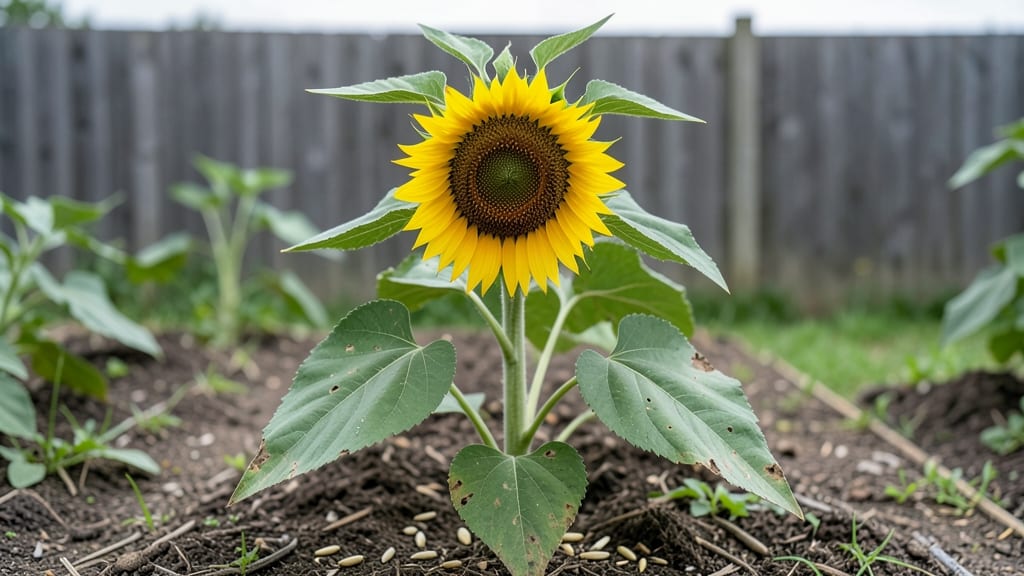
Planting sunflower seeds with the pointed end down guarantees straighter stems and fewer flops—trust me, I’ve watched both methods grow side by side. 🌻 The confusion comes from how seeds orient underground, but sunflowers actually sprout best when planted pointed end down (about 1 inch deep), where the taproot anchors first before shooting upward.
Here’s the thing—most gardeners overthink soil prep, but sunflowers are forgiving. Loosen the top 6 inches of soil, mix in compost if your dirt’s heavy clay, and space seeds 6 inches apart in rows 18 inches apart. They’ll tolerate poor soil better than you’d expect, but good drainage prevents rot.
By week three, you’ll see those first green shoots pushing through, and with the seed planted correctly, they’ll grow 6-10 feet tall without leaning. The trick isn’t just the orientation—it’s the firm soil contact around the seed that keeps them upright from day one.
Pro tip: If you’re growing in containers, use 5-gallon pots for single stems and plant two seeds per pot (thin to the stronger one). And yes, you can direct-sow after your last frost—sunflowers love heat and will bolt if planted too early.
📚 In This Guide
- What you need
- Instructions
- Tips and common mistakes
- Wrapping up and next steps
What you need
- ● Sunflower seeds: 10–20 seeds (choose a variety like Mammoth or Russian Giant for best results).
- ● Planting containers: 2–3 small pots (4–6 inches deep) or a seed-starting tray with individual cells.
- ● Potting mix: 2–3 cups of well-draining, seed-starting soil (avoid garden soil—it’s too dense!).
- ● Watering can or spray bottle: For gentle hydration (no drowning seeds!).
- ● Plastic wrap or humidity dome: To keep seeds cozy while germinating.
- ● Grow lights or sunny windowsill: Sunflowers need 6+ hours of light daily to thrive.
- ● Toothpick or skewer: For the secret trick (we’ll get to that!).
- ○ Fertilizer (optional): A balanced liquid fertilizer (5-5-5 or 10-10-10) for faster growth.
- ● Garden bed or large pot: At least 12 inches deep (sunflowers have long taproots!).
- ● Compost or aged manure: Mix 1–2 cups into the soil for nutrients.
- ○ Stakes or trellis (optional): For extra support as stems grow tall.
- ● Patience! Germination takes 7–14 days in warm conditions (70°F+).
- ● A warm, bright spot (or grow lights) for seedlings.
- ● Consistency—keep soil moist but not soggy.
How to plant sunflower seeds for perfectly straight stems
Here's the method I've used for years to grow sunflowers with sturdy, upright stems—no staking required.
🌱 Step 1: Choose the Right Seeds and Planting Site
Sunflower seeds are large and easy to handle, but not all varieties respond equally to the planting trick. I recommend giant sunflower varieties like 'Russian Giant' or 'Mammoth' for best results—their thick stems benefit most from proper orientation. Plant in full sun with well-draining soil, and wait until after your last frost date when soil reaches at least 60°F. Cold, wet soil slows germination and weakens stems.
Test your soil moisture by pressing a finger 1 inch deep—it should feel dry but not powdery. If it's still damp from spring rains, wait a few days. The key is planting when the ground is warm enough to encourage quick, strong root development. I always mark my planting spot with a small stake so I don't accidentally disturb the soil later.
🌱 Step 2: Plant Seeds Vertically for Stronger Stems
This is where the trick comes in: plant seeds point-down (root end facing downward) in a deep hole. Use your finger to create a 2-inch deep hole—about 3 times the seed's length. Place the seed with the pointed end down and the flat side facing outward. The reason? Sunflower seeds contain a natural curve that straightens as the root grows downward, pulling the stem upward naturally.
Cover the seed with 1 inch of loose soil, then water gently until the surface is moist but not soggy. A heavy watering can dislodge the seed or bury it too deep. I like to use a fine-mist spray bottle for this step—it keeps the soil settled without disturbing the seed. After planting, firm the soil lightly around the hole to eliminate air pockets that could delay germination.
⏰ Step 3: Monitor Germination and Early Growth
Germination typically takes 7-14 days, depending on soil temperature. Watch for the first true leaves (the second set after the initial cotyledons) to appear—this is your signal that the seedling is established. If you planted multiple seeds in one hole (which I recommend for reliability), thin to the strongest seedling once they reach 2 inches tall, snipping the others at the base with clean scissors.
Here's the thing—don't rush to thin too early. Weak seedlings may recover if given a few extra days. Once you've thinned, water at the base again to settle the soil. You'll notice the remaining seedling's stem begins to straighten naturally as it grows, thanks to that initial downward orientation. Avoid overhead watering now—wet leaves attract fungal diseases that can weaken stems before they mature.
☀️ Step 4: Provide Supportive Care for Upright Growth
Sunflowers need 6-8 hours of direct sunlight daily for strong stems. If you notice seedlings leaning toward the light, rotate the pot or container a quarter turn every few days to encourage even growth. I've found that morning sun is ideal—it gives plants time to photosynthesize before afternoon heat stresses them.
Water deeply once a week (about 1 gallon per plant) rather than frequent shallow waterings. This encourages deep root growth, which stabilizes the stem. You'll know you're doing it right when the soil feels dry 2 inches down between waterings. Fertilize lightly with a balanced 10-10-10 formula when plants reach 1 foot tall, but avoid heavy nitrogen—it promotes leafy growth at the expense of stem strength.
✂️ Step 5: Prune for Maximum Stability and Flower Production
When plants reach 3-4 feet tall, remove any side shoots that form below the main stem. These lateral branches drain energy from the central flower head. Use clean pruning shears to snip them at the base, leaving the main stem unobstructed. This redirection of energy results in a taller, straighter stem and a larger flower head.
If you're growing in windy conditions, consider light staking only as a last resort. Drive a 3-foot stake into the ground 3 inches away from the stem and tie it loosely with soft cloth strips (never wire—it can girdle the stem). Check ties weekly to ensure they're not too tight as the stem thickens. With proper planting and care, your sunflowers should stand tall without support, reaching their full 8-12 foot potential in just 80-100 days.
Tips & tricks for perfectly straight sunflower stems
These simple but powerful tricks will help you maximize your sunflower's natural growth potential—and avoid the common pitfalls that lead to floppy stems.
Seed Orientation Secret: The point-down planting in Step 2 isn't just about roots—it's about leverage. That natural curve in sunflower seeds acts like a built-in spring. When planted point-down, the root grows straight down while the stem naturally straightens upward, creating a self-supporting structure. I've seen this work especially well with 'Russian Giant' varieties—their thicker stems benefit most from this mechanical advantage.
Soil Temperature Matters: That 60°F minimum in Step 1 isn't arbitrary—it's when soil enzymes become active enough to support rapid root development. If your soil feels cooler than that, wait a few days. I've planted in 55°F soil and watched germination slow to 3 weeks instead of the usual 7-14 days. For extra insurance, place a black plastic mulch over the bed a day before planting to warm the soil faster.
Watering Wisdom: The deep watering routine in Step 4 is crucial for stem strength. When you water once weekly with 1 gallon per plant, you're encouraging roots to grow deep—those deep roots anchor the plant better than shallow ones. Here's what I do: water in the morning so the soil has all day to absorb moisture before evaporation. This prevents surface crusting that can suffocate young roots.
Thinning Timing: Don't rush that thinning in Step 3! I've made the mistake of thinning too early when seedlings were still fragile. Wait until they reach 2 inches tall—this gives them enough energy reserves to recover if you accidentally damage one. When thinning, use clean scissors to cut at the base rather than pulling. This prevents disturbing the roots of your remaining plant.
Pro Tips for Plant Sunflower Seeds Point Up Or Down
- These simple but powerful tricks will help you maximize your sunflower's natural growth potential—and avoid the common pitfalls that lead to floppy stems.
- Seed Orientation Secret: The point-down planting in Step 2 isn't just about roots—it's about leverage.
- Soil Temperature Matters: That 60°F minimum in Step 1 isn't arbitrary—it's when soil enzymes become active enough to support rapid root development.
Frequently asked questions
Got questions about planting sunflower seeds the right way? Here are some common ones—and their answers—to help you grow tall, straight stems every time!
Why does planting sunflower seeds point up or down matter?
Planting seeds point-up (with the pointed end facing upward) ensures the shoot emerges straight from the soil, reducing energy wasted breaking through. If planted point-down, the seedling may struggle to reach the surface, leading to weak or crooked stems.
What’s the best time to plant sunflower seeds?
Sunflowers thrive in warm soil—wait until after the last frost when temperatures stay above 50°F (10°C). For most regions, this means late spring to early summer. If planting early, use row covers to protect tender seedlings from cold snaps.
Can I plant sunflower seeds point-down if I forget?
Yes! If you accidentally plant them point-down, don’t panic. Sunflower seeds are resilient—they’ll still sprout, though the stem might bend as it grows toward light. Simply thin seedlings to the strongest, straightest plants as they mature.
What if my sunflowers grow crooked or lean?
Crooked stems often happen due to poor sunlight or crowding. To fix it:
- Thin seedlings to 12–18 inches apart for better airflow.
- Rotate pots or reposition plants to face full sun (6+ hours/day).
- Stake tall varieties early if needed (though sunflowers rarely require support!).
Are there sunflower varieties that don’t need this trick?
Most sunflower varieties benefit from proper planting orientation, but dwarf or bush types (like ‘Teddy Bear’ or ‘Moulin Rouge’) are more forgiving. However, even these grow straighter with the point-up method. For giant varieties (e.g., ‘Russian Giant’), precision planting is key to avoid flopping!
Wrapping up and next steps
So, whether you’re a seasoned gardener or a sunflower newbie, remember: planting your seeds with the pointed end up is your ticket to tall, sturdy stems and happy blooms! 🌻 With the right soil, spacing, and a little patience, you’ll be rewarded with sunflowers that reach for the sky—literally.
Ready to give it a try? Grab your seeds, head outdoors, and start planting today. Your future sunflower patch awaits!
- Next step: Mark your planting spots, prep the soil, and follow the steps above for a thriving garden.