Planting
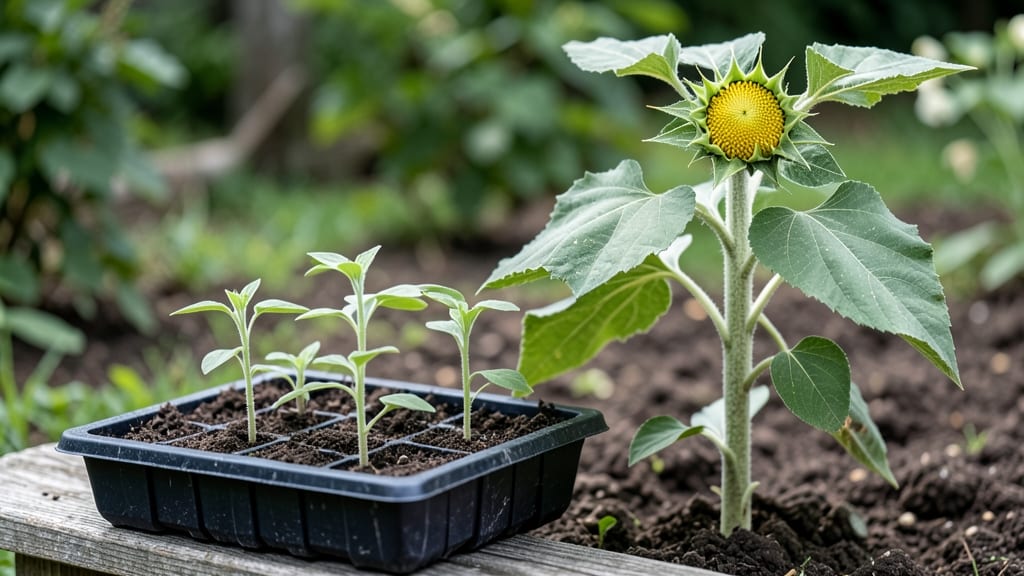
Planting four to five sunflower seeds per hole isn’t just tradition—it’s a foolproof way to guarantee at least one strong, healthy seedling. 🌻 I learned this the hard way after watching tiny sprouts compete for sunlight and nutrients, only to see the weaker ones wither.
The secret lies in giving nature a little help while letting it do the rest.
Start with well-drained soil and holes about 1 inch deep, spaced 6-12 inches apart depending on your sunflower variety. Larger types need more room to avoid crowding, while dwarf varieties can handle closer spacing.
After planting, gently firm the soil and water lightly—no need to soak, just enough to settle the seeds.
Once seedlings emerge, you’ll likely see two or three strong sprouts per hole. That’s when thinning comes in: keep the strongest one, snipping the others at the base.
This might sound harsh, but it prevents competition and gives your champion sunflower room to grow tall and sturdy—not leggy and weak.
Proper spacing isn’t just about looks; it’s about health. Crowded sunflowers attract pests, spread diseases, and struggle to reach their full potential. With the right approach, you’ll end up with bold, vibrant blooms that turn heads—and maybe even win your neighborhood’s best-grown contest.
📚 In This Guide
- What you need
- Instructions
- Tips and common mistakes
- Wrapping up and next steps
What you need
- ● Sunflower seeds: Choose heirloom or hybrid varieties (e.g., Mammoth, Russian Giant, or Teddy Bear). You’ll need about 100–200 seeds for a small garden or 500+ for larger plots.
- ● Garden soil or potting mix: Well-draining, nutrient-rich soil (or a blend with compost). Aim for 1–2 cubic yards for a standard garden bed.
- ● Planting holes tool: A trowel, dibble, or small hand shovel for digging holes 1–2 inches deep.
- ● Watering can or hose: With a gentle spray nozzle to avoid disturbing seeds.
- ○ Fertilizer (optional but recommended): A balanced 10-10-10 or slow-release granular fertilizer to boost early growth.
- ● Mulch: Straw or wood chips to retain moisture and suppress weeds.
- ● Plant markers: Small stakes or labels to track varieties (especially useful if planting multiple types).
- ● Sunflower seedling support: Stakes or cages (4–6 feet tall) for taller varieties to prevent toppling.
- ● Garden gloves: To keep hands clean while handling soil and seeds.
Step-by-Step guide to planting sunflower seeds for maximum germination
Here’s how to maximize your sunflower’s chances of thriving from the very first planting.
🌱 Step 1: Prepare the Planting Hole for Optimal Growth
Dig a hole that’s 1-2 inches deep—this gives sunflower seeds enough room to spread their roots without being buried too deeply. The soil should be loose and free of rocks or debris, as sunflowers hate competition for space. I like to use my fingers to break up any compacted soil at the bottom of the hole—this ensures roots can push through easily later.
If your soil is heavy clay, mix in a handful of compost or sand to improve drainage. Sunflowers despise soggy roots, and even a slight improvement in soil structure makes a huge difference in germination rates. You’ll know the hole is ready when the soil crumbles easily between your fingers and looks dark and rich.
🌱 Step 2: Plant 4-5 Seeds Per Hole for Guaranteed Sprouts
Place 4-5 seeds in each hole, spacing them evenly around the edges. This ensures at least one strong seedling will emerge even if some fail to germinate. I tap the seed packet gently to release seeds one at a time—planting too many in one spot leads to overcrowding, while too few risks gaps in your sunflower row.
Cover the seeds with ½ inch of soil, pressing lightly to secure them but not compacting the mix. Sunflower seeds need darkness to germinate, so avoid burying them too deeply. A good rule of thumb: if you can see the seeds through the soil, they’re too shallow. Once planted, water gently until the soil surface feels damp but not wet.
💧 Step 3: Maintain Consistent Moisture Until Germination
Keep the soil evenly moist for the first 7-14 days—this is critical for sunflower seeds, which need steady hydration to break dormancy. I use a spray bottle to mist the area daily rather than drenching it, as sunflowers are drought-tolerant once established but need consistent moisture to sprout.
Watch for the first signs of germination: tiny green shoots pushing through the soil. Once you see these, reduce watering slightly but keep the soil moist to support root development. If the soil dries out completely before germination, the seeds may not sprout at all—so check daily during this phase.
✂️ Step 4: Thin Seedlings to the Strongest 1-2 Plants
After 2-3 weeks, when seedlings reach 2-3 inches tall, thin them to leave only the strongest 1-2 plants per hole. Use scissors to snip weak stems at soil level—this prevents disturbing the roots of the remaining plants. I always keep the most vigorous seedling, identifiable by its thick stem and deep green leaves.
Thinning may seem harsh, but it ensures your sunflowers have enough nutrients and space to grow tall and sturdy. If you leave too many, they’ll compete for sunlight and water, resulting in leggy, weak stems that can’t support heavy blooms. After thinning, water deeply to help the remaining plants establish strong root systems.
☀️ Step 5: Provide Full Sun and Monitor for Pests
Sunflowers thrive in full sun (6+ hours daily), so place them in the sunniest spot in your garden. If you’re growing them in containers, rotate the pots weekly so they don’t lean toward the light. You’ll notice strong stems and compact growth when sunlight is abundant.
Keep an eye out for pests like aphids or slugs, which love young sunflower leaves. A quick spray of water or a barrier of diatomaceous earth around the base can deter them. With proper care, your sunflowers will grow into towering beauties ready for harvest in 80-120 days.
Tips & tricks for perfect sunflower seed planting
Planting sunflowers right from the start makes all the difference between scraggly sprouts and towering giants. Here's what I've learned after years of growing these cheerful giants.
Seed Spacing Secret: When planting those 4-5 seeds per hole in Step 2, arrange them in a circular pattern around the edges rather than clustering them together. This creates a natural buffer zone that prevents overcrowding right from the beginning. I've found that spacing seeds about ½ inch apart within the hole gives them just enough room to establish without competing for nutrients.
Soil Depth Technique: That ½-inch soil coverage in Step 2 is more important than you might think. Sunflower seeds need darkness to germinate, but they also need room to push through. I press the soil gently with my finger to ensure good contact while avoiding compaction. If you can see the seeds through the soil, they're too shallow—this often happens when working with sandy soil that doesn't hold together well.
Germination Timing: The 7-14 day window mentioned in Step 3 can actually vary dramatically based on soil temperature. In cooler spring conditions, germination might take closer to 14 days, while warm spring days can bring sprouts in as few as 5-7 days. I check daily by gently lifting a small section of soil with my fingers—look for the first tiny green tips before they fully emerge.
Thinning Strategy: Don't wait until those 2-3 weeks in Step 4 to thin! I actually start checking for seedlings around day 10-12. The key is to thin gradually—remove the weakest seedlings first, then wait another 3-4 days before removing the next weakest. This gives your sunflowers time to adjust to their new space without shock. I always keep the seedling with the thickest stem and most vibrant leaves.
Pro Tips for How Many Sunflower Seeds To Plant Per Hole
- Planting sunflowers right from the start makes all the difference between scraggly sprouts and towering giants. Here'...
- Seed Spacing Secret: When planting those 4-5 seeds per hole in Step 2, arrange them in a circular pattern around the ...
- Soil Depth Technique: That ½-inch soil coverage in Step 2 is more important than you might think. Sunflower seeds nee...
Frequently asked questions
How deep should I plant sunflower seeds?
Plant sunflower seeds about 1 inch deep in well-drained soil. Press them gently into the hole to ensure good soil contact, but don’t bury them too deep—this can delay germination. If you’re in cooler climates, a slightly deeper planting (up to 1.5 inches) may help protect seeds from frost.
When is the best time to plant sunflower seeds?
Sunflowers thrive in warm soil, so wait until the last frost has passed and temperatures stay above 50°F (10°C). For most regions, this means planting in late spring to early summer. If you’re in a hot climate, you can also try a fall planting for winter harvests!
What if my sunflowers don’t germinate?
If seeds aren’t sprouting after 10–14 days, check for these issues:
- Moisture: Keep soil consistently damp (not soggy) until germination.
- Temperature: Seeds need warmth—try a heat mat if soil is too cold.
- Depth: If planted too deep, they may rot; if too shallow, they’ll dry out.
- Seed viability: Test a few seeds in a damp paper towel—if they don’t sprout in 3–5 days, they may be old.
Can I plant sunflower seeds in containers?
Yes! Sunflowers grow well in large containers (at least 12–18 inches deep) with good drainage. Use 1–2 seeds per container (thin to the strongest sprout) and place them in full sun. Dwarf varieties (like ‘Teddy Bear’) are ideal for pots—just ensure the container is wide enough for their mature root spread.
How close can I plant sunflower seeds to other plants?
Sunflowers need space to grow—plant them 6–12 inches apart for dwarf varieties and 18–24 inches apart for standard types. If growing near other plants (like corn or beans), give them extra room since their roots and stems can get crowded. Pro tip: Use them as a living trellis for vining plants like cucumbers!
What if I only have a few seeds? Can I replant them?
Sunflower seeds are easy to save for next year. Let a few heads dry completely on the stalk, then harvest the seeds, remove the hulls, and store them in a cool, dry place. Plant them the following spring—they’ll germinate just as well as store-bought seeds!
Wrapping up and next steps
Planting 4-5 sunflower seeds per hole is your secret to thriving, sun-drenched blooms! 🌻 Whether you’re a green thumb or just starting, this simple step ensures strong starts and fewer disappointments.
Now that you’re armed with the right knowledge, why not grab those seeds and get growing? Next, pick a sunny spot, prep your soil, and watch your garden transform into a vibrant haven.