
Pests
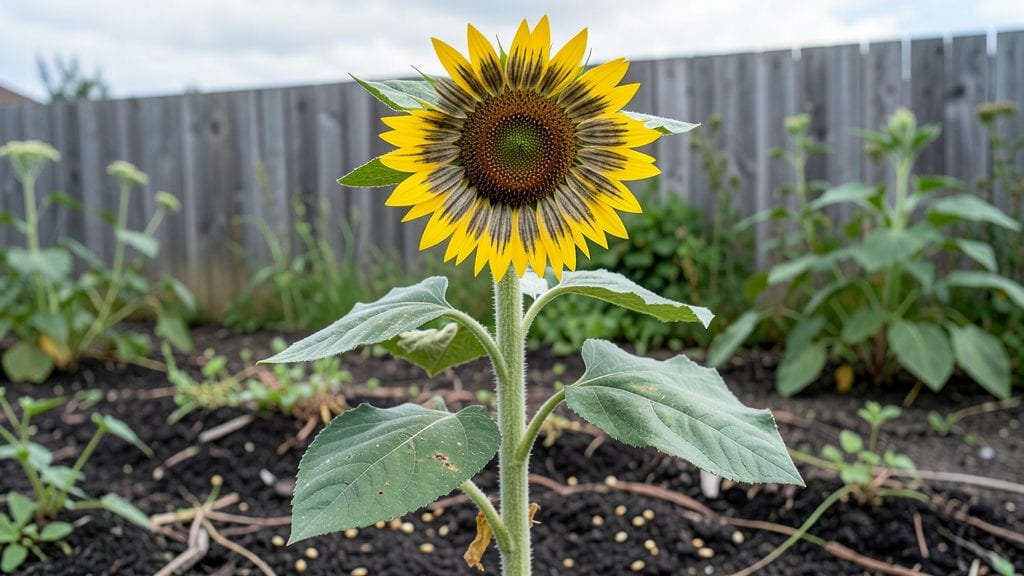
Growing Mammoth Grey Stripe sunflowers from seed feels like cultivating a living sculpture—each plant reaches 10-12 feet with striking grey-green striped petals that catch every breeze. 🌻 I planted mine last spring, and by midsummer, they dominated the garden like silent sentinels, their towering forms providing shade for smaller plants below.
The secret to their success? Starting indoors six weeks before your last frost and giving them room to stretch their legs.
These giants demand space—2-3 feet apart in rich, well-draining soil—and thrive in full sun, where they soak up warmth like thirsty travelers. Water consistently at the base (not overhead) to prevent mildew, and watch as those striped blooms unfurl into dinner-plate-sized faces that hummingbirds adore.
The stems are sturdy, but a cage or stake helps them stand tall against summer storms.
By late summer, you’ll have a sunflower forest that turns heads and attracts pollinators like a magnet. The blooms last weeks, making them perfect for cutting or leaving in the garden as a dramatic backdrop.
Just be ready for the "wow" factor—neighbors will ask how you grew them so big, and you’ll smile knowing it’s all about patience and the right conditions.
For extra drama, pair them with black-eyed Susans or purple coneflowers to create a bold, textured border. And if pests like aphids appear, a strong spray of water usually sends them packing.
These sunflowers aren’t just plants—they’re a statement, and with a little care, they’ll steal the show all season long.
📚 In This Guide
- What you need
- Instructions
- Tips and common mistakes
- Wrapping up and next steps
What you need
- ● Seeds: Mammoth Grey Stripe Sunflower seeds (10–20 seeds, depending on desired spacing)
- ● Growing containers or garden bed: For containers: 12–18" deep pots (1 per plant) with drainage holes
- ● For in-ground: Well-draining soil, full sun (6+ hours daily), and space (2–3 ft apart)
- ● Potting mix or garden soil: Lightweight, nutrient-rich blend (e.g., 50% potting soil + 50% compost)
- ● Watering can or hose: With a gentle spray nozzle (to avoid disturbing seedlings)
- ○ Fertilizer (optional but recommended): Balanced 10-10-10 or slow-release granular fertilizer
- ● OR organic options like worm castings or compost tea
- ● Gloves: To protect hands while handling soil/seeds
- ● Trowel or small shovel: For transplanting or loosening soil
- ○ Stakes or cages (optional): 5–6 ft tall to support towering stems (especially in windy areas)
- ○ Mulch (optional): Straw or shredded leaves to retain moisture and suppress weeds
- ● Pest control (prep): Neem oil or insecticidal soap (for aphids, beetles, or powdery mildew)
- ● Row covers (if pests like birds are a concern)
Step-by-step instructions for growing Mammoth Grey Stripe sunflowers
Here's how to cultivate these striking giants from seed to their breathtaking 10-foot height.
🌱 Step 1: Prepare the Planting Site
Sunflowers thrive in full sun with at least 6-8 hours of direct light daily. Choose a location with well-draining soil—these plants hate soggy roots. Amend heavy soil with 2-3 inches of compost mixed into the top 12 inches to improve aeration and fertility. I like to test the soil pH first; sunflowers prefer a slightly acidic to neutral range of 6.0-7.0. If your soil is alkaline, add sulfur to lower the pH before planting.
Space your planting spots 2-3 feet apart in rows 3 feet apart to allow for their massive growth. Mammoth Grey Stripes develop thick taproots, so avoid disturbing the soil deeply once planted. If growing in containers, use pots at least 18 inches deep and wide—these sunflowers need room to anchor their towering stems.
🌱 Step 2: Sow Seeds at the Right Time and Depth
Direct-sow seeds after the last frost when soil temperatures reach at least 55°F. These sunflowers are cold-sensitive and won’t germinate well in cool soil. Plant seeds 1-2 inches deep, pressing them lightly into the soil. I like to sow 2-3 seeds per hole—they germinate quickly, and thinning later prevents root disturbance.
Keep seeds consistently moist until germination, which typically occurs in 7-14 days. Water gently to avoid displacing seeds. Once seedlings emerge, thin to the strongest plant per location, cutting weaker stems at the base with clean scissors. This prevents competition and encourages robust growth.
☀️ Step 3: Provide Support and Maintain Moisture
As plants reach 3-4 feet tall, they’ll need sturdy support—their heavy blooms can cause stems to snap. Install 8-foot stakes or cages at planting and loosely tie stems to them as they grow. Use soft plant ties to avoid damaging the bark. I’ve seen these sunflowers top 12 feet in ideal conditions, so support is non-negotiable.
Water deeply 2-3 times per week, ensuring the soil stays evenly moist but not waterlogged. The top 6 inches of soil should dry slightly between waterings. Mulch around the base with 2-3 inches of straw to retain moisture and suppress weeds. Fertilize lightly with a balanced 10-10-10 formula every 4-6 weeks—sunflowers don’t need heavy feeding but benefit from steady nutrients.
✂️ Step 4: Prune for Health and Encourage Blooms
Remove any side shoots that form below the main stem—these divert energy from the primary bloom. Pinch off dead or damaged leaves to improve airflow and reduce disease risk. If you notice yellowing leaves, it’s often a sign of overwatering or nutrient deficiency. Adjust your watering schedule or add a potassium-rich fertilizer to strengthen stems.
Watch for pest pressure, especially sunflower moths or beetles. Handpick larger pests or spray with neem oil for organic control. The grey stripes on the petals are a natural defense—avoid over-treating with pesticides, as they can harm pollinators. Let the plant focus on its bold, 10-inch-wide blooms without unnecessary stress.
🌻 Step 5: Harvest and Enjoy the Rewards
Sunflowers are ready to cut when the back of the bloom turns yellow and the petals begin to droop slightly. Harvest in the morning for the freshest stems. Cut 4-6 inches below the bloom at a 45-degree angle to encourage water uptake. Store stems in cool water for 3-5 days—they make stunning centerpieces.
Leave a few blooms on the plant to dry for birdseed or to collect seeds for next year. The large, striped seeds are a favorite for wildlife. After harvesting, pull up the remaining plants and compost them—this prevents disease buildup in the soil for future plantings.
Tips & tricks for growing Mammoth Grey Stripe sunflowers
A few strategic tips will help you nurture these towering beauties from seed to their stunning 10-foot glory.
Site Selection Secret: While the instructions emphasize full sun, I've found that morning sun with afternoon shade in hot climates actually produces slightly more vibrant petal colors. These sunflowers can handle partial shade, but they'll need at least 6 hours of direct light to reach their full height potential. The key is avoiding the intense afternoon sun that can stress plants in zones 8-10.
Germination Strategy: The 7-14 day germination window can feel like an eternity, but there's a trick to speed things up. After sowing your seeds 1-2 inches deep, place a clear plastic dome or even a cut-open plastic bottle over each planting spot to create a mini greenhouse effect. This maintains consistent moisture and warmth, often bringing germination within 5-7 days. Just remember to remove the cover once sprouts appear to prevent fungal growth.
Support System: Those 8-foot stakes or cages are essential, but I've learned the hard way that standard garden stakes often aren't sturdy enough for these giants. Look for metal or reinforced wooden stakes rated for at least 20 pounds of pressure. I tie stems loosely with soft fabric strips rather than wire—this prevents damage to the bark as the plant grows. The goal is to support without restricting growth, especially as they reach their 10-foot potential.
Watering Wisdom: The 2-3 times per week guideline works well, but timing matters just as much as frequency. Water deeply in the morning to give roots time to absorb moisture before evening. I've noticed that watering in the late afternoon can lead to fungal issues, particularly in humid climates. The top 6 inches of soil should dry slightly between waterings—stick your finger in to check rather than relying on a schedule.
Pro Tips for Mammoth Grey Stripe Sunflower
- A few strategic tips will help you nurture these towering beauties from seed to their stunning 10-foot glory.
- Site Selection Secret: While the instructions emphasize full sun, I've found that morning sun with afternoon shade in hot climates actually produces slightly more vibrant petal colors.
- Germination Strategy: The 7-14 day germination window can feel like an eternity, but there's a trick to speed things up.
Frequently asked questions
Got questions about growing Mammoth Grey Stripe sunflowers? You’re not alone! Here are answers to the most common queries—from pests to timing—to help you cultivate these stunning giants with confidence.
When is the best time to plant Mammoth Grey Stripe sunflowers?
Plant seeds after the last frost when soil temperatures reach at least 55°F (13°C). For optimal growth, aim for late spring to early summer. In warmer climates, you can even plant in fall for a late-season bloom. Just ensure they get 6+ hours of sunlight daily!
What pests should I watch out for, and how do I prevent them?
These sunflowers are tough, but keep an eye out for sunflower moths, aphids, and beetles. Use neem oil or insecticidal soap for mild infestations. Pro tip: Plant companion flowers like marigolds nearby to deter pests naturally!
How often should I water Mammoth Grey Stripe sunflowers?
Water deeply 1-2 times per week, ensuring the soil stays moist but not soggy. Young plants need consistent moisture, while mature ones are drought-tolerant. Warning: Overwatering can lead to root rot—always check soil drainage!
Can I grow Mammoth Grey Stripe sunflowers in containers?
Yes! Choose a large container (12"+ diameter) with drainage holes. Use well-draining soil and support the tall stems with a stake or trellis as they grow. Just ensure the pot gets plenty of sunlight—these beauties hate shade!
How long does it take for Mammoth Grey Stripe sunflowers to bloom?
From seed to bloom, expect 80-100 days in ideal conditions. Early planting (spring) yields the fastest results, while fall plantings may take longer. Fun fact: Their striking grey stripes fade as they mature—plant extra for peak visual impact!
Wrapping up and next steps
The Mammoth Grey Stripe Sunflower isn’t just a plant—it’s a statement of nature’s grandeur, and with the right care, you can grow one that steals the show! 🌻 From choosing the perfect spot to protecting it from pests, every step brings you closer to a towering, striped masterpiece.
Remember, patience and consistency are key, but the reward—a sunflower that reaches 12 feet—is worth every effort.
Ready to dive in? Grab your seeds, mark your calendar, and start planting—your sunflower garden awaits! Need a refresher? Bookmark this guide or jot down your notes, then get growing. Happy planting! 🌱✨