
Flowers
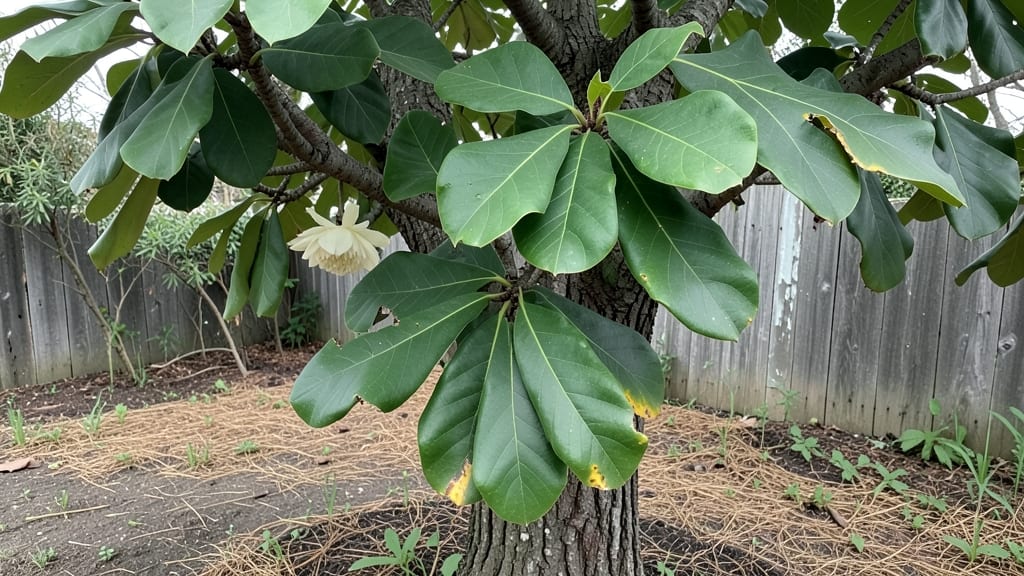
The bigleaf magnolia flower brings the Pacific Northwest’s damp forests to your garden with its 12-inch-wide creamy blooms that smell like honey in spring. 🌿 I’ve watched mine stand tall through winters that would flatten other magnolias, their glossy leaves turning bronze in fall—a living testament to resilience.
This isn’t just another ornamental tree; it’s a statement piece that thrives where others falter, its roots running deep into the same rich, acidic soils that nurture old-growth forests.
What you’ll need is simple: a spot with morning sun and afternoon shade, well-draining soil mixed with compost, and patience—these trees grow 2-3 feet per year and take a decade to reach their full 60-foot glory.
The real magic happens in late spring when those cup-shaped flowers unfurl, revealing a creamy center that draws hummingbirds like a magnet. Even in coastal climates where frost lingers, bigleaf magnolias shrug off the cold, their thick bark and layered branches designed to weather storms.
By summer, you’ll have a canopy of leathery, dark green leaves that stay vibrant until frost, providing year-round structure. The scent alone—sweet, almost tropical—will make neighbors ask where you got it.
This tree doesn’t just survive; it thrives, turning even the driest corner of your property into a lush, fragrant retreat. Ready to plant the future of your garden?
Whether you’re restoring a native woodland vibe or simply want a tree that outlasts trends, the bigleaf magnolia delivers. Just avoid planting too close to foundations—its roots are patient, but persistent. Let’s get yours established for generations to come.
📚 In This Guide
- What you need
- Instructions
- Tips and common mistakes
- Wrapping up and next steps
What you need
- ● Bigleaf Magnolia Plant: 1–2 Magnolia macrophylla seedlings or container-grown plants (3–5 ft tall for best results).
- ● Note: Choose a frost-resistant cultivar like ‘Dyno’ or ‘Clarkia’ for PNW climates.
- ● Soil: 5–10 bags (50 lb each) of well-draining, acidic soil mix (pH 5.0–6.5).
- ○ Optional: 2–3 bags of peat moss or pine bark fines to improve aeration.
- ● Fertilizer: 10–20 lb of slow-release, acidic fertilizer (e.g., 8-3-9 or 10-10-10 with micronutrients).
- ● 1 lb of iron sulfate (to prevent chlorosis in alkaline soils).
- ● Hand Tools: 1 trowel (for planting).
- ● 1 pruning shears (sterilized with rubbing alcohol).
- ● 1 garden fork (to loosen soil).
- ● Safety Gear: 1 pair of gloves (gardening or work gloves).
- ● 1 sunscreen (SPF 30+) and hat (PNW sun can be deceiving!).
- ○ Optional (But Helpful!): 1 mulch (3–4 inches of pine straw or wood chips).
- ● 1 soil pH test kit (to monitor acidity).
- ● 1 drip irrigation system or soaker hose (for consistent moisture).
- ● ✅ A sunny to partially shaded spot (6+ hours of light daily).
- ● ✅ Space! Mature bigleaf magnolias can grow 60–80 ft tall and 20–30 ft wide—plan accordingly!
- ● ✅ Frost tolerance: These beauties handle 10–15°F temps, but young plants may need winter protection (e.g., burlap wraps).
Step-by-Step instructions for planting bigleaf magnolia trees
Here's how to establish these stunning Pacific Northwest natives with minimal fuss.
🌱 Step 1: Select and Prepare the Planting Site
Bigleaf magnolias thrive in partial shade to full sun but prefer morning sun and afternoon shade in hotter inland PNW regions. Choose a location with well-draining soil—they rot easily if water pools around roots. I dig a hole twice as wide as the root ball but only as deep as the container's bottom, since planting too deep suffocates the tree.
Test soil drainage by digging a 12-inch hole elsewhere in the yard and filling it with water. If it drains within 2 hours, your site is perfect. For clay-heavy soils, I mix in 2-3 inches of compost at the bottom of the hole to improve structure. The key is mimicking their natural woodland understory conditions.
🪴 Step 2: Remove the Tree from Its Container and Inspect Roots
Gently squeeze the container sides to loosen the root ball before sliding the tree out. If roots are circling tightly (a common nursery issue), I make 2-3 vertical cuts with pruners to encourage outward growth. Never pull roots apart—this damages delicate feeder roots that absorb water and nutrients.
Check for root-bound signs (roots growing in tight circles). If present, soak the root ball in lukewarm water for 15-20 minutes before planting to reduce transplant shock. Place the tree in the hole so the top of the root ball sits 1-2 inches above ground level—this prevents water from pooling at the stem base.
☀️ Step 3: Backfill and Water Thoroughly
Fill the hole with native soil mixed with 20% compost, tamping lightly every 2-3 inches to remove air pockets. Avoid compacting too firmly—you want roots to spread easily. I create a water well around the base by mounding soil slightly higher at the edges, then water deeply until the soil 12 inches down feels moist.
After planting, I apply 2-3 inches of mulch (wood chips or bark) 3 inches away from the trunk, keeping it clear of the stem. This conserves moisture and regulates soil temperature. Water every 2-3 days for the first month, checking that the top 6 inches of soil stay consistently moist but not soggy.
✂️ Step 4: Prune for Structure and Support
Remove any dead, broken, or crossing branches using clean, sharp pruners to encourage an open canopy. I make cuts just outside the branch collar (the swollen area where the branch meets the trunk) to promote faster healing. Avoid heavy pruning—bigleaf magnolias flower on old wood, so aggressive cuts reduce bloom potential.
Stake only if necessary—these trees have strong root systems. If staking, use 2-3 stakes positioned 4-6 inches from the trunk and tie with soft fabric strips (never wire, which can girdle the stem). Remove stakes after 1 growing season to prevent the tree from becoming dependent on support.
🌿 Step 5: Monitor and Maintain Through the First Year
Watch for new growth in spring—this signals successful establishment. Fertilize only if leaves appear pale or yellow (a sign of nutrient deficiency). I use a balanced 10-10-10 fertilizer at half strength in early spring, applied 6 inches from the trunk. Over-fertilizing causes weak, disease-prone growth.
Bigleaf magnolias are drought-tolerant once established, but young trees need consistent moisture. Water deeply once a week during dry spells, aiming for 1-1.5 inches of water per session. By their second summer, they’ll handle PNW’s occasional droughts with ease—just don’t let the soil dry out completely.
Tips & tricks for perfect bigleaf magnolia planting
Planting bigleaf magnolias successfully comes down to a few key details that mimic their natural woodland habitat. These tips will help you avoid common pitfalls and give your tree the best possible start.
Soil Drainage Test: That 2-hour drainage test in Step 1 is non-negotiable for bigleaf magnolias. If water pools for longer than 2 hours, amend the soil with 2-3 inches of coarse sand mixed into the bottom of the hole before planting. Poor drainage is the #1 reason these trees fail—root rot sets in quickly. For clay-heavy soils, I also add a layer of gravel at the bottom of the planting hole to create a drainage layer.
Root Ball Handling: When loosening the root ball in Step 2, I use a plastic knife or garden fork to gently separate the outer edges from the container. This prevents tearing delicate feeder roots. For root-bound trees, make those 2-3 vertical cuts just deep enough to break the circular pattern—don't slice all the way through. The goal is to encourage outward growth, not create open wounds.
Watering Strategy: The first month's watering schedule in Step 3 is crucial, but timing matters as much as quantity. Water in the early morning to let foliage dry before evening—this prevents fungal issues. Use a soaker hose placed 6 inches from the trunk to deliver water directly to the root zone without disturbing the mulch. I check moisture by pushing a screwdriver into the soil—if it goes in easily, you're good; if it meets resistance, water again.
Fertilizer Timing: That half-strength 10-10-10 application in Step 5 should only happen in early spring when new growth appears. I test soil pH first—bigleaf magnolias prefer slightly acidic soil (pH 5.5-6.5). If your soil is more alkaline, add elemental sulfur to the planting hole before backfilling. Over-fertilizing stresses young trees, especially in the PNW's cool, wet climate where nutrients leach quickly.
Pro Tips for Bigleaf Magnolia Flower
- Planting bigleaf magnolias successfully comes down to a few key details that mimic their natural woodland habitat.
- Soil Drainage Test: That 2-hour drainage test in Step 1 is non-negotiable for bigleaf magnolias.
- Root Ball Handling: When loosening the root ball in Step 2, I use a plastic knife or garden fork to gently separate the outer edges from the container.
Frequently asked questions
Got questions about growing bigleaf magnolia flowers? You’re not alone! Here are answers to the most common queries from gardeners in the Pacific Northwest and beyond.
How cold can bigleaf magnolias tolerate?
The Magnolia macrophylla thrives in USDA Zones 5-9, making it one of the most frost-resistant magnolias. While young trees may need winter protection (like burlap wraps), mature specimens handle temperatures down to -10°F (-23°C) with ease. Mulch heavily in late fall to shield roots!
When do bigleaf magnolias bloom, and how long do the flowers last?
Blooms typically appear in late spring to early summer (May–June), with flowers lasting 7–10 days per cluster. Each flower is massive (up to 12 inches wide!) but short-lived—enjoy their creamy-white, fragrant display while it lasts! For extended blooms, plant near a south-facing wall to capture warmth.
Do bigleaf magnolias need full sun, or can they grow in shade?
While they prefer full sun (6+ hours daily) for optimal blooms, bigleaf magnolias tolerate partial shade (3–6 hours of sun), especially in hotter climates. In the Pacific Northwest’s cooler, wetter conditions, they’ll thrive in morning sun + afternoon shade to prevent leaf scorch.
Why aren’t my bigleaf magnolia flowers opening?
Several factors may delay blooms:
- Age: Young trees (under 5 years) focus on root/foliage growth. Patience is key!
- Light: Insufficient sun? Move to a sunnier spot gradually.
- Stress: Overwatering, poor drainage, or pests (like scale) can stunt growth. Check soil moisture and inspect leaves for damage.
- Pruning timing: Never prune in late summer/fall—wait until late winter to avoid disrupting bloom signals.
If the tree is mature and healthy but still not flowering, it might need a balanced fertilizer (10-10-10) in early spring.
How fast do bigleaf magnolias grow, and how big do they get?
These giants grow 12–24 inches per year when young, slowing to 6–12 inches annually as they mature. At full size, they reach 60–80 feet tall with a 30–50-foot spread—so plan for long-term space! For smaller gardens, consider dwarf cultivars like ‘Butterflies’ (20–25 ft tall).
Pro Tip: Pollination matters!
Bigleaf magnolias have perfect flowers (male/female parts in one), but cross-pollination from nearby magnolias (even other species) can boost fruit/seed production. Plant a buddy tree if you’re dreaming of those iconic pink seed pods!
Wrapping up and next steps
The bigleaf magnolia flower is a true gem of the Pacific Northwest—easy to grow, stunningly resilient, and bursting with old-world charm. Whether you’re a seasoned gardener or a beginner, its ability to thrive in frost and partial shade makes it a must-have for any landscape.
With the right care, you’ll soon be rewarded with those iconic, fragrant blooms that turn heads year after year!
Ready to plant your own? Start by picking the perfect spot in your garden—then grab your gloves and get growing! 🌱 For extra inspiration, browse local nurseries or join gardening forums to share your progress with fellow plant enthusiasts.