Flowers
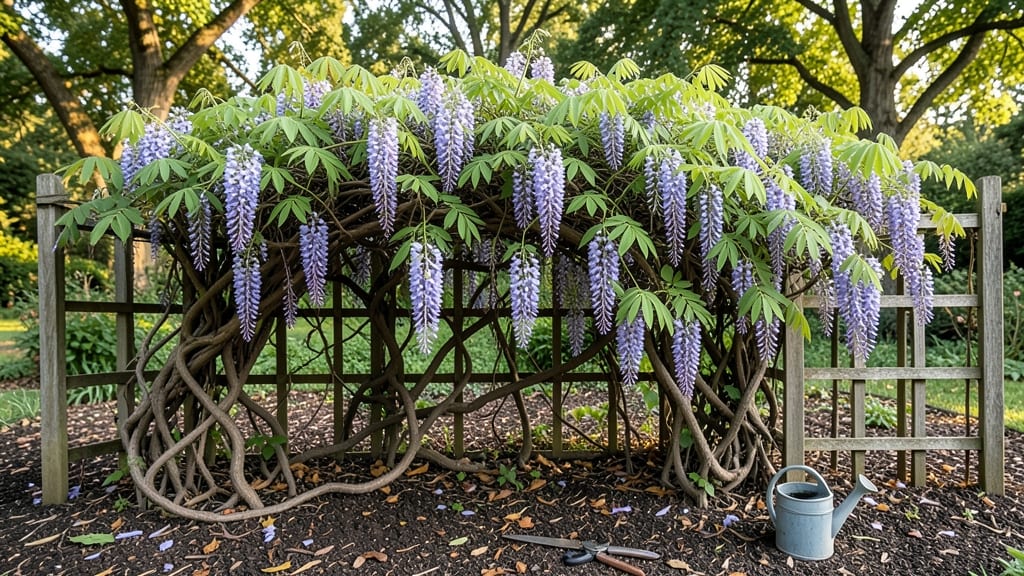
Wisteria flowers photos reveal why this vine steals every garden show—those lavender cascades of fragrant blossoms turn any space into a romantic dream. 🌿 I’ve seen wisteria transform bare walls into living tapestries, its long, graceful tendrils spilling over pergolas like silk ribbons.
The secret lies in how you train it: whether climbing a sturdy arbor or draping over an old fence, the drama comes from its purple, pink, or white blooms that perfume the air in spring.
The right variety makes all the difference—some wisterias bloom early with abundant clusters, while others wait until late spring but reward you with longer-lasting flowers. Pair it with clematis for vertical contrast or plant beneath it shade-loving hostas to highlight its airy elegance.
The key? Pruning in late winter to shape its growth and prevent it from becoming a tangled mess.
Imagine stepping into a garden where the scent of wisteria mingles with the rustle of new leaves—this is the magic of a well-placed vine. 🌸 You’ll create a focal point that draws eyes upward, frames patios, or even softens a chain-link fence with its lush foliage.
The best part? It thrives in full sun to partial shade, making it adaptable to almost any landscape.
For maximum impact, combine wisteria with complementary colors like deep greens or creamy white flowers. Add a few spring bulbs at its base for early-season color, and you’ve got a garden that feels like a postcard all season long. Ready to bring this drama to your yard?
📚 In This Guide
- What you need
- Instructions
- Tips and common mistakes
- Wrapping up and next steps
What you need
- ● DSLR or Mirrorless Camera: A camera with manual settings (e.g., Canon EOS R5, Sony A7 III, or Nikon Z6 II) for full creative control.
- ● Wide-Angle Lens (16-35mm or similar): Captures the dramatic cascades and grand scale of wisteria.
- ● Tripod: A sturdy one (e.g., Manfrotto MT055XTR) to stabilize long-exposure shots or low-light conditions.
- ● Remote Shutter Release: Avoids camera shake during exposures (even a budget-friendly Bluetooth remote works!).
- ○ Polarizing Filter (optional but helpful): Enhances color saturation and reduces glare (e.g., Hoya HD Polarizer).
- ● Wisteria Vine Location: A garden, arbor, or trellis with healthy, blooming wisteria (late spring to early summer is ideal!).
- ● Natural Light: Golden hour (sunrise/sunset) for soft, warm lighting—avoid harsh midday sun.
- ○ Overcast Days (optional): Diffused light softens shadows for dreamy portraits.
- ● Reflector (5-in-1 or silver/gold): Bounces light onto shaded areas for balanced exposure.
- ○ Macro Lens (optional): For close-ups of delicate flowers and intricate details (e.g., Sigma 105mm f/2.8).
- ● Pruners or Garden Shears: Lightly trim overgrown vines to frame your shot (if permitted).
- ● Notebook & Pen: Jot down composition ideas or lighting notes!
How to capture stunning wisteria flower photos for garden inspiration
Here's how to photograph wisteria's fragrant lavender blooms like a pro—no fancy equipment needed.
☀️ Step 1: Choose the Right Time of Day for Light and Fragrance
Morning hours between 8-10 AM deliver the perfect balance of soft light and fresh fragrance. Wisteria blooms open fully by mid-morning, revealing their delicate lavender clusters at their most photogenic. I avoid midday sun—it creates harsh shadows and can wash out the delicate purple hues.
Check the flowers' scent first. The strongest fragrance typically appears on warmer mornings after a cool night. Hold your hand near the blooms—if you can smell them from 2 feet away, you're golden. This is also when bees are least active, giving you cleaner shots without flying insects.
🌿 Step 2: Frame the Cascading Vines for Maximum Drama
Wisteria's natural habit is its best feature—use it! Position yourself to capture the 3-6 foot cascades spilling over trellises, arbors, or pergolas. I like to shoot from below, looking up at the vines against the sky, which creates a stunning vertical perspective. Move closer to fill the frame with 3-5 flower clusters for intimate shots.
Look for contrasting textures in the background. A weathered wooden trellis or lush green foliage adds depth. If your wisteria climbs a tree, include the trunk or branches in the frame to show its natural growth habit. Avoid cutting off the vines—leave at least 6 inches of stem visible to maintain the organic feel.
📸 Step 3: Adjust Camera Settings for Soft, Natural Colors
Switch to aperture priority mode with a setting between f/5.6-f/8 to keep both the flowers and background in focus. Wisteria's delicate blooms need sharp detail, but a slightly blurred background (bokeh) makes the lavender stand out. Use your camera's daylight or cloudy white balance to prevent purple casts.
For best results, shoot in raw format if possible—it gives you more flexibility to adjust exposure later. I always take a test shot first, then check the histogram to ensure no highlights are blown out. If the sky appears too bright, slightly underexpose by 0.3-0.5 stops to preserve detail in the flowers.
✂️ Step 4: Edit for Vibrant Lavender Without Overprocessing
Start by adjusting exposure first—wisteria blooms should look naturally vibrant, not flat or washed out. In Lightroom or similar software, boost the clarity slightly (+10-20) to enhance the flower texture without adding noise. I avoid heavy saturation—just a 5-10% increase keeps the colors true to life.
Use the selective adjustment tool to darken any green foliage competing with the flowers. The goal is to make the lavender pop while keeping the overall image natural. Add a subtle vignette (+10%) to draw focus to the center of the photo. Save your edits as a preset for future wisteria shots!
🌱 Step 5: Capture the Fragrance Through Composition Tricks
Since fragrance can't be seen, use composition to imply it. Include dewdrops on petals (morning shots work best) or butterflies hovering nearby—both suggest freshness. I also look for subtle movement in the vines caused by breeze, which adds life to the scene.
For close-ups, focus on individual flower clusters where you can see the tiny hairs on the buds. These details make the image feel tactile. If photographing a large specimen, include a reference object like a hand or garden tool to show scale—wisteria's size is part of its charm!
Tips & tricks for perfect wisteria flower photography
Here's how to elevate your wisteria shots from good to breathtaking with these insider tricks.
Timing is Everything: The 8-10 AM window is your golden hour for wisteria—this is when the blooms are fully open and fragrance is strongest. I've found that if you photograph right after morning dew has evaporated but before 10 AM, you'll capture that fresh, dewy look without harsh shadows. Pro tip: Check the weather forecast for clear mornings after a cool night—this combination guarantees the best scent and vibrant colors.
Composition Secrets: When framing those 3-6 foot cascades, try shooting from below at a slight angle to emphasize the vertical growth. I like to position myself so the vines create diagonal lines leading to the sky—this adds dynamic movement to the shot. For intimate close-ups, focus on 3-5 flower clusters together rather than single blooms. This shows the natural grouping while keeping the image cohesive. The 6-inch stem rule helps maintain that organic feel without looking like you've cut the plant.
Camera Settings That Make All the Difference: That f/5.6-f/8 aperture range is perfect for keeping both the delicate blooms and background in sharp focus. I always shoot in aperture priority mode because it lets me concentrate on composition while the camera handles the rest. For the histogram check, look for a bell curve that peaks around the middle—this means you're capturing all the details without losing highlights or shadows in the lavender clusters. The slight underexposure trick (0.3-0.5 stops) is my secret weapon for keeping those sky details without washing out the flowers.
Editing Like a Pro: That 5-10% saturation boost is all you need—any more and the colors start looking unnatural. I use the selective adjustment tool to darken competing green foliage by about 15-20%, which makes the lavender truly pop. The 10% vignette adds that professional touch while keeping the focus exactly where you want it—the flower clusters. Save those edits as a preset labeled "Wisteria" so you can apply the same look to all your future shots with just one click.
Pro Tips for Wisteria Photos Flower
- Here's how to elevate your wisteria shots from good to breathtaking with these insider tricks.
- Timing is Everything: The 8-10 AM window is your golden hour for wisteria—this is when the blooms are fully open and ...
- Composition Secrets: When framing those 3-6 foot cascades, try shooting from below at a slight angle to emphasize the...
Frequently asked questions
When is the best time to plant wisteria?
The ideal time to plant wisteria is in early spring or fall, when temperatures are mild. This gives roots time to establish before extreme heat or cold sets in. Avoid planting in summer—young roots can dry out or struggle with heat stress. For container-grown wisteria, plant as soon as the soil is workable.
How long does it take for wisteria to bloom?
Patience is key! Wisteria typically takes 3 to 5 years to produce its first blooms, depending on the variety and growing conditions. Young plants focus on root and vine growth first. With proper care—like pruning and fertilization—you’ll see those fragrant lavender cascades sooner.
What’s the best time of day to photograph wisteria flowers?
Early morning or late afternoon (the golden hours) are perfect for capturing wisteria’s vibrant colors and delicate details. Soft, diffused light enhances texture and reduces harsh shadows. Avoid midday sun, which can create unflattering contrasts. A light breeze also adds movement to your photos—just be ready to snap quickly!
Why isn’t my wisteria blooming?
Several factors can delay blooms, including over-pruning (cut back only after flowering), poor sunlight (wisteria needs full sun), or lack of nutrients. Ensure your plant gets at least 6+ hours of sunlight daily and fertilize in early spring with a balanced, phosphorus-rich formula. If it’s young, give it time—blooms may take years!
Are there low-maintenance alternatives to wisteria?
If wisteria’s growth demands seem high, consider these fragrant, fast-growing alternatives:
- Clematis: Blooms in various colors, climbs trellises, and thrives in partial shade.
- Jasmine (Trachelospermum): Compact, evergreen, and highly fragrant—ideal for containers.
- Honeysuckle: Vigorous, attracts pollinators, and blooms prolifically with minimal care.
Wrapping up and next steps
Wisteria’s dramatic cascades and intoxicating fragrance truly elevate any garden into a dreamy sanctuary. From selecting the perfect variety to mastering care tips, these lavender-blue blooms are well worth the effort—whether you’re a seasoned gardener or just starting your floral journey. 🌸
Ready to transform your outdoor space? Start small—plant a single wisteria vine or snap a few photos of your favorite blooms to inspire your next project. The magic of wisteria awaits!