Flowers
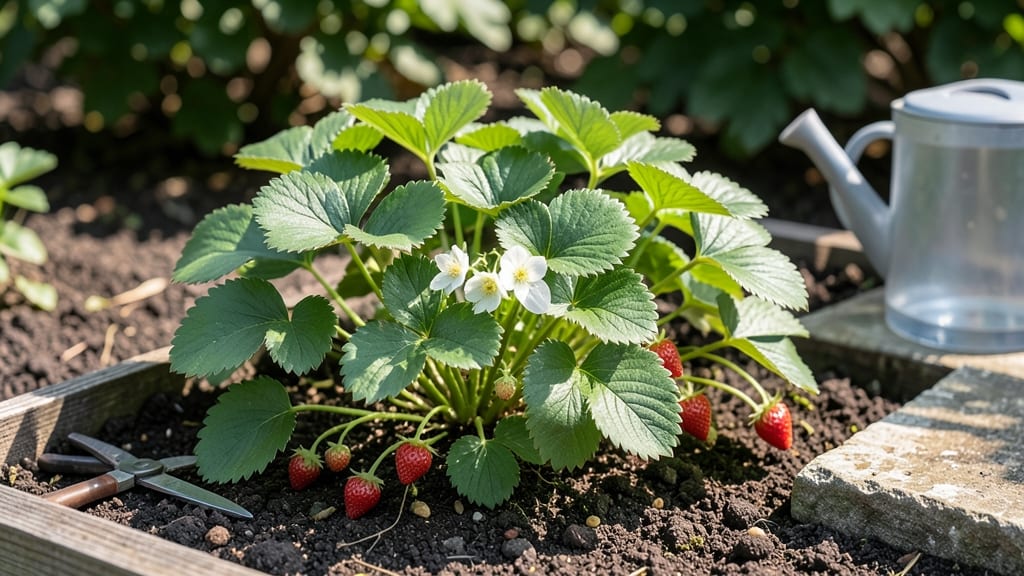
A strawberry flower close up reveals nature’s hidden jewels—delicate, vibrant, and packed with intricate details that transform any garden corner into a living masterpiece. 🌸 Their tiny white petals, dusted with yellow stamens, create a soft contrast against lush green foliage, while the subtle blush of emerging blooms adds a romantic touch.
What most gardeners miss is how these flowers don’t just feed our fruit—they turn your landscape into a pollinator paradise, drawing bees and butterflies with their sweet fragrance.
Capturing their beauty up close reveals textures you’d never notice from a distance: the velvety centers, the way dew clings to petals at dawn, or how sunlight turns stamens into golden highlights.
These flowers pair beautifully with blue salvia, purple clematis, or even wild grasses to create a layered, cottage-core aesthetic. Even in small spaces, a single strawberry plant becomes a focal point—imagine it spilling over a pot or framing a garden path.
Photographing them is simpler than you’d think. A basic macro lens or even your smartphone’s close-up mode can reveal their secrets—just focus on a single bloom, play with natural light, and let the colors pop against a blurred background.
The results? Stunning images that make your garden feel like a curated gallery. Plus, every shot you take reminds you why these flowers matter beyond the fruit.
Whether you’re designing a pollinator-friendly bed or just admiring the details, strawberry flowers prove that beauty lives in the smallest places. The key is slowing down to see it—and maybe capturing a few shots to share. Your garden’s hidden stars are waiting to shine.
📚 In This Guide
- What you need
- Instructions
- Tips and common mistakes
- Wrapping up and next steps
What you need
- ● Camera: DSLR or mirrorless camera with manual focus (e.g., Canon EOS R5, Nikon Z6, Sony A7 III).
- ● Macro Lens: 60mm–105mm focal length (e.g., Canon MP-E 65mm, Nikon AF-S VR Micro-Nikkor 105mm).
- ● Tripod: Sturdy with a fluid head for stability (e.g., Manfrotto MT055XLT).
- ● Remote Shutter Release: 2x (to avoid camera shake).
- ● Natural Light: Overcast day or diffused sunlight (avoid harsh shadows).
- ○ Optional Lighting: Softbox (e.g., Neewer 18-inch) or LED panel (e.g., Godox SL-60W).
- ● Reflector (5-in-1, 22-inch) for bounce light.
- ● Extension Tubes: 12mm–25mm (for extreme close-ups).
- ● Reverse Ring: 1x (for attaching lenses backward).
- ● Fresh Strawberry Plant: With fully bloomed flowers (morning pick for dew-free petals).
- ● Pruning Shears: Small, sharp pair for trimming stems.
- ● Water Spray Bottle: Tiny mist for hydration (if shooting outdoors).
- ● Black Cardboard or Cloth: For background contrast.
Step-by-step instructions for capturing strawberry flower macro shots
Here’s how I consistently get crisp, vibrant close-ups of strawberry flowers—no fancy gear required.
🌿 Step 1: Find the Perfect Lighting and Timing
Strawberry flowers shine brightest on overcast mornings or in soft shade—harsh midday sun creates unflattering shadows. I scout locations 30 minutes before sunrise when dew clings to petals, adding natural sparkle to your shots. Look for buds just about to open; fully bloomed flowers wilt faster under the lens.
If shooting midday, position the flower parallel to the sun (not facing it) to minimize glare. A diffuser or white foam board placed between the sun and flower softens light dramatically. Watch for tiny water droplets on petals—these act as natural lenses, creating dreamy bokeh effects in the background.
☀️ Step 2: Set Up Your Lens and Focus Carefully
Use a macro lens (1:1 or greater) for true detail, but even a 50mm prime with extension tubes works in a pinch. Set your aperture to f/8 or higher to keep petals sharp from edge to edge—strawberry flowers have delicate textures that blur easily. I manually focus on the center stamens first, then recompose to include surrounding petals.
Enable live view magnification on your camera to preview focus at 100%. Strawberry flowers have uneven surfaces—the center may be in focus while edges blur. Take test shots and zoom in; if the center stamens look like fuzzy blobs, adjust focus slightly. Pro tip: Use focus stacking (multiple shots at different focal planes) in post-processing for razor-sharp results.
💧 Step 3: Stabilize and Frame for Maximum Impact
A tripod or sturdy monopod is non-negotiable—strawberry flowers are delicate, and even a slight breeze can ruin a shot. I place a small weight (like a pebble) on the petals to keep them from shifting mid-shoot. For handheld shots, brace against a tree or use your camera’s 2-second timer to avoid shake.
Frame the shot to include one to three stamens in the center, surrounded by petals. Leave negative space around the edges—crowding the flower with background clutter distracts from its intricate details. I often shoot at a slight angle to highlight the flower’s natural asymmetry, which adds depth to the composition.
⏰ Step 4: Capture and Process for Vibrant Colors
Shoot in RAW format to preserve the flower’s true colors—strawberry petals often lose their pink intensity in JPEG compression. I take three shots per angle: one with the flower in focus, one with the background sharp, and one with both slightly blurred for creative effects. Use a remote shutter to avoid camera shake entirely.
In post-processing, boost vibrance (not saturation) to enhance the pink hues without washing out details. I also apply a slight vignette to darken edges and draw attention to the flower’s center. For extra magic, add a subtle texture overlay of a strawberry leaf to imply the plant’s natural habitat.
🌱 Step 5: Edit for Texture and Depth
Strawberry petals have tiny hairs and veins that add dimension—use sharpness tools sparingly to avoid a plastic look. I enhance texture by dodging and burning the stamens’ tips to make them pop against the petals. For a dreamy effect, reduce the clarity slider slightly—this softens harsh edges while keeping details intact.
Finally, add a white balance tweak to remove any green or yellow tint from the background. Strawberry flowers should look cool-toned pink, not muddy. Export at 300 DPI for prints or high-resolution JPEG for digital sharing—your close-ups deserve to be seen up close!
Tips & tricks for perfect strawberry flower close-ups
Here’s how to elevate your strawberry flower macro shots from good to breathtaking—without breaking the bank or needing pro gear.
Timing is Everything: That 30-minute window before sunrise is your golden hour for strawberry flowers. Dew creates natural sparkle, and the soft morning light eliminates harsh shadows. If you miss this window, try late afternoon instead—just avoid midday sun entirely. Pro tip: Use a light meter app to check your exposure; strawberry petals need f/8 or higher to stay sharp without overexposing the delicate pinks.
Focus Stacking Secret: Strawberry flowers have uneven surfaces, so no single shot captures everything in focus. Take three shots per angle—one focused on the stamens, one on the petals, and one with both slightly blurred. In post-processing, merge these using focus stacking software (or free tools like Helicon Focus) for razor-sharp details that look like they were shot with a $5,000 lens.
Stabilization Hacks: A tripod is ideal, but if you’re shooting handheld, brace your elbows against a tree or sturdy surface. For extra stability, place a small pebble on the petals to weigh them down—this prevents movement from wind or your breath. If you don’t have a remote shutter, use your camera’s 2-second timer to avoid shake entirely. Even a slight breeze can ruin a shot, so scout for sheltered spots like under a bush or near a fence.
Post-Processing Pro Tip: When editing, boost vibrance (not saturation) to enhance the pink hues without making the petals look unnatural. A slight vignette (darkening the edges) draws the eye to the flower’s center, while a subtle texture overlay of a strawberry leaf adds context without overpowering the shot. For a dreamy effect, reduce clarity by 10-15%—this softens harsh edges while keeping the intricate details intact.
Pro Tips for Strawberry Flower Close Up
- Here’s how to elevate your strawberry flower macro shots from good to breathtaking—without breaking the bank or needing pro gear.
- Timing is Everything: That 30-minute window before sunrise is your golden hour for strawberry flowers.
- Focus Stacking Secret: Strawberry flowers have uneven surfaces, so no single shot captures everything in focus.
Frequently asked questions
Got questions about capturing the delicate beauty of strawberry flowers in close-up shots? You’re not alone! Here are some of the most common queries—plus quick, practical answers to help you nail those stunning macro shots.
What’s the best time of day to photograph strawberry flowers?
The golden hours—right after sunrise or before sunset—offer the softest, most flattering light for strawberry blossoms. Avoid harsh midday sun, which creates unflattering shadows. Overcast days can also work well, as diffused light enhances delicate details without glare.
Do I need a macro lens to capture strawberry flowers up close?
While a macro lens (1:1 or greater magnification) is ideal, you can get creative with alternatives like a telephoto lens + extension tubes or even a smartphone with a macro attachment. Just be prepared for lower depth of field—focus carefully on the flower’s center!
Why do my strawberry flowers look blurry in close-ups?
Blurry shots often stem from camera shake, incorrect focus, or slow shutter speeds. Use a tripod or monopod, enable live view with magnification for precise focusing, and shoot at 1/200s or faster. If shooting handheld, brace yourself against a stable surface.
Can I photograph strawberry flowers indoors?
Yes! Place them near a north-facing window for even, natural light. Avoid direct sunlight to prevent lens flare. For controlled lighting, use a softbox or ring light at a 45-degree angle to highlight texture without washing out colors.
How do I get sharp details on the tiny stamens and petals?
Start with a small aperture (f/8–f/16) for maximum depth of field, then focus stack in post-processing: Take multiple shots at different focus points, then blend them using software like Photoshop or Helicon Focus. This trick ensures every delicate part stays crisp!
Wrapping up and next steps
Capturing the delicate beauty of a strawberry flower close-up is all about patience, precision, and a keen eye for detail. Whether you’re a seasoned photographer or just starting out, these macro photography secrets will help you unlock stunning shots that showcase nature’s intricate artistry. 🌸
Now that you’re armed with the right tools and techniques, it’s time to put your skills into practice! Grab your camera, head outdoors, and experiment with different angles and lighting. Every flower tells a story—let yours shine through your lens.
Want to take it further? Try sharing your close-ups on social media or even entering a local photography contest. Your passion could inspire others to see the world through a new lens! 📸✨