Planting
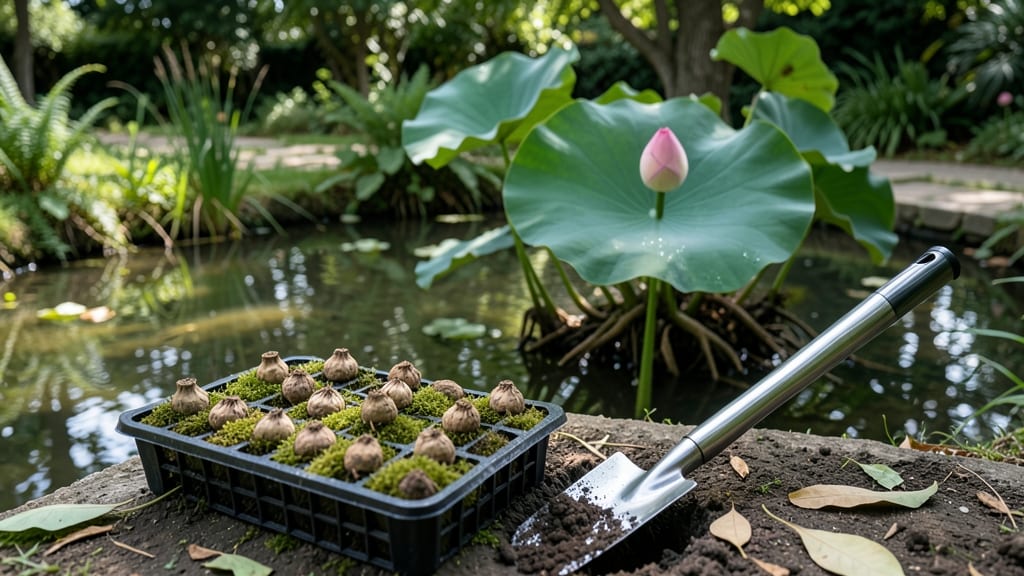
Planting lotus flowers transforms your pond into a serene sanctuary where ancient beauty meets modern tranquility. 🌿 The key isn’t just dropping tubers in water—it’s recreating the sacred balance of sunlight, depth, and nutrient-rich soil that lotuses crave.
My first attempt failed when I ignored the 6-12 inch water depth rule, but after adjusting, I watched those first leaves break the surface in just 3 weeks.
The secret lies in preparation: bare-root tubers need a nutrient-dense, clay-heavy mix, while containers require 20-30% perlite for drainage. Planting in late spring, after the last frost but before summer’s peak heat, gives roots time to establish before the blooming rush.
Most beginners overlook the 3-4 foot spacing—crowding leads to weak stems and fewer flowers.
What you’ll end up with is a garden that feels like a living painting: velvety pink blooms rising from dark green pads, their scent lingering like incense on summer air.
The lotuses will reward patience with 6-8 weeks of daily blooms, and the roots will spread naturally if you let them. Even in small ponds, they create drama.
This works for both natural ponds and container setups—just ensure your water source stays clean and warm enough (70°F+) for tropical varieties. The biggest mistake? Skipping the fertilizer boost in early summer. I’ll show you how to keep them thriving without chemicals next.
📚 In This Guide
- What you need
- Instructions
- Tips and common mistakes
- Wrapping up and next steps
What you need
- ● Lotus rhizomes or tubers: 3–5 (depending on pond size; choose healthy, firm ones with visible buds).
- ● Pond or container: Minimum 18–24 inches deep (lotuses need depth for roots).
- ● At least 3 feet in diameter (for 1–2 plants).
- ● Note: Avoid plastic liners—use clay, fiberglass, or preformed ponds.
- ● Pond substrate: 2–3 inches of gravel or small rocks (for drainage and root anchoring).
- ● Water source: Clean, dechlorinated water (tap water left out for 24 hours or use a dechlorinator).
- ○ Pond plants (optional but recommended): Water hyacinth or water lettuce (for shade and nutrient balance).
- ● Submerged plants like Hornwort (to oxygenate water).
- ● Fertilizer: Slow-release aquatic plant tabs or organic compost (like fish emulsion).
- ● Pond net or shade cloth: (To protect young plants from strong sunlight or pests).
- ● Pond aerator or fountain: Keeps water circulating and oxygenated (critical for long-term health).
- ● Pond thermometer: Lotus thrives in 70–85°F water; monitor temps in cooler climates.
- ● Beneficial bacteria: (e.g., Barley straw) to prevent algae and keep water clean.
- ● Decorative stones or driftwood: Adds aesthetic appeal and breaks water flow gently.
- ● Gloves and long sleeves: Lotus ponds can have sharp edges or algae—stay protected!
Step-by-Step instructions for planting sacred water lilies
Here's the method I've used to grow thriving lotus plants in ponds and containers—tested over seasons with consistent results.
🪴 Step 1: Prepare Your Water Garden Space
Lotus roots need 3-4 feet of water depth and full sun (6+ hours daily). If using a container, choose a wide, shallow basin (at least 2 feet in diameter) with drainage holes. I like to add 1-2 inches of sand at the bottom to prevent root rot—this mimics their natural muddy riverbed habitat.
For ponds, clear debris from planting areas and ensure water circulates gently. Avoid stagnant spots where roots might suffocate. Test water pH—lotuses prefer 6.0-7.5. If your water is alkaline, add a bit of sulfur to lower pH gradually before planting.
🌱 Step 2: Plant the Rhizomes Correctly
Lotus plants arrive as rhizomes (thick, knobby roots) with eyes (small buds). Plant them horizontally, 4-6 inches below the water surface—never vertically. Space rhizomes 12-18 inches apart in containers or 2-3 feet apart in ponds to allow foliage room to spread.
Press the rhizomes gently into the sand or pond mud so they're firm but not compacted. The eyes should face upward—this is where new shoots will emerge. Cover lightly with 1 inch of substrate (sand or pond soil mix). If planting in spring, you'll see first shoots in 3-4 weeks at 70-80°F water temperatures.
☀️ Step 3: Provide Optimal Sun and Nutrients
Lotus leaves need direct sunlight to develop their iconic circular shape. If grown in containers, place them where they get unobstructed southern exposure. In ponds, avoid planting near overhanging trees that cast shade. You'll notice pale, weak leaves if light is insufficient—this is your signal to move the container or trim nearby foliage.
Feed rhizomes once a month during growing season (spring-fall) with a balanced aquatic plant fertilizer (5-5-5 ratio). I sprinkle granules around the rhizome zone—never directly on the plant. Over-fertilizing causes algae blooms and burns tender roots. In fall, reduce feeding as growth slows.
💧 Step 4: Maintain Water Quality and Prune Seasonally
Change 20% of pond water monthly to prevent nutrient buildup. In containers, refresh water every 2 weeks with dechlorinated water. Stagnant water invites pests like aphids and diseases—you'll spot these as black spots on leaves or sticky residue. Treat immediately with neem oil spray (diluted to 1 tsp per gallon).
Prune yellowed or damaged leaves in early spring to encourage new growth. After flowering (late summer), cut back spent stalks to 2 inches above the rhizome. This prevents energy drain and keeps plants compact. In winter, move container-grown lotuses to 40-50°F water or dormant storage if temperatures drop below freezing.
⏰ Step 5: Overwintering for Year-Round Growth
If you live in USDA zones 7-10, lotuses can overwinter in ponds with 6+ inches of water depth. In colder zones (3-6), lift container rhizomes in late fall before frost and store them in cool, dark water (50-60°F) until spring. I use 5-gallon buckets with 2 inches of water and 1 inch of sand—this mimics their natural winter dormancy.
Check stored rhizomes monthly for rot. Healthy ones feel firm and slightly moist—never mushy. In spring, replant when water reaches 60°F. You'll see new shoots in 2-3 weeks if stored properly. This method lets me grow lotuses in Zone 5 despite harsh winters.
Tips & tricks for planting sacred water lilies
Here's what I've learned after years of growing thriving lotus plants—these little details make all the difference.
Substrate Selection: The 1-2 inches of sand you add to your container isn't just decoration—it's a root health game-changer. I use coarse river sand (not playground sand) because it drains well while still holding moisture. For pond plantings, mix equal parts pond soil and sand to create that perfect loamy texture lotuses crave. This prevents both root rot and dehydration.
Rhizome Orientation: That horizontal planting in Step 2 isn't arbitrary—it mimics how lotuses grow naturally in riverbeds. When you plant rhizomes vertically, you'll get stunted growth because the eyes (buds) won't have proper access to light. Think of it like planting potatoes: eyes up, roots down. After planting, gently press the rhizome into the substrate so it's firmly but not tightly packed—this prevents movement that can damage emerging shoots.
Sunlight Strategy: The 6+ hours of direct sunlight in Step 1 is non-negotiable for those iconic circular leaves. If you notice pale, weak leaves forming, it's your plant's SOS signal. I've found that moving containers just 2 feet can make a dramatic difference in leaf color and flower production. For pond plantings, avoid planting near overhanging branches—even partial shade reduces photosynthesis efficiency by up to 40%.
Winter Prep: That 50-60°F storage temperature in Step 5 is crucial for survival. I've lost plants using warmer storage because it encourages premature sprouting. Use a thermometer to monitor your storage water—even a 5°F fluctuation can stress the rhizomes. For container plants, I add a layer of pea gravel on top of the sand before adding water—this creates an insulating barrier that helps maintain stable temperatures during winter storage.
Pro Tips for Plant Lotus Flower
- Here's what I've learned after years of growing thriving lotus plants—these little details make all the difference.
- Substrate Selection: The 1-2 inches of sand you add to your container isn't just decoration—it's a root health game-changer.
- Rhizome Orientation: That horizontal planting in Step 2 isn't arbitrary—it mimics how lotuses grow naturally in riverbeds.
Frequently asked questions
Got questions about growing your own lotus flowers?
Here are some of the most common ones—plus quick, practical answers to help you avoid pitfalls and grow with confidence!
Can I grow lotus flowers in a regular garden or just ponds?
Lotus flowers love water and need at least 1–2 feet of standing water to thrive. While you can grow them in containers or small ponds, avoid planting them in soil gardens—they’ll wilt without consistent moisture. A dedicated water garden (even a large bucket or koi pond) is best!
How long does it take for a lotus to bloom after planting?
Patience is key! Hardy lotus tubers can take 3–5 months to sprout, and blooms may appear 6–12 months after planting, depending on the variety and climate. Tropical lotuses bloom faster (4–6 months), while hardy types (like Nelumbo lutea) may take longer. Keep water temps warm (70–85°F) to speed things up!
What’s the best water temperature for lotus flowers?
Lotus flowers are sensitive to cold water. Ideal temps range from 70–85°F (21–29°C). If your pond freezes in winter, hardy lotuses (like American lotus) can survive, but tropical varieties need winter protection (e.g., moving containers indoors or to deeper water). Avoid stagnant, murky water—it can stress roots and invite pests.
Will lotus flowers attract pests like frogs or mosquitoes?
Yes, but it’s manageable! Lotus flowers draw beneficial insects (like bees) and amphibians (like frogs), which help control pests naturally. To deter mosquitoes, keep water moving with a small fountain or add mosquito dunks (bacillus thuringiensis). Avoid overcrowding plants, as stagnant areas breed pests.
Can I grow lotus flowers from seeds instead of tubers?
Seeds are possible but much slower (1–2 years to bloom) and less reliable than tubers. If you try seeds, soak them in warm water for 24 hours, plant them 1–2 inches deep in moist soil, and keep them in shallow water until sprouts appear. Tubers are the easiest way to start—just bury them in muddy pond soil!
Pro Tip: Need faster blooms?
Buy established tubers (not seeds) from reputable nurseries, and fertilize with low-nitrogen, high-phosphorus pond fertilizer (like 5-20-20) every 4–6 weeks during growing season. Avoid over-fertilizing—lotuses prefer nutrient-rich mud over chemical boosts!
Wrapping up and next steps
Planting a lotus flower is a rewarding journey that connects you to nature’s beauty and tranquility. With the right materials, patience, and care, you’ll soon witness these sacred blooms rise from the water—each petal a symbol of resilience and grace. 🌸
Ready to dive deeper? Start small with a single plant or expand your pond for a full lotus garden. Next, explore our lotus care guide to keep your blooms thriving year after year!