
Flowers
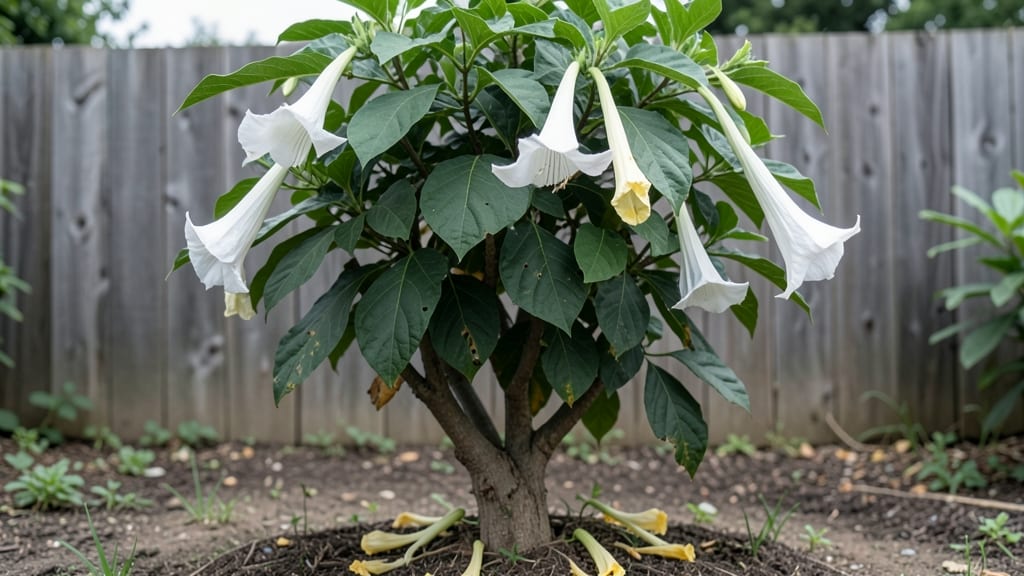
That first glimpse of white angel trumpet blooms at dusk is pure magic—soft, moonlit drama that transforms any Pacific Northwest garden into a dreamy retreat. 🌙 The way their trumpet-shaped flowers glow under porch lights or spill over trellises creates an atmosphere straight out of a storybook, especially when paired with deep greens or burgundy foliage.
What makes this plant a game-changer for PNW gardens? Unlike many tropicals, white angel trumpet (Brugmansia spp.) handles our cooler summers and milder winters better than expected—when sited correctly.
The vertical growth habit turns dead space into a living centerpiece, whether climbing a sturdy arbor, draping over a balcony railing, or spilling from a large container.
Imagine your garden at night: the scent of night-blooming jasmine mingling with the angel trumpet’s faint, intoxicating fragrance, while fireflies dance around the white petals. The contrast of creamy blooms against dark foliage or deep purple flowers creates a moonlit masterpiece that feels like a secret garden just for you.
Perfect for creating a tropical border, a moonlight garden focal point, or even a container showstopper—this plant delivers drama without the fuss. Let’s talk placement and styling to make yours unforgettable.
📚 In This Guide
- What you need
- Instructions
- Tips and common mistakes
- Wrapping up and next steps
What you need
- ● Angel Trumpet Seeds or Young Plants: Seeds: 5–10 (for multiple plants or backup growth) Young plants: 1–2 (for faster results, ensure they’re Brugmansia × candida or similar frost-hardy cultivars)
- ● Well-Draining Potting Mix: 1–2 bags (10–20 lbs each) of cactus/succulent mix or a blend of: 60% peat moss or coco coir 30% perlite or pumice 10% compost (for nutrients)
- ● Containers or Garden Bed: Containers: 5–10 gallon pots (with drainage holes) for each plant Garden Bed: Full sun to partial shade spot with 6+ hours of sunlight and shelter from strong winds
- ● Slow-Release Fertilizer: 1–2 cups of balanced 10-10-10 or 20-20-20 fertilizer (organic options like fish emulsion work too!)
- ● Mulch: 2–3 inches of wood chips or straw (to retain moisture and protect roots in cooler PNW climates)
Step-by-step guide to planting and cultivating angel trumpet for Pacific Northwest gardens
This frost-tolerant beauty thrives in vertical spaces—here's how to coax its dramatic blooms to life.
🌱 Step 1: Select the Perfect Planting Site and Prepare the Soil
Angel Trumpet (Brugmansia × candida) craves partial shade—think morning sun with afternoon shade—to prevent leaf scorch. In the Pacific Northwest's cooler climate, a north-facing wall or east-facing garden bed works best. The plant's massive, trumpet-shaped blooms grow 6-10 feet tall, so choose a spot where they won't block walkways or power lines.
Amend the soil with 3-4 inches of compost mixed into the top 12 inches of native soil. Angel Trumpet prefers well-draining, slightly acidic soil (pH 6.0-6.5). If your soil is heavy clay, add organic matter like leaf mold or peat moss to improve aeration. Test your soil's pH before planting—you can adjust it with sulfur for acidity or lime for alkalinity if needed.
🪴 Step 2: Plant with Care to Protect the Delicate Root System
Dig a hole twice as wide as the root ball but only as deep as the container it came in. Gently remove the plant from its pot and loosen any circling roots with your fingers—this encourages outward growth. Place the root ball in the hole, ensuring the top of the root ball sits level with the surrounding soil (never buried deeper).
Backfill with the amended soil, pressing lightly around the edges to eliminate air pockets. Water deeply to settle the soil and remove any gaps. Mulch with 3 inches of organic mulch (like shredded bark or wood chips) to retain moisture and regulate soil temperature. Keep the mulch 6 inches away from the stem to prevent rot.
☀️ Step 3: Establish Watering and Fertilizing Routines for Strong Growth
Water deeply 2-3 times per week during the first growing season, ensuring the soil stays evenly moist but not soggy. Angel Trumpet has shallow roots, so watering lightly at the surface won’t reach them. You’ll know it’s time to water when the top 2 inches of soil feel dry. In the Pacific Northwest’s rainy seasons, reduce watering to once a week unless the soil is bone-dry.
Feed with a balanced, slow-release fertilizer (10-10-10) at half-strength every 4-6 weeks during the growing season (spring through summer). In fall, switch to a low-nitrogen, high-phosphorus fertilizer (5-10-10) to encourage root development before dormancy. Avoid high-nitrogen fertilizers—they promote leafy growth at the expense of flowers.
✂️ Step 4: Prune for Shape and Encourage Floral Display
Prune in late winter or early spring before new growth begins. Remove dead, damaged, or crossing branches to improve airflow and reduce disease risk. Cut back overly long stems by one-third to encourage bushier growth. Angel Trumpet blooms on new wood, so avoid heavy pruning in fall—this prevents next year’s flowers from forming.
After flowering, trim back spent blooms to encourage more flowers. You’ll notice new buds forming at the leaf axils—these are where your next set of trumpet-shaped blooms will emerge. Deadhead regularly to keep the plant looking tidy and promote continuous blooming through the summer.
⏰ Step 5: Protect from Frost and Winter Care for Pacific Northwest Resilience
Angel Trumpet is frost-tolerant down to 20°F, but young plants or severe freezes may damage foliage. In the Pacific Northwest, mulch heavily (6-8 inches) around the base with straw or leaves before the first frost. This insulates the roots and protects against temperature swings. Wrap the lower trunk with burlap or frost cloth if your winters dip below 25°F for extended periods.
In late winter, remove winter protection once new growth appears. Resume watering lightly (every 10-14 days) to prevent drought stress during early spring. The plant will rebound quickly, and you’ll see new leaves and flower buds by early summer. With proper care, your Angel Trumpet will become a stunning vertical focal point in your garden for years to come.
Tips & tricks for perfect angel trumpet planting in Pacific Northwest gardens
These expert insights will help you transform your Angel Trumpet into a thriving vertical centerpiece that defies Pacific Northwest winters.
Soil Preparation Secret: The 3-4 inches of compost mixed into the top 12 inches of soil isn't just about nutrients—it's about creating the perfect air-to-soil ratio. Think of it like building a moisture-retaining sponge that still allows excess water to drain. For heavy clay soils, mix in equal parts leaf mold and peat moss to dramatically improve drainage while maintaining that crucial acidity (pH 6.0-6.5). I've seen Angel Trumpets struggle in compacted soil where roots can't breathe properly—this amendment makes all the difference.
Root System Care: When loosening circling roots, be gentle but thorough—you're not just preventing root-bound issues, you're encouraging outward growth that will support those massive blooms. The key is to work with your fingers rather than tools, which can damage delicate feeder roots. Remember, the top of the root ball must sit level with the surrounding soil—burying it deeper creates anaerobic conditions that lead to rot. This is where most beginner mistakes happen.
Watering Wisdom: Those shallow roots mean surface watering won't reach them. Instead, water deeply until you see moisture emerge from the drainage holes at the bottom of your pot or planting site. The "top 2 inches dry" rule is your guide—stick your finger in and feel for moisture. In our rainy climate, you'll often need to adjust to weekly watering, but always check before watering during wet seasons. Overwatering is the silent killer of Angel Trumpets.
Winter Protection Strategy: The 6-8 inches of mulch and frost cloth aren't just decorative—they create a microclimate that can protect your plant down to 20°F. The secret is applying mulch before the first frost, not after. I've seen plants survive 15°F with proper protection, though 25°F is the safer threshold. Remove protection gradually in late winter when you see new growth—don't strip it all off at once or you'll shock the plant.
Pro Tips for Angel Trumpet White Flower
- These expert insights will help you transform your Angel Trumpet into a thriving vertical centerpiece that defies Pacific Northwest winters.
- Soil Preparation Secret: The 3-4 inches of compost mixed into the top 12 inches of soil isn't just about nutrients—it's about creating the perfect air-to-soil ratio.
- Root System Care: When loosening circling roots, be gentle but thorough—you're not just preventing root-bound issues, you're encouraging outward growth that will support those massive blooms.
Frequently asked questions
Got questions about growing angel trumpet (Brugmansia) white flowers in the Pacific Northwest? You’re not alone!
Here are answers to the most common queries—from frost prep to troubleshooting—so your vertical garden drama stays dramatic and healthy.
Can angel trumpet white flowers survive PNW winters?
While angel trumpet (Brugmansia) is not fully frost-resistant, you can protect it! In the PNW’s mild winters, grow it as a tender perennial—dig up tubers in fall, store them indoors, and replant in spring. For year-round drama, plant in containers and winter them in a garage or greenhouse.
When should I plant angel trumpet in the PNW?
Wait until after the last frost (typically late May–early June in the PNW) to plant outdoors. Start seeds indoors 8–10 weeks earlier (March) for a head start. If using tubers, soak them in water for 24 hours before planting in well-draining soil.
What’s the best alternative if angel trumpet struggles in my climate?
Try these frost-tolerant vertical climbers for PNW gardens:
- Clematis (hardy to Zone 4!) – Choose varieties like ‘Jackmanii’ for lush blooms.
- Honeysuckle (Zone 4–9) – Fragrant and hummingbird-friendly.
- Passionflower (Zone 6–10) – Exotic foliage and edible fruits.
- Jasmine (Zone 7–10) – Sweet-scented and drought-tolerant.
All thrive in PNW’s cool summers and add vertical interest!
Why are my angel trumpet leaves turning yellow?
Yellow leaves often signal overwatering or poor drainage. Brugmansia hates soggy roots—ensure pots have drainage holes and soil dries slightly between waterings. Check for pests like spider mites (tiny webs on undersides) or nutrient deficiencies (feed with balanced fertilizer in spring/summer).
How do I prune angel trumpet for bushier growth?
Prune in early spring (before new growth) to shape the plant and encourage branching. Cut back leggy stems by ⅓ to a joint or leaf. Avoid heavy pruning in fall—it stresses the plant before winter. Wear gloves! Brugmansia sap can irritate skin.
Pro Tip:
Boost your angel trumpet’s resilience in the PNW by:
- Mulching heavily in fall to insulate roots.
- Plant in south-facing spots for max warmth.
- Water deeply but infrequently—drought stress is better than root rot!
With these tweaks, your white blooms will thrive like a PNW native!
Wrapping up and next steps
The angel trumpet white flower is a stunning, frost-resistant gem that brings vertical drama to Pacific Northwest gardens—perfect for adding elegance and structure to your outdoor space. 🌸 With its fragrant blooms and resilience, it’s an ideal choice for gardeners who love low-maintenance yet high-impact plants.
Whether you’re a seasoned gardener or just starting, this beauty is ready to elevate your landscape!
Ready to transform your garden? Start by selecting the perfect spot—whether it’s a sunny nook or a shaded corner—and gather your supplies. Then, dig in, plant with care, and watch your angel trumpet flourish! 🌿