
Companion Plants
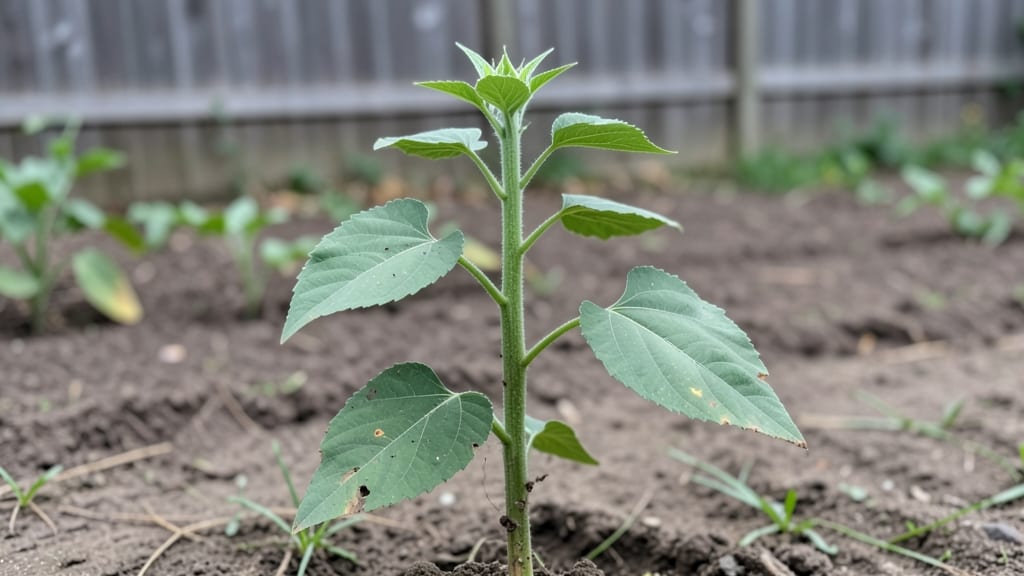
Sunflower plants before they flower look nothing like the towering giants you imagine—at first, they’re just velvety green seedlings with tiny, fuzzy leaves. 🌱 The very first leaves (cotyledons) are round and smooth, but true leaves appear within days: long, narrow, and slightly jagged at the edges, growing in a spiral pattern up the stem.
Those early stalks stay surprisingly thin—often just 1/8-inch wide—and grow 2-4 inches per day when conditions are right. The leaves get larger as the plant matures, but they’re always deep green with a slightly hairy texture that helps distinguish them from weeds or other seedlings.
By the time they’re 6-12 inches tall, you’ll notice the classic sunflower shape forming: a sturdy, slightly woody stem with leaves arranged alternately along it.
The top leaves start to look more like the mature ones—longer, broader, and slightly lobed—but the plant still has no hint of that golden center.
Here’s the trick: sunflower seedlings bolt upward quickly once they’ve got 4-6 true leaves, so if you’re growing them from seed, watch for that rapid growth spurt.
The earlier you recognize these stages, the better you can protect them from pests or give them the space they’ll need to reach their full height.
📚 In This Guide
- What you need
- Instructions
- Tips and common mistakes
- Wrapping up and next steps
What you need
- ● Sunflower seeds: Non-GMO, heirloom, or hybrid varieties (e.g., Mammoth, Teddy Bear, or Russian Giant). Buy 50–100 seeds for a small patch or 500+ seeds for a full garden bed.
- ● Well-draining potting mix or garden soil: A blend with compost (e.g., 50% topsoil + 50% compost) or a seed-starting mix for indoor germination.
- ○ Containers (optional for indoor starts): Biodegradable seedling pots (2–3 inch diameter, 50–100 units)
- ● OR a seed tray with 50+ cells
- ● Watering can or spray bottle: With a fine mist nozzle for gentle watering.
- ● Garden trowel or small shovel: For transplanting seedlings (if not using biodegradable pots).
- ○ Fertilizer (optional but helpful): A balanced 10-10-10 or 5-10-10 granular fertilizer for transplanting.
- ● OR a liquid seaweed fertilizer (1 tbsp per gallon of water) for early growth.
- ● Garden journal or notebook: To track growth stages and leaf development.
- ● Plant labels: Wooden or metal stakes with markers to identify varieties.
- ● Row covers or shade cloth: 30–50% shade cloth if growing in hot climates (prevents bolting too early).
- ● Pruning shears: For trimming lower leaves to encourage stalk strength (once plants reach 12+ inches).
- ● Camera or smartphone: To document the pre-flowering stages—because those rosette leaves are adorable!
How to identify sunflower growth stages before blooming
Sunflowers go through distinct transformations before their iconic blooms appear—here’s what to watch for.
🌱 Step 1: Spot the First True Leaves and Cotyledons
Right after germination, sunflower seedlings emerge with two small, rounded leaves called cotyledons. These aren’t true leaves but the plant’s first food source, storing energy from the seed. Within 5-7 days, the first set of true leaves appears—longer, jagged, and lance-shaped, with a slightly fuzzy texture. These leaves are your signal the plant is established and ready for growth.
Here’s the thing—I’ve seen beginners mistake cotyledons for true leaves and panic when the plant seems "stuck." Don’t overwater at this stage; the soil should stay lightly moist but never soggy. You’ll know you’re on track when the stem thickens and the first true leaves unfurl in a V-shape.
🌿 Step 2: Observe the Rapid Stem and Leaf Expansion Phase
Once the plant has 4-6 true leaves, it enters its most vigorous growth phase. The stem elongates quickly, often reaching 1-2 feet tall within 3-4 weeks. The leaves grow larger, developing a rough, hairy texture along the edges. At this stage, sunflowers look like tall, bushy green stalks with alternating leaves that can stretch up to 8 inches long.
Real talk: this is where leggy growth can happen if the plant isn’t getting enough light. If the stem stretches thin and pale with leaves spaced far apart, move it to a sunnier spot immediately. Healthy stems should be sturdy and upright, with deep green leaves that feel slightly waxy to the touch.
☀️ Step 3: Recognize the Bud Formation Stage
About 6-8 weeks after germination, the sunflower’s true transformation begins. You’ll notice a small, tight cluster of leaves at the top of the stem—this is the flower bud. Initially, it looks like a compact, fuzzy green ball, often hidden among the upper leaves. Over 1-2 weeks, the bud swells and develops a slightly elongated shape, with a visible bump where the flower will emerge.
Don’t mistake this for a pest or disease—it’s the plant’s way of preparing for bloom. Here’s what I do: I gently brush away any lower leaves that might shade the bud. This ensures the flower gets maximum sunlight and develops fully. You’ll see the bud’s edges start to split open, revealing the first hints of yellow or orange beneath the green petals.
⏰ Step 4: Watch for the Final Pre-Bloom Signs
The last stage before flowering is when the bud doubles in size and the outer green bracts begin to peel back. The flower head will look like a tightly packed, fuzzy ball with a raised center where the disc florets are forming. The edges may start to show faint color—yellow, orange, or even red—depending on the variety. This happens 3-5 days before full bloom.
This is the moment that matters: the bud will feel slightly firm to the touch, almost like a small, round melon. If you tap it gently, you might hear a faint crunching sound from the developing florets inside. Once the edges of the bud start to curl outward, you’re just hours away from a full bloom—so keep an eye on it!
Tips & tricks for perfect sunflower growth observation
Identifying sunflower growth stages becomes effortless with these key insights that go beyond what you'll see in the guide.
Leaf Shape Matters: In Step 1, the transition from cotyledons to true leaves is your first clear indicator of healthy growth. The true leaves should unfurl in a V-shape with jagged edges—this tells you the plant is photosynthesizing efficiently. If you notice leaves that are more rounded or have smooth edges, it might signal nutrient deficiencies or overwatering. I've seen beginners overwater during this stage, thinking the plant needs more moisture when it's actually just adjusting to sunlight.
Stem Strength is Telling: During the rapid growth phase (Step 2), pay attention to stem thickness. A healthy sunflower stem should feel sturdy when you gently squeeze it—almost like a pencil. If it's hollow-sounding or easily bends, the plant needs more sunlight or possibly a stake for support. I learned this the hard way when my first sunflower collapsed under its own weight because I didn't notice the stem weakening until it was too late.
Bud Inspection Technique: When you reach Step 3 and spot that fuzzy green ball, here's what I do: I examine the bud's base where it meets the stem. Healthy buds will have a slight swelling at the base that feels firm but not hard. If you see any black spots or soft areas, it could indicate fungal issues. The key is to gently brush away lower leaves that might shade the bud—this simple step can make the difference between a vibrant bloom and a weak one.
Pre-Bloom Texture Test: In the final stage (Step 4), the "melon-like firmness" is your best indicator of imminent blooming. When you tap a healthy bud, you should hear that faint crunching sound from the developing florets. This happens because the disc florets in the center are starting to harden. If the bud feels mushy or hollow, it might not bloom properly—this is your plant's way of signaling stress, often from inconsistent watering or temperature fluctuations.
Pro Tips for What Do Sunflower Plants Look Like Before They Flower
- Identifying sunflower growth stages becomes effortless with these key insights that go beyond what you'll see in the guide.
- Leaf Shape Matters: In Step 1, the transition from cotyledons to true leaves is your first clear indicator of healthy growth.
- Stem Strength is Telling: During the rapid growth phase (Step 2), pay attention to stem thickness.
Frequently asked questions
Got questions about sunflower seedlings and early growth? You’re not alone! Here are some of the most common queries—plus quick, actionable answers to help you nurture your sunflowers from sprout to bloom.
How long does it take for sunflower seedlings to emerge?
Sunflower seeds typically sprout in 7–14 days after planting, depending on soil temperature and moisture. If you’ve planted in warm, well-drained soil (60–70°F), expect tiny green shoots to peek through the soil within 1–2 weeks. Patience is key—cool or soggy soil can delay germination.
What do sunflower leaves look like in the early stages?
Young sunflower leaves are oval-shaped, fuzzy, and bright green, resembling elongated versions of a dandelion’s leaves. The first true leaves appear 2–3 inches long and grow in a spiral pattern. As the plant matures, leaves become broader and less fuzzy, but the early stages are all about those soft, velvety textures!
How do I know if my sunflower is healthy before flowering?
A healthy pre-flowering sunflower should have sturdy stems, vibrant leaves, and no yellowing or wilting. Check for pest damage (chewed leaves, holes) or disease signs (black spots, mold). If the stalk is hollow or leaves are curling, it may need more sunlight, water, or nutrients. A quick soil test can also reveal hidden deficiencies!
Can I grow sunflowers indoors before transplanting outdoors?
Yes! Start seeds indoors 2–3 weeks before your last frost date in biodegradable pots or seed trays. Keep soil moist and provide 6–8 hours of sunlight daily (a grow light works if natural light is limited). Once seedlings have 2–4 true leaves and are 3–4 inches tall, they’re ready to harden off and transplant outdoors.
Why isn’t my sunflower growing tall or flowering?
Slow growth or no flowering often stems from lack of sunlight, poor soil, or overcrowding. Sunflowers need at least 6–8 hours of direct sunlight daily. If your plant is leggy or weak, try thinning seedlings (leave 12–18 inches between plants) and fertilizing with a balanced 10-10-10 mix. Dwarf varieties may also take longer to mature—check your seed packet for expected height!
Wrapping up and next steps
From their tiny sprouts to their bold, leafy stalks, sunflowers undergo a fascinating transformation before blooming. Recognizing their early growth stages—like the cotyledons and serrated leaves—helps you nurture them with confidence.
Whether you're a gardener or just curious, now’s the perfect time to plant, observe, and celebrate these cheerful plants!
🌱 Next step: Grab some seeds, find a sunny spot, and watch the magic unfold! Ready to grow your own sunflowers? Start here with our planting guide.