
Planting
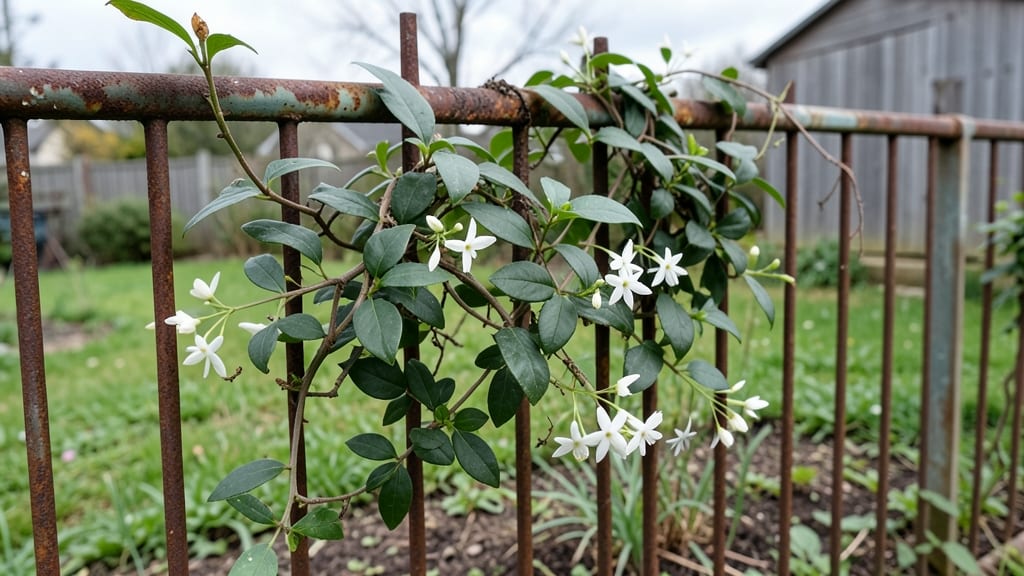
The delicate star jasmine flower plant’s intoxicating scent will transform your Pacific Northwest garden into a fragrant paradise. Star jasmine (Trachelospermum jasminoides) delivers it year after year—if you nail its care.
I’ve grown mine through three wet winters and two dry summers in Zone 8, and the secret isn’t complicated: it’s all about the soil, the trellis, and knowing when to back off.
The plant thrives in well-draining, slightly acidic soil (think 6.0–7.0 pH) and needs partial shade to protect its delicate leaves—critical in our region’s mix of sun and drizzle. Once established, it’s shockingly drought-tolerant, but young plants need weekly watering until roots spread.
The real magic happens when you train it up a sturdy trellis or arbor, where those snow-white, star-shaped blooms cascade like a fragrant waterfall.
By midsummer, your climbable wall of jasmine will perfume the air at dusk, drawing hummingbirds and neighbors alike. Pruning after flowering keeps it tidy, and a light winter trim prevents wind damage.
The best part? It’s nearly pest-proof and handles our zone’s mild winters with ease—just mulch well to protect roots. Here’s how to get started without the guesswork.
Whether you’re training it over a pergola or a simple fence, star jasmine transforms any space into a fragrant retreat. The key is patience: it takes 2–3 years to fully bloom, but once it does, you’ll wonder how you ever lived without it. Let’s get those roots in the ground!
📚 In This Guide
- What you need
- Instructions
- Tips and common mistakes
- Wrapping up and next steps
What you need
- ● Star jasmine plant: 1 nursery-grown plant (preferred for faster results) or seeds/cuttings (if starting from scratch).
- ● Well-draining potting mix: 1 bag (1-2 cubic feet) of organic garden soil mixed with perlite or sand (for aeration).
- ● Container or garden bed: For containers: 1 5-gallon pot or larger (with drainage holes) per plant.
- ● For in-ground planting: A sunny, sheltered spot with loose, well-drained soil.
- ● Mulch: 1 bag of organic mulch (e.g., shredded bark or pine needles) to retain moisture.
- ● Watering can or hose: With a gentle spray nozzle for even moisture.
- ○ Fertilizer (optional but recommended): 1 balanced, slow-release fertilizer (10-10-10 or 20-20-20) for planting.
- ● 1 liquid bloom booster (e.g., fish emulsion or compost tea) for flowering.
- ● Garden gloves (to protect hands from thorns or rough soil).
- ● Trowel or small shovel (for transplanting or digging holes).
- ● Pruning shears (for shaping and maintaining vines).
- ● Trellis, arbor, or fence (if growing as a climber—6+ feet tall for full coverage).
- ○ pH testing kit (optional) (to check soil acidity—ideal range: 6.0–7.0).
- ● Sunlight: Full sun to partial shade (6+ hours of sunlight daily in Pacific Northwest zones).
- ● Climate: Thrives in USDA Zones 7–10 (hardy to 10°F with winter protection).
- ● Watering routine: Keep soil consistently moist but not soggy (especially during establishment).
- ● Patience: Star jasmine grows 1–2 feet per year—full fragrance and blooms take 2–3 years!
Step-by-Step guide to planting and caring for star jasmine in the Pacific Northwest
This fragrant climber thrives with the right approach—here’s how to plant and nurture it for years of sweet blooms.
Choose the Perfect Planting Location
Star jasmine (Trachelospermum jasminoides) craves full sun to partial shade, ideally 6 hours of direct sunlight daily. In the Pacific Northwest’s cooler climate, a spot with morning sun and afternoon shade prevents heat stress while ensuring strong blooms. Avoid low-lying areas where cold air settles—this plant is semi-evergreen but can suffer frost damage below 20°F.
Test your site by observing how sunlight moves across it throughout the day. If your yard has dense shade from large trees, opt for a location near a south-facing wall or fence where reflected light can supplement natural sunlight. The roots appreciate well-draining soil, so if your garden holds moisture poorly, consider amending with 1-2 inches of compost before planting.
Plant at the Right Time and Depth
Spring is the ideal time to plant star jasmine in the Pacific Northwest, after the last frost date when soil temperatures reach at least 60°F. Dig a hole twice as wide as the root ball but only as deep—planting too deep can suffocate the roots. Gently loosen the roots if they’re circling tightly in the container, then position the plant so the top of the root ball sits level with the surrounding soil.
Backfill with native soil mixed with compost (about 1 part compost to 3 parts soil) to improve drainage and fertility. Water deeply immediately after planting to settle the soil and eliminate air pockets. You’ll know it’s right when water drains freely through the hole—no puddling. Mulch around the base with 2-3 inches of organic mulch (like wood chips) to retain moisture and regulate soil temperature.
Provide Support and Prune for Healthy Growth
Star jasmine is a vigorous climber, so install a trellis, arbor, or fence at planting to guide its growth. Use soft ties or twine to attach stems gently—avoid wire or anything that can damage the bark. Prune in late winter or early spring before new growth begins. Remove dead or crossing branches first, then trim back any overly long stems by one-third to encourage bushier, more fragrant blooms.
This plant blooms on new wood, so avoid heavy pruning after flowering. If you notice leggy growth, it’s a sign of insufficient light—relocate or supplement with a grow light for 12-14 hours daily during shorter winter days. Fertilize lightly in early spring with a balanced, slow-release fertilizer (10-10-10) to support vigorous growth without overstimulating foliage at the expense of flowers.
Water and Maintain for Long-Term Success
Water deeply once a week during the first growing season to establish roots, then every 10-14 days once established—adjust based on rainfall. Star jasmine is drought-tolerant once mature but produces the most fragrant blooms with consistent moisture. You’ll know it’s thirsty when the top inch of soil feels dry to the touch. Avoid overhead watering to prevent fungal diseases like powdery mildew, which can discolor leaves and reduce flowering.
Monitor for pests like aphids or spider mites, which thrive in dry conditions. Treat infestations early with neem oil or a hose blast to dislodge pests. In the Pacific Northwest’s mild winters, star jasmine may retain some foliage, but a light pruning in late winter keeps the plant tidy and encourages fresh growth. With the right care, your star jasmine will reward you with sweet, jasmine-scented blooms from late spring through summer.
Tips & tricks for perfect star jasmine planting and care
A few strategic moves will ensure your star jasmine thrives in the Pacific Northwest's unique climate and delivers those signature fragrant blooms year after year.
Sunlight Strategy: The 6 hours of daily sunlight mentioned in Step 1 is non-negotiable for blooming success. In our cooler climate, I recommend supplementing with a south-facing wall or reflective surface during winter months when daylight is shorter. This mimics the morning sun/afternoon shade balance while preventing the heat stress that can occur with full afternoon sun. Think of it as giving your plant a gentle boost when nature's light is at its weakest.
Soil Preparation Secret: When amending with compost in Step 2, don't just toss it in the hole—mix it thoroughly with the native soil to create a uniform growing medium. The 1-2 inches recommendation is perfect, but I've found adding a handful of perlite to this mixture works wonders for our region's often dense soils. This prevents compaction and ensures those roots can breathe properly, which is crucial for establishing star jasmine in our moist Pacific Northwest climate.
Pruning Precision: That one-third trim in Step 3 might seem drastic, but it's actually the key to encouraging bushier growth and more fragrant blooms. I've learned the hard way that pruning too late in spring can remove next year's flower buds. Mark your calendar for late winter when dormant buds are just starting to swell—this is your perfect pruning window. And remember, you're shaping the plant's future growth pattern with each cut.
Watering Wisdom: The once-weekly watering in Step 4 assumes average rainfall conditions, but our region's unpredictable weather means you'll need to adjust. I check soil moisture by pushing my finger about an inch deep—if it's dry, that's your cue to water. For container-grown star jasmine, you'll need to water more frequently, sometimes every 5-7 days, as pots dry out faster. The key is maintaining that consistent moisture without waterlogging the roots.
Pro Tips for Star Jasmine Flower Plant
- A few strategic moves will ensure your star jasmine thrives in the Pacific Northwest's unique climate and delivers those signature fragrant blooms year after year.
- Sunlight Strategy: The 6 hours of daily sunlight mentioned in Step 1 is non-negotiable for blooming success.
- Soil Preparation Secret: When amending with compost in Step 2, don't just toss it in the hole—mix it thoroughly with the native soil to create a uniform growing medium.
Frequently asked questions
Got questions about growing star jasmine? You’re not alone—this fragrant climber is beloved but can have a few quirks! Here are answers to the most common queries to help you cultivate a thriving vine.
How fast does star jasmine grow, and when will it bloom?
Star jasmine grows moderately fast—about 12–24 inches per year—but can surge faster with ideal conditions (sun, moisture, and support). Blooms typically appear in late spring to early summer (May–June in the PNW), with repeat flowers in fall if deadheaded. Patience pays off: full fragrance and lush growth often take 2–3 years.
Is star jasmine cold-hardy for Pacific Northwest winters?
Yes! This plant is USDA Zones 7–10 hardy, making it perfect for the PNW’s mild winters. In colder microclimates (e.g., Zone 6), mulch the base with 3–4 inches of wood chips or wrap young vines in burlap. Prune back dead growth in early spring—new shoots are tougher and more vigorous.
How often should I water star jasmine, and does it need fertilizer?
Water deeply 1–2 times per week in dry spells (check soil 2 inches down—it should be slightly moist, not soggy). Once established (Year 2+), it’s drought-tolerant. Fertilize once in spring with a balanced 10-10-10 or slow-release granular. Avoid over-fertilizing—too much nitrogen = fewer flowers!
Can star jasmine grow in containers, or does it need a trellis?
It thrives in large containers (15+ gallons) with well-draining soil and regular watering. For vertical growth, use a trellis, arbor, or fence—its vines twine naturally but need support to climb. In pots, prune aggressively in late winter to encourage bushier growth. Pro tip: Add perlite to potting mix for aeration.
Why aren’t my star jasmine leaves or flowers dropping?
Dropping leaves/flowers usually signals stress. Check for:
- Underwatering (wilting, crispy edges) or overwatering (yellowing, mold).
- Pests like spider mites or aphids (spray with neem oil if infested).
- Poor drainage (root rot). Ensure pots have drainage holes.
- Nutrient deficiency (pale leaves = needs iron; fertilizer in spring helps).
If the issue persists, move to a sunnier spot—star jasmine loves 6+ hours of light daily.
What’s a good alternative if star jasmine doesn’t thrive in my garden?
If your site is too shady, wet, or windy, try these fragrant PNW-friendly climbers:
- Clematis (varieties like ‘Jackmanii’ for sun, ‘Fountain’ for shade).
- Honeysuckle (e.g., ‘Golden Gate’—drought-tolerant, attracts pollinators).
- Wisteria (for bold blooms; needs more space and pruning).
- Jasmine ‘Primrose’ (hardier than star jasmine, blooms later in summer).
All offer fragrance but with different care needs—match the plant to your microclimate!
Wrapping up and next steps
Growing star jasmine (Trachelospermum jasminoides) is a rewarding journey that brings fragrant beauty to your Pacific Northwest garden! 🌿 With its low-maintenance nature and stunning blooms, this climbing vine is perfect for adding charm to trellises, fences, or even containers.
Whether you're a seasoned gardener or just starting, its resilience and adaptability make it a fantastic choice.
Ready to transform your outdoor space? Start by gathering your supplies, choosing the right location, and following the simple steps outlined above. Before you know it, you’ll be enjoying the sweet, intoxicating scent of star jasmine in full bloom—nature’s way of saying, “You’ve done great!” 🌸