Landscaping
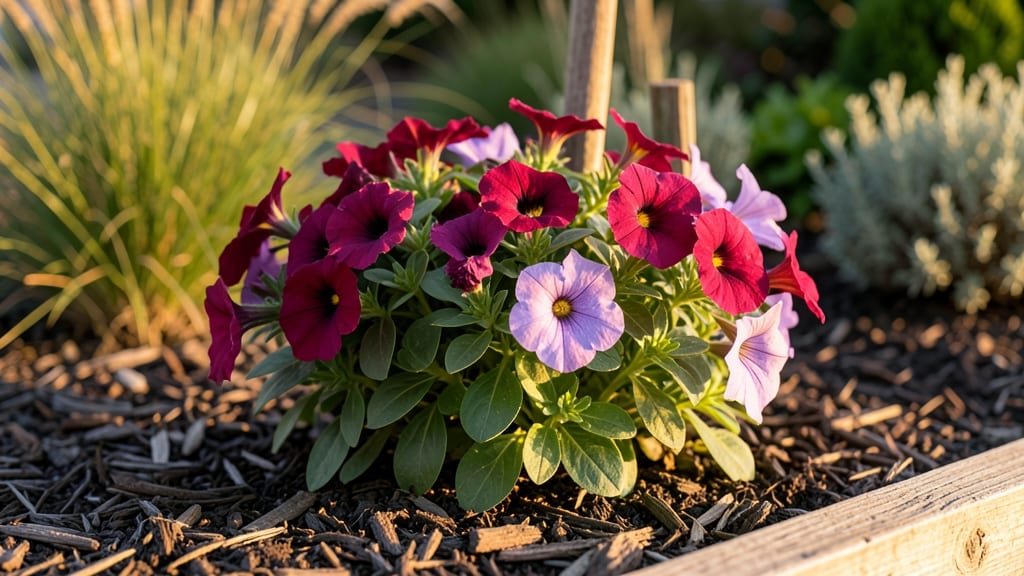
Here are some petunia flower bed ideas that turn bare soil into a riot of color—just tuck them in, water lightly, and let them shine all season long. 🌸 shine without competing.
The key is grouping them in bold blocks (think deep purple, hot pink, or sunny yellow) so they make an impact from the sidewalk, not just up close.
My go-to setup uses three petunia varieties per bed—one trailing type for edges, one bushy type for height, and one spill-over variety for containers. Pair them with drought-tolerant plants like snapdragons or dusty miller to keep the bed looking fresh even when you’re not deadheading.
The spacing trick? Plant petunias 10-12 inches apart—they’ll fill in fast, but not so close they suffocate each other.
By midsummer, you’ll have a nonstop show of blooms that lasts until frost, with colors so intense they’ll make your neighbors ask for your secret. The best part? Petunias thrive in partial sun (4-6 hours daily), so they’re perfect for shady spots where other annuals fail.
Add a few pollinator-friendly companions like lobelia or sweet alyssum, and you’ve got a bed that’s both beautiful and bee-friendly.
Whether you’re framing a front door, lining a walkway, or filling a raised bed, petunias deliver instant curb appeal with minimal effort. Start with a clear vision of your color palette—monochromatic for drama, or mixed for a wildflower effect—and let the petunias do the heavy lifting.
Ready to make your yard the talk of the neighborhood?
📚 In This Guide
- What you need
- Instructions
- Tips and common mistakes
- Wrapping up and next steps
What you need
- ● Petunia plants: Choose 10–20 plants per 4’x4’ bed (adjust for size). Opt for trailing varieties (e.g., 'Wave' or 'Tumbling Waterfalls') for edges or bush types (e.g., 'Mitchell' or 'Easy Wave') for dense color blocks.
- ● Potting soil: 2–3 cubic feet per 4’x4’ bed. Use a well-draining, peat-based mix (e.g., Miracle-Gro Potting Mix) or amend garden soil with compost (50%) and perlite (20%) for aeration.
- ● Mulch: 1–2 inches of pine bark nuggets, shredded bark, or black plastic mulch to retain moisture and suppress weeds.
- ● Fertilizer: Slow-release granular fertilizer (10-10-10 or 14-14-14)—1 tbsp per plant—or liquid bloom booster (e.g., Miracle-Gro Bloom Booster) for weekly feeding.
- ○ Stakes/ties (optional): 6–10 bamboo stakes or spiral ties for trailing varieties to climb trellises or cascading structures.
- ● Garden trowel (for planting and soil amendments).
- ● Garden fork or spade (to loosen soil in the bed).
- ● Measuring tape or string (to mark bed dimensions).
- ● Gloves (to keep hands clean and protected).
- ● Watering can or hose with nozzle (for gentle hydration).
- ○ Pruners (optional) (for trimming leggy stems or deadheading).
- ● Sunlight: Full sun (6+ hours daily) for optimal blooms. Partial shade (4–6 hours) works for cooler climates.
- ● Drainage: Ensure the bed isn’t soggy—petunias hate wet feet! Elevate beds if needed or mix in sand (10%) for clay soil.
- ● Spacing: 12–18 inches apart for bush types; 10–12 inches for trailing varieties.
- ● Timing: Plant after the last frost (spring) or early summer for continuous blooms.
Step-by-Step guide to creating bold petunia color blocks
Here's how I design petunia beds that pop with color while keeping maintenance simple and stress-free.
🌿 Step 1: Choose a Sunny, Open Location
Petunias thrive in full sun—at least 6-8 hours daily. Scan your yard for spots where sunlight hits directly, like south-facing beds or areas near the house. Avoid spots where trees or structures cast shade after noon, as afternoon sun is crucial for petunia blooms.
Check the soil drainage by digging a 6-inch hole—if water pools after 30 minutes, amend with 2-3 inches of compost or plant in raised beds. I always test drainage first because soggy roots are petunias' worst enemy. The soil should feel slightly damp but not wet when you squeeze it.
☀️ Step 2: Plan Your Color Block Layout
Sketch a simple grid on paper to map your design. For bold blocks, group 3-5 petunia varieties together in 2-foot squares. Mix heights—taller varieties like 'Wave' petunias (12-18 inches) go in the back, while trailing types like 'Supertunia' (6-10 inches) spill over edges. I like to repeat one or two varieties as "anchors" to tie the design together.
Leave 18-24 inches between blocks for easy access when watering or deadheading. Avoid tight clusters—petunias need air circulation to prevent fungal diseases. If your bed is narrow, plant in staggered rows instead of a solid block for better airflow.
🪴 Step 3: Prepare the Soil for Healthy Roots
Loosen the top 12 inches of soil with a garden fork or tiller to break up compaction. Work in 2-3 inches of compost or a balanced 10-10-10 fertilizer to give roots a nutrient boost right away. Petunias are heavy feeders, so don't skimp on organic matter—this ensures vibrant blooms all season.
Rake the surface smooth and create shallow planting holes—just deep enough to bury the roots without burying the stems. I like to make holes slightly larger than the root balls (about 1 inch wider) to encourage roots to spread quickly. Water the holes gently before planting to help roots settle in.
🌱 Step 4: Plant Petunias for Maximum Impact
Remove petunias from their pots and gently tease apart crowded roots—this prevents future tangling. Space plants 10-12 inches apart in rows, or 12-18 inches apart if you want a denser look. Plant at the same depth they were in the pot, with the top of the root ball just below soil level. Press soil lightly around each plant to eliminate air pockets.
Water immediately after planting to help soil settle and remove any air gaps. I like to use a watering wand to gently soak the roots without disturbing the soil surface. Avoid stepping on the bed—compacted soil slows root growth and reduces blooms. Mulch with 1-2 inches of shredded bark or straw to retain moisture and suppress weeds.
💧 Step 5: Water and Maintain for Continuous Blooms
Water petunias deeply 2-3 times weekly—aim for 1 inch of water per week. Check soil moisture by sticking your finger 1 inch deep; if it feels dry, it's time to water. I water in the morning so foliage dries quickly, reducing disease risk. Avoid overhead watering after dark to prevent fungal issues.
Deadhead spent blooms weekly to encourage more flowers. Pinch off faded flowers at the base with your fingers or snip with clean scissors. Feed every 2-3 weeks with a liquid bloom booster (like 20-20-20) to keep colors vibrant. If petunias look leggy, trim back by 1/3 to encourage bushier growth and more blooms.
Tips & tricks for perfect petunia color block designs
A few simple strategies that'll transform your petunia beds from ordinary to show-stopping with minimal effort.
Sunlight Secret: The 6-8 hours of daily sun in Step 1 is non-negotiable for vibrant blooms. I've learned that morning sun (6am-12pm) is especially crucial—it kickstarts photosynthesis early. If your yard has afternoon shade, consider using trailing varieties like 'Supertunia' that can handle partial shade better than upright types.
Drainage Test: That 30-minute drainage check in Step 1 is your best friend. If water pools, don't just add more compost—create raised beds or mounds with the existing soil. I've seen petunias wilt dramatically in soggy soil, and it's always a drainage issue. A simple test with a 6-inch hole saves hours of frustration later.
Color Block Pro Tip: When planning your 2-foot squares in Step 2, use the "rule of thirds" for visual impact. Place your most vibrant color in one corner of the block, then balance with two neutral colors. This creates depth without overwhelming the eye. I've found this works especially well with purple petunias as the focal point.
Maintenance Hack: The 18-24 inch spacing in Step 2 isn't just about access—it's about airflow. I've discovered that petunias planted too closely develop powdery mildew faster. Use a simple tape measure to mark your spacing before planting, and you'll never have crowded clusters again.
Pro Tips for Petunia Flower Bed Ideas
- A few simple strategies that'll transform your petunia beds from ordinary to show-stopping with minimal effort.
- Sunlight Secret: The 6-8 hours of daily sun in Step 1 is non-negotiable for vibrant blooms.
- Drainage Test: That 30-minute drainage check in Step 1 is your best friend.
Frequently asked questions
Got questions about creating a stunning petunia flower bed? You’re not alone!
Here are answers to the most common queries—so you can dive right into planting with confidence.
When is the best time to plant petunias?
Petunias thrive in warm soil, so aim for after the last frost (typically late spring in most regions). For a head start, start seeds indoors 8–10 weeks before the last frost. If you’re in a hot climate, plant in early spring or fall to avoid summer heat stress.
How often should I water my petunia flower bed?
Petunias love consistent moisture—water daily in hot weather (or when the top inch of soil feels dry). Mulch helps retain water, and morning watering prevents fungal issues. Avoid soggy soil; petunias hate "wet feet."
What pests or diseases should I watch for?
Common culprits include aphids, spider mites, and whiteflies. Neem oil or insecticidal soap can help. For diseases, powdery mildew (from poor airflow) and blossom rot (from overwatering) are risks. Space plants 12–18 inches apart and deadhead regularly to improve airflow.
Can I mix petunias with other flowers?
Petunias pair beautifully with salvias, marigolds, or calibrachoas for a low-maintenance combo. For height contrast, add shrubs like boxwoods or tall grasses. Just ensure companions have similar sunlight and water needs—petunias prefer full sun (6+ hours/day).
How long do petunias bloom, and how do I keep them flowering?
With proper care, petunias bloom all summer long (and sometimes into fall!). To extend blooms: deadhead spent flowers weekly, fertilize every 2–3 weeks with a balanced, water-soluble fertilizer, and prune leggy stems. Succulent petunias (like 'Wave' or 'Superbells') are especially long-lasting.
What if my petunias look sad or stop blooming?
Yellow leaves? Overwatering or nutrient deficiency—check drainage and fertilize. Fewer blooms? Too much shade or lack of pruning. Move to sunnier spot if needed, and trim back 1/3 of the plant to encourage new growth. Petunias are forgiving—they often bounce back with a little TLC!
Wrapping up and next steps
Transforming your space with petunia flower beds is easier—and more rewarding—than you think! Whether you love bold color blocks, low-maintenance beauty, or a mix of both, these ideas prove that stunning gardens don’t require fuss.
With the right prep, your petunias will thrive, turning even small patches into vibrant, eye-catching displays.
Ready to dive in? Grab your gloves, pick your colors, and start planting! 🌸 For extra inspiration, browse seasonal trends or sketch your dream layout before breaking ground. Your future garden will thank you!