Planting
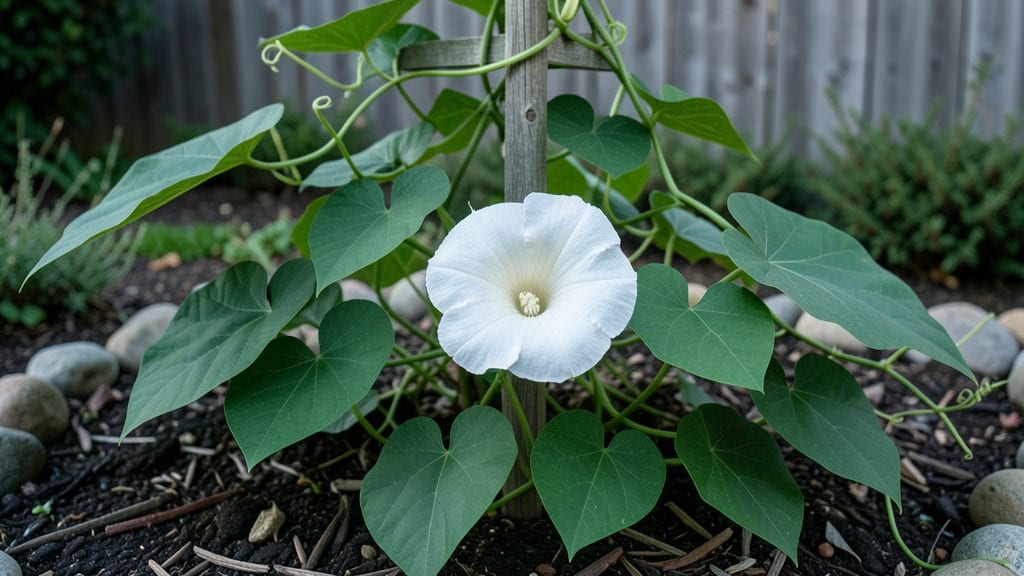
The moonflower vine (Ipomoea alba) unfurls its ghostly white blooms only after sunset—transforming your Pacific Northwest garden into a twilight hummingbird haven. 🌙 I planted mine last summer along a fence, and by August, the vines had spiraled up 12 feet, each evening revealing huge, fragrant flowers that glow under porch lights.
The key to coaxing this fast grower to thrive lies in matching its tropical roots to your region's cooler climate.
Moonflowers demand full sun (at least 6 hours daily) and well-draining soil—amend heavy Pacific Northwest clay with compost to prevent soggy roots. Water deeply 2-3 times per week once established, but let the top inch dry between waterings to avoid fungal issues.
The vines grow 10-15 feet per season, so install a sturdy trellis or fence early. Hummingbirds and moths will find you within days of the first bloom.
By midsummer, you'll have a living lantern that blooms June through September, with each flower lasting just one night. Prune leggy growth in spring to encourage bushier vines, and save seeds from dried pods for next year's plants.
The trade-off? Moonflowers are annuals here, but their dramatic beauty makes them worth replanting every season.
For extended blooms, deadhead spent flowers in the morning before they set seed. In cooler PNW summers, a black plastic mulch sheet around the base can add 5-10°F of warmth to trigger more blooms. The vines handle our damp winters if given a sheltered spot—they'll resprout like weeds in spring.
📚 In This Guide
- What you need
- Instructions
- Tips and common mistakes
- Wrapping up and next steps
What you need
- ● Moonflower vine seeds: 3–5 seeds (or 1–2 starter plants from a nursery)
- ● Well-draining potting mix: 5–10 gallons (for containers) or amended garden soil (for in-ground planting)
- ● Organic compost: 1–2 cups (to enrich soil fertility)
- ○ Slow-release fertilizer (optional but recommended): 5–10-5 NPK ratio, 1–2 tbsp per plant
- ● Trellis, fence, or sturdy support: 6–10 feet tall (moonflowers climb vigorously!)
- ● Watering can or hose with a gentle spray nozzle
- ● Pruning shears (sterilized)
- ● Garden gloves (to protect hands from thorns)
- ● Trowel or small shovel (for transplanting)
- ● Mulch (straw or wood chips): 2–3 inches (to retain moisture)
- ● Drip irrigation system or soaker hose (for consistent watering)
- ○ Hummingbird feeder (optional): Place near the vine to attract pollinators!
- ● Plant markers or stakes (to label your moonflower)
- ● Sunlight: Full sun (6+ hours daily) or partial shade (4–6 hours)
- ● Climate: USDA Hardiness Zones 10–12 (or grow as an annual in cooler PNW zones)
- ● Soil pH: Slightly acidic to neutral (6.0–7.0)
- ● Patience: Moonflowers grow fast but need time to establish!
Step-by-Step guide to growing moonflower vines in the Pacific Northwest
Here's how to grow these twilight-blooming beauties that hummingbirds adore—no fancy tricks required.
🌱 Step 1: Choose the Right Location and Plant at the Right Time
Moonflowers thrive in full sun to partial shade, making them perfect for Pacific Northwest gardens where afternoon shade helps prevent wilting. Plant your seeds or young vines after the last frost date—typically mid-May to early June in most PNW regions. If you're starting from seed, sow them directly in the garden ¼ inch deep in late spring for best results.
I always test the soil first by squeezing a handful—if it crumbles easily, it's ready. Moonflowers love well-draining soil, so if your garden soil is heavy clay, mix in a few inches of compost to improve drainage. The key is planting where the vine can climb naturally, whether on a trellis, fence, or pergola—just give it 6-10 feet of vertical space to spread.
💧 Step 2: Water Deeply and Consistently During Establishment
Keep the soil evenly moist but not soggy during the first 4-6 weeks after planting. Water deeply once a week unless you've had heavy rain, aiming for 1-2 inches of water per week. You'll know you're doing it right when the top 2 inches of soil feel damp but not waterlogged.
Moonflowers are drought-tolerant once established, but young plants need consistent moisture. I water in the early morning to reduce evaporation and prevent fungal diseases. If you notice the leaves wilting in the heat, give it a good drink right away—these vines bounce back quickly once hydrated.
☀️ Step 3: Provide Support and Encourage Vertical Growth
Install a sturdy trellis, fence, or pergola before the vine starts climbing—moonflowers can grow 10-15 feet in a single season if given the right support. Use twine or soft ties to gently guide the vine upward as it grows, but avoid anything that could damage the delicate stems.
Here's the thing—moonflowers are annuals in most of the PNW, so they'll die back after their first frost. But they self-seed like crazy, so you'll often get volunteers popping up the next year. If you want to encourage more blooms, pinch back the tips of young vines when they're about 12 inches tall. This redirects energy to flower production instead of just leaf growth.
✂️ Step 4: Deadhead and Maintain for Longer Blooming Seasons
To keep your moonflowers blooming well into fall, deadhead spent flowers by gently twisting them off in the morning. The blooms open in the evening and close by midday, so you'll often see them fully open just as you're heading outside at dusk. This is also when hummingbirds are most active—watch for them hovering just before sunset!
If you notice any yellowing leaves or signs of powdery mildew, prune those areas immediately. Moonflowers are generally low-maintenance, but they do appreciate a light feeding with a balanced 10-10-10 fertilizer every 4-6 weeks during the growing season. Just be careful not to over-fertilize, as this can lead to more foliage and fewer flowers.
🌿 Step 5: Prepare for Winter and Encourage Self-Seeding
When the first frost hits, the vines will die back naturally. You can cut them down to the ground or leave them for winter interest—the dried stems add texture to the garden. In early spring, you might see new shoots emerging from the base or nearby self-seeded plants.
If you want to encourage more moonflowers next year, leave some of the dried seed pods on the plant until they naturally release their seeds. The delicate, papery seeds will scatter in the breeze, often landing right where you want them. I've found that moonflowers do best in slightly disturbed soil, so a light raking in early spring can help new seedlings establish.
Tips & tricks for perfect moonflower vine growth
Here's what I've learned from years of growing moonflowers in the Pacific Northwest—these tricks make all the difference for happy, thriving vines.
Soil Prep Secret: In Step 1, when you're testing your soil, look for that perfect balance—it should crumble easily between your fingers but hold its shape. If your soil is heavy clay, mix in 3-4 inches of compost and a handful of coarse sand to improve drainage. I've found that moonflowers really appreciate this extra effort, especially in our rainy climate. The right soil mix helps prevent root rot while keeping moisture where it belongs.
Watering Wisdom: During those first 4-6 weeks in Step 2, I've learned to check soil moisture by sticking my finger about 2 inches deep. If it feels dry, that's your cue to water deeply. The key is consistency—moonflowers hate soggy roots but also can't handle drought stress. I set a reminder on my phone for that weekly check, especially during our unpredictable PNW weather patterns.
Support System: When installing your trellis in Step 3, make sure it's sturdy enough to handle 10-15 feet of vine—I've seen too many flimsy supports snap under the weight! Use soft twine or garden tape to guide the vines upward without damaging delicate stems. I also recommend positioning your support on the north side of your planting area to take advantage of morning sun while providing afternoon shade.
Fertilizer Timing: In Step 4, when you're considering that 10-10-10 fertilizer, remember that less is often more. I apply it every 6 weeks but use only half the recommended amount. Too much nitrogen leads to lush foliage but fewer flowers—we want those beautiful evening blooms! The best time to fertilize is right after you've deadheaded spent flowers, giving the plant a boost for its next bloom cycle.
Pro Tips for Moonflower Vine Plant
- Here's what I've learned from years of growing moonflowers in the Pacific Northwest—these tricks make all the difference for happy, thriving vines.
- Soil Prep Secret: In Step 1, when you're testing your soil, look for that perfect balance—it should crumble easily between your fingers but hold its shape.
- Watering Wisdom: During those first 4-6 weeks in Step 2, I've learned to check soil moisture by sticking my finger about 2 inches deep.
Frequently asked questions
Got questions about growing moonflower vine (Ipomoea alba) in your Pacific Northwest garden? Here are some of the most common ones—and their answers!
When is the best time to plant moonflower vine?
The ideal time to plant moonflower vine in the PNW is after the last frost (typically late May to early June). This fast-growing annual thrives in warm soil and can’t handle cold snaps. For a head start, start seeds indoors 6-8 weeks before transplanting.
Do moonflower vines attract hummingbirds, and how long do they bloom?
Moonflowers are a hummingbird magnet thanks to their fragrant, white, night-blooming flowers. With proper care, they’ll bloom continuously from summer until frost, often opening in the evening for a magical display.
Can moonflower vine grow in shade, or does it need full sun?
Moonflowers love full sun (6+ hours daily), but they’ll tolerate partial shade (4-6 hours). In the PNW’s cooler climates, a sunny spot ensures more blooms and faster growth. If growing in shade, expect fewer flowers but still beautiful foliage.
Why aren’t my moonflower vines blooming?
No blooms? Check these fixes:
- Not enough sun—move to a sunnier spot.
- Over-fertilizing—too much nitrogen = leafy vines, no flowers. Use a low-nitrogen, high-phosphorus fertilizer instead.
- Deadheading—remove spent blooms to encourage more flowers.
- Stress—ensure consistent watering (drought or soggy soil can halt blooming).
What’s a good alternative if moonflower vine doesn’t thrive in my garden?
If moonflowers struggle in your space, try these hummingbird-friendly PNW alternatives:
- Honeysuckle (Lonicera spp.) – Fast-growing, fragrant, and loves sun/partial shade.
- Bee Balm (Monarda spp.) – Bold blooms and pollinator magnet.
- Coral Bells (Heuchera spp.) – Gorgeous foliage with occasional flowers.
- Salvia (Salvia spp.) – Drought-tolerant and hummingbird loved.
Wrapping up and next steps
The moonflower vine is a dreamy addition to Pacific Northwest gardens, offering stunning nighttime blooms and a magnet for hummingbirds! Its low-maintenance nature and fast-growing vines make it perfect for both beginners and seasoned gardeners.
Whether you're drawn to its ethereal beauty or its ecological benefits, this vine is sure to elevate your outdoor space.
Ready to transform your garden? Grab your supplies and start planting—your moonlit oasis awaits! 🌙✨