
Fertilization
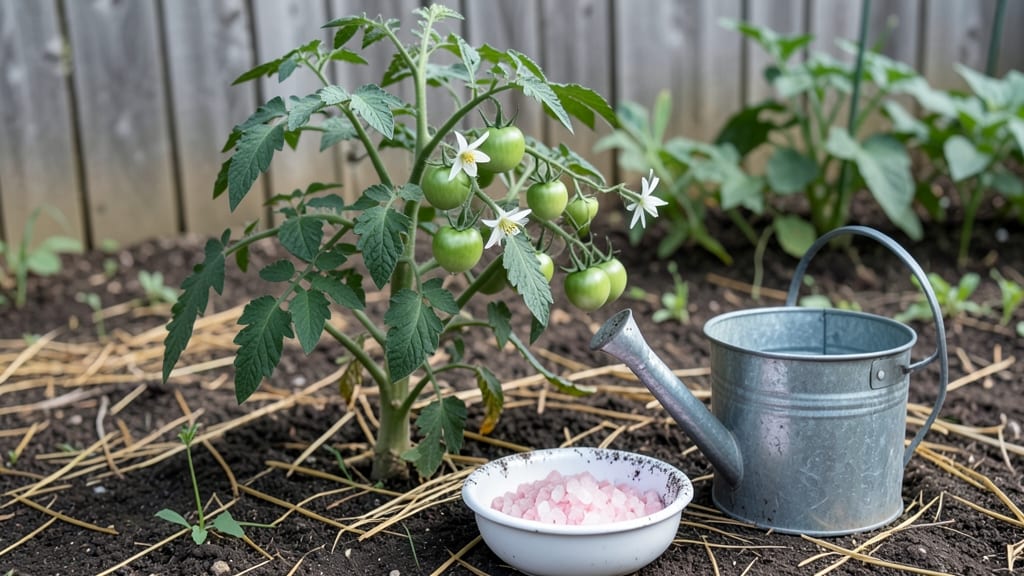
Here’s how to use Epsom salt for flowering plants to transform your roses and petunias from half-hearted blooms to explosive color—it’s not magic, but magnesium deficiency is the silent bloom-killer most gardeners overlook.
That first year, my garden looked like everyone else’s until I sprinkled this simple mineral into the soil and watched flowers double in size.
The beauty of Epsom salt is how foolproof it is: no fancy equipment, just a scoop, water, and your plants. For soil application, mix 1 tablespoon per gallon of water and pour around the base every 4-6 weeks.
Foliar spray? Dissolve 2 tablespoons in a gallon and mist leaves in the early morning—your plants will drink up the magnesium like a vitamin shot. Roses, tomatoes, and peppers respond fastest, but even fussy annuals perk up.
You’ll notice the difference within 2-3 weeks: deeper green leaves, stronger stems, and blooms that last longer. The key is consistency—don’t overdo it (more than monthly can harm roots) and always use it as a supplement, not a replacement for balanced fertilizer.
My neighbor-jealousy-level blooms prove it works, but the real magic is how simple it is.
Works for container gardens, raised beds, or in-ground plantings—just adjust the dose for smaller pots. Start with a single plant as a test, and if you see those vibrant green leaves and extra buds, you’ll be hooked.
Here’s how to make it work without burning your plants or breaking the bank.
📚 In This Guide
- What you need
- Instructions
- Tips and common mistakes
- Wrapping up and next steps
What you need
- ● Epsom salt (magnesium sulfate) – 1 tablespoon per gallon of water (or 20 grams per 3.8 liters). Choose pure, food-grade Epsom salt (no additives).
- ● Watering can or spray bottle – A fine-mist sprayer works best for foliar feeding.
- ● Measuring spoon or scale – For precise Epsom salt dosage (avoid guesswork!).
- ○ Distilled or rainwater (optional but recommended) – Tap water with high chlorine/fluoride may reduce effectiveness.
- ○ pH testing kit (optional but helpful) – Epsom salt works best in slightly acidic to neutral soil (pH 6.0–7.0).
- ● Garden gloves – Protect your hands from salt residue.
- ● Label or marker – To tag plants you’re treating for tracking.
- ● Compost or organic fertilizer – Pair Epsom salt with nitrogen-rich fertilizers (like fish emulsion) for balanced growth.
- ● Cheesecloth or old sock – To strain Epsom salt if dissolving in a large batch.
Step-by-Step guide to using Epsom salt for flowering plants
Here’s how to harness magnesium’s power for vibrant blooms—no guesswork, just science-backed results.
Identify Magnesium-Deficient Plants
Before applying Epsom salt, check for yellowing leaves with green veins—a classic sign of magnesium deficiency. This often appears first on older leaves of flowering plants like roses, petunias, or geraniums. Compare healthy foliage to affected leaves: deficient leaves will show pale yellow patches between veins while retaining green along the midrib.
Don’t confuse magnesium deficiency with iron chlorosis (yellowing between veins) or nitrogen deficiency (general yellowing). Magnesium issues typically start at the leaf edges and progress inward. If you spot these symptoms, your plants are ready for a magnesium boost—just don’t overdo it. Overapplication can disrupt calcium uptake, leading to blossom-end rot in some species.
Prepare the Solution
Mix 1 tablespoon of Epsom salt per gallon of water for a standard foliar spray or soil drench. Use distilled or rainwater if your tap water is heavily chlorinated or mineral-rich, as these can interfere with magnesium absorption. Stir until fully dissolved—undissolved crystals can damage plant tissue when sprayed.
For container-grown plants, use ½ tablespoon per gallon since they have less root zone volume. Always apply in the early morning to prevent rapid evaporation and allow foliage to dry before nightfall, reducing fungal risks. I like to use a spray bottle with a fine mist nozzle for even coverage, ensuring the undersides of leaves get treated too.
Apply to Foliage and Soil
For foliar feeding, spray the solution until leaves glisten but don’t drip—this ensures maximum absorption without waste. Focus on the upper and lower surfaces of leaves, as stomata (pores) on both sides absorb nutrients. Avoid spraying flowers directly, as Epsom salt can leave white residue that detracts from their appearance.
For soil application, water the base of the plant with the solution until it drains through the soil. This method works best for established plants with mature root systems. Repeat every 4-6 weeks during the growing season, or more frequently if you notice new deficiency symptoms. Overapplication won’t harm plants immediately, but it’s unnecessary and can lead to salt buildup in the soil over time.
Monitor and Adjust
Watch for new leaf growth within 2-3 weeks—healthy, dark green foliage indicates successful magnesium uptake. If blooms improve but leaves still show yellowing, your plants may need additional nutrients like nitrogen or potassium. I often pair Epsom salt treatments with a balanced liquid fertilizer to ensure comprehensive nutrition.
If you notice leaf edges curling or browning, you’ve overdone it. Flush the soil with plain water to leach excess salt. For container plants, this means watering until it runs freely from the drainage holes. For in-ground plants, apply 2-3 inches of mulch to prevent salt from concentrating near the roots.
Seasonal Maintenance for Long-Term Blooms
Apply Epsom salt twice annually—once in early spring to kickstart growth and again in mid-summer to support flowering. In high-heat climates, increase frequency to every 3-4 weeks, as magnesium leaches from soil faster when temperatures exceed 85°F. Always pair treatments with regular watering to help roots absorb the magnesium.
For potted flowering plants, add ½ teaspoon of Epsom salt to the soil during repotting. This gradual release method avoids sudden nutrient spikes that can stress roots. Combine with slow-release fertilizer for a balanced approach—your plants will reward you with longer-lasting, more abundant blooms.
Tips & tricks for perfect Epsom salt application on flowering plants
These science-backed tricks will help you maximize magnesium benefits while avoiding common pitfalls that can stress your plants.
Diagnosis Tip: When identifying magnesium deficiency in Step 1, examine the undersides of leaves—they often show symptoms first. I've seen cases where gardeners missed deficiency because they only checked the tops. Use a bright light to enhance contrast between healthy and affected areas, making those pale yellow patches between veins much easier to spot.
Solution Preparation: For the 1 tablespoon per gallon ratio in Step 2, use a clean spray bottle or watering can to avoid cross-contamination with other fertilizers. I've found that adding a few drops of liquid dish soap (not detergent) to the solution helps it cling better to leaf surfaces, improving absorption without harming plants. Just use a very mild, plant-safe soap.
Application Technique: In Step 3, when applying to foliage, work in the shade to prevent rapid evaporation. I've noticed that plants treated in direct sunlight can develop temporary white residue spots where the solution dries too quickly. For container plants, reduce the concentration to ½ tablespoon per gallon—this prevents salt buildup in the limited soil volume.
Seasonal Adjustments: The instructions mention high-heat climates exceeding 85°F, but I've found that even in moderate climates, summer afternoons can create similar stress conditions. If you notice leaves wilting after application, move plants to shaded areas for 24 hours. This gives them time to recover while still allowing magnesium absorption.
Pro Tips for Use Epsom Salt For Flowering Plants
- These science-backed tricks will help you maximize magnesium benefits while avoiding common pitfalls that can stress your plants.
- Diagnosis Tip: When identifying magnesium deficiency in Step 1, examine the undersides of leaves—they often show symptoms first.
- Solution Preparation: For the 1 tablespoon per gallon ratio in Step 2, use a clean spray bottle or watering can to avoid cross-contamination with other fertilizers.
Frequently asked questions
Can I use Epsom salt on all flowering plants?
Epsom salt is generally safe for most flowering plants, but not all benefit equally. Succulents, cacti, and plants sensitive to magnesium (like azaleas or blueberries) may react poorly. Always check your plant’s specific needs before applying—when in doubt, dilute the solution to half-strength first!
How often should I apply Epsom salt to my flowering plants?
For most flowering plants, apply Epsom salt every 4–6 weeks during the growing season (spring to fall). Overuse can harm roots or soil microbes, so avoid monthly applications unless your plants show magnesium deficiency (yellowing leaves with green veins). Always flush soil with water after treatment.
Do I need to mix Epsom salt with water, or can I sprinkle it directly on soil?
While you can sprinkle Epsom salt directly on soil, mixing it into water (1 tablespoon per gallon) ensures even distribution and prevents salt buildup. Direct application works best for container plants with well-draining soil, but always water thoroughly afterward to activate the nutrients.
What are the signs my flowering plants need more magnesium?
Watch for these clues: yellowing leaves between veins (interveinal chlorosis), weak stems, or stunted blooms. If your plants are struggling but soil tests show low magnesium, Epsom salt can help—but also check for other deficiencies (like nitrogen) or pests, as symptoms can overlap.
Are there alternatives to Epsom salt for magnesium?
Yes! If you’re out of Epsom salt, try:
- Magnesium sulfate granules (same active ingredient, slower release).
- Compost or worm castings (natural magnesium source).
- Epsom salt substitutes like dolomitic lime (for alkaline soil) or kelp meal (for trace minerals).
Wrapping up and next steps
Using Epsom salt for flowering plants is a simple, budget-friendly way to unlock vibrant blooms and lush foliage! 🌸 Whether you’re dealing with magnesium deficiencies or just want to give your plants a nutrient boost, this mineral-rich solution delivers impressive results.
Start small, monitor your plants, and soon you’ll see the difference in their health and beauty.
Ready to take your gardening game to the next level? Experiment with different concentrations and observe how your plants respond—then share your success with fellow green thumbs! 🌱