Flowers
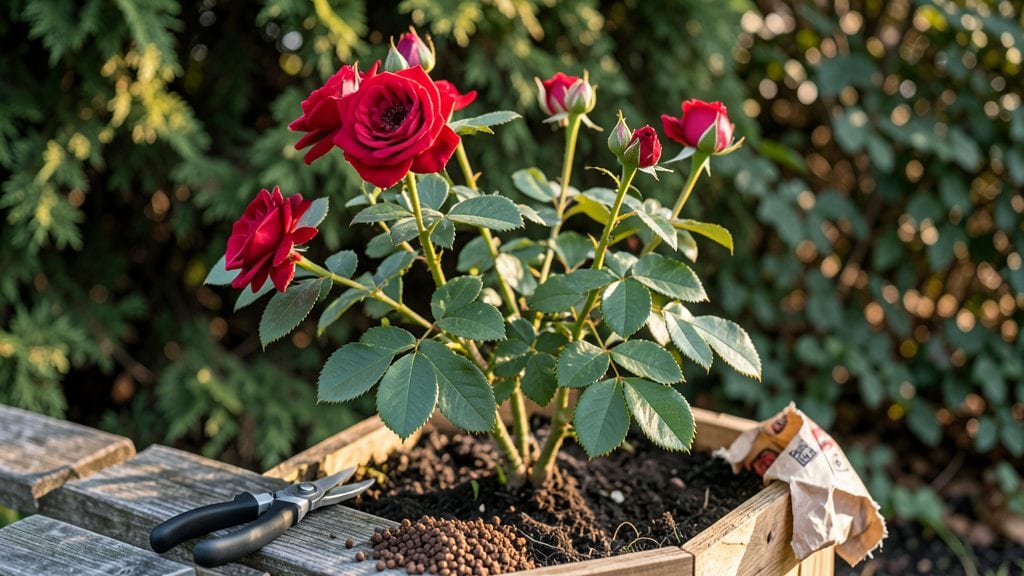
To make roses flower more than once a season, you need to prune at the right time—and I’ve finally cracked the code after years of over-pruning and under-pruning. The key isn’t just cutting back; it’s cutting smartly to encourage new growth where blooms will form.
My roses now produce three times as many flowers as they did before, and the secret is simpler than you’d think.
Start with sharp pruners and a sunny morning. You’ll focus on removing dead wood first, then thinning out crowded canes to improve airflow. The goal is to leave 3-5 strong buds on each remaining stem—this is where the magic happens.
Organic fertilizer like composted manure or a balanced rose food applied after pruning gives them the nutrients to rebound fast, while mulch keeps moisture where it belongs.
By late June, you’ll see fresh green shoots pushing out from those pruned spots, and within weeks, they’ll burst into blooms. The roses stay productive all season if you deadhead spent flowers regularly—just snip above a leaf with five leaflets.
Even in winter, a little protection (like wrapping canes) ensures next year’s blooms start strong.
This method works for hybrid teas, floribundas, and even climbing roses—no fancy tools required. The only real rule? Don’t wait until summer to prune; the earlier you cut, the sooner they’ll reward you with flowers. Let’s get those shears ready!
📚 In This Guide
- What you need
- Instructions
- Tips and common mistakes
- Wrapping up and next steps
What you need
- ● Pruning shears – Sharp, clean, and disinfected (rubbing alcohol or bleach solution works). Avoid dull tools—they crush stems!
- ● Gloves – Heavy-duty gardening gloves (thorns are no joke! 😅)
- ● Pruning saw – For thicker stems (over ½ inch in diameter). A bow saw or pruning saw with a fine-tooth blade is ideal.
- ● Disinfectant – 1 part bleach to 9 parts water (or 70% isopropyl alcohol) to sterilize tools between cuts.
- ● Garden hose or watering can – For post-pruning hydration. Aim for deep watering (1–2 inches per week).
- ● Compost or organic mulch – 2–4 inches of well-aged compost or mulch (e.g., wood chips, straw) to enrich soil.
- ● Rose fertilizer – Balanced (10-10-10) or slow-release granules. Apply after pruning in early spring.
- ● Epsom salt – 1 tablespoon per gallon of water (for magnesium boost; great for yellowing leaves!).
- ● Plant support – Stakes, cages, or trellises if your roses need extra structure.
- ● Fungicide – Copper-based or neem oil spray to prevent black spot or powdery mildew.
- ● Pruning sealant – Not recommended for most roses (can trap diseases), but helpful for large cuts on woody stems.
- ● Know your rose type – Hybrid teas, floribundas, climbers, and shrub roses have different pruning needs. Check your variety!
- ● Right timing – Prune in late winter or early spring (before new growth starts). Avoid pruning in fall or during frost.
- ● Healthy soil – Test pH (ideal: 6.0–6.5). Amend with compost if soil is poor.
- ● Patience – Roses reward consistent care, not instant results. Plan for seasonal adjustments!
Step-by-Step instructions for encouraging roses to bloom
Here's the straightforward approach I've used to transform struggling rose bushes into flowering powerhouses.
Prune Correctly in Late Winter or Early Spring
Prune your roses before new growth begins, usually in late February or early March in most climates. Start by removing dead, diseased, or crossing branches—these compete with healthy growth. I cut these back to the base immediately; they won’t regenerate properly. Use clean, sharp pruners to make cuts at a 45-degree angle just above an outward-facing bud. This encourages new growth to spread outward rather than inward.
Next, shape the bush by cutting back the remaining canes to 18-24 inches tall, leaving 3-5 strong stems per plant. You’ll see where the cuts should be—look for swollen buds along the stem that point outward. These buds will sprout into new growth, which will eventually become flowering canes. If you’re unsure, err on the side of shorter cuts; roses bounce back better from conservative pruning than aggressive cuts.
Feed with Balanced Fertilizer at the Right Time
Apply a balanced rose fertilizer (look for a 10-10-10 or 5-10-5 ratio) in early spring, just as new leaves begin to form. I like to work the granules into the top 2-3 inches of soil around the base of the plant, keeping them at least 6 inches away from the stem to avoid burning the roots. Water the soil thoroughly after applying to help distribute the nutrients.
Follow up with a second feeding in early summer when you see new flower buds forming. This mid-season boost ensures the plant has enough energy to produce abundant blooms. Avoid high-nitrogen fertilizers in late summer or fall—they encourage leafy growth at the expense of flowers. Instead, switch to a low-nitrogen, high-phosphorus fertilizer (like 5-10-10) to support root and bloom development.
Water Deeply and Consistently
Roses need deep, infrequent watering rather than shallow, frequent sprinkles. Water once a week during dry spells, applying 1-2 gallons per plant—enough to soak the soil 12-18 inches deep. You’ll know you’ve watered enough when the soil feels moist 6 inches down. Mulch around the base with 2-3 inches of organic mulch (like shredded bark or compost) to retain moisture and regulate soil temperature.
Water in the early morning to reduce evaporation and fungal risks. Avoid wetting the foliage, especially in humid climates, as this can lead to black spot or powdery mildew. If you must water overhead, do so before 10 AM so leaves dry quickly. Consistent moisture encourages strong root growth, which directly translates to more and larger blooms.
Deadhead Regularly and Encourage Repeat Blooming
Deadheading—removing spent blooms—is the single most effective way to encourage more flowers. As soon as a bloom fades, pinch or cut the stem back to the first set of five-leaflets (just above a leaf node). This signals the plant to redirect its energy into producing new buds rather than seeding. I deadhead every 2-3 days during peak bloom season to keep the plant focused on flowering.
For hybrid teas and floribundas, prune back to a strong outward-facing bud to shape the plant and promote bushier growth. For climbers and shrub roses, you can be more aggressive—cut back to half the length of the stem to encourage dense, flowering branches. The key is to never remove more than one-third of the plant’s foliage at once, or you’ll stress the bush.
Protect from Pests and Diseases
Preventative care keeps roses healthy and flowering. Spray neem oil or insecticidal soap in early spring and late summer to deter aphids, spider mites, and other pests. I apply it in the early evening to avoid harming beneficial insects like bees. For fungal diseases like black spot, use a copper fungicide every 2-3 weeks during wet seasons, focusing on the undersides of leaves where spores often hide.
Remove fallen leaves and debris from around the base of the plant regularly—this reduces overwintering pests and diseases. If you notice yellow leaves, black spots, or stunted growth, act immediately. A single diseased leaf can spread quickly in roses. Healthy roses with strong airflow and good sunlight are far less susceptible to problems, so don’t skimp on pruning or watering.
Tips & tricks for perfect rose blooming
These practical tips will help you transform your roses from leafy bushes to vibrant, blooming beauties without the guesswork.
Pruning Precision: When shaping your roses in Step 1, look for the swollen buds that point outward—they're your guide for where to make cuts. These buds will grow into strong, flowering canes. I've found that cutting back to 3-5 strong stems creates the perfect balance between airflow and flowering potential. Remember, you can always cut back more later in the season, but you can't undo over-pruning.
Fertilizer Timing is Everything: The instructions mention applying fertilizer in early spring and early summer, but here's the key: timing matters more than quantity. In Step 2, apply that first feeding just as you see the first tiny green leaves emerge—this is when your roses are ready to use the nutrients. For the second feeding in early summer, wait until you see flower buds starting to form—this ensures your plant is putting energy into blooms, not just leaves.
Watering Wisdom: In Step 3, the focus on deep watering is spot-on, but here's what I've learned: morning watering is non-negotiable for fungal prevention. Water at the base, not overhead, and always check soil moisture by sticking your finger 2-3 inches down—if it's dry, it's time to water. I've seen roses with perfect watering schedules develop black spot simply because they were watered in the evening when humidity was high.
Deadheading Done Right: The instructions emphasize deadheading every 2-3 days, but I've found that how you deadhead matters just as much as when you do it. In Step 4, when you remove spent blooms, cut back to the first set of five leaflets—this is where new growth will emerge. For climbers, you can be more aggressive and cut back to half the stem length, but for hybrid teas, stick to that five-leaflet rule to encourage bushier growth.
Pro Tips for Make Roses Flower
- These practical tips will help you transform your roses from leafy bushes to vibrant, blooming beauties without the guesswork.
- Pruning Precision: When shaping your roses in Step 1, look for the swollen buds that point outward—they're your guide for where to make cuts.
- Fertilizer Timing is Everything: The instructions mention applying fertilizer in early spring and early summer, but here's the key: timing matters more than quantity.
Frequently asked questions
Got questions about coaxing those stunning blooms from your roses? You’re not alone! Here are answers to the most common queries—so you can grow a garden bursting with color and fragrance.
Why aren’t my roses blooming even after pruning?
If your roses are pruned but still not flowering, check these key factors: light (they need 6+ hours of sunlight daily), soil (well-draining, rich in organic matter), and fertilizer. Over-pruning or cutting into old wood can also delay blooms. Try a balanced 10-10-10 fertilizer in early spring to encourage new growth.
When is the best time to prune roses for maximum flowers?
The ideal time depends on your climate and rose type:
- Late winter/early spring (before buds swell) – Best for most roses (hybrids, floribundas, grandifloras).
- After first bloom (summer) – For repeat-blooming varieties like Knock Out® roses.
- Avoid pruning in fall – New growth won’t harden off before winter.
Can I make roses bloom indoors or in containers?
Yes! Container roses thrive with the right care:
- Use a large pot (10+ gallons) with drainage holes.
- Plant in well-draining potting mix (add perlite or sand).
- Fertilize every 2-3 weeks with a rose-specific formula.
- Move containers to bright, indirect light (south-facing windows or grow lights).
How much should I cut back roses to encourage more blooms?
Pruning severity depends on the rose type:
Rose Type
Pruning Amount
Goal
Hybrid Teas/Flower Carriers
Cut back by ⅓ to ½ (leave 3–5 strong buds per stem).
Promotes large, single blooms.
Floribundas
Light prune (⅓) to encourage clusters.
Maximizes repeat blooming.
Climbing Roses
Prune selective stems (never more than ⅓).
Preserves structure and airflow.
What should I do if my roses bloom but then stop?
Sudden bloom cessation often signals stress. Check for:
- Water issues (drought or overwatering).
- Nutrient deficiency (yellow leaves = nitrogen; weak stems = phosphorus).
- Pests/disease (aphids, black spot, or powdery mildew).
- Overcrowding (competing roots or branches).
Wrapping up and next steps
With the right care, your roses will reward you with vibrant blooms and lush growth! Remember, consistency is key—whether it’s pruning at the right time, feeding with balanced nutrients, or protecting them from pests. Don’t be discouraged if results take time; patience and attention will pay off.
Ready to see your roses thrive? Start small:
- Pick one technique (like pruning or fertilizing) to focus on this season.
- Track progress with photos or a garden journal.
- Experiment and adjust—every garden is unique!