Flowers
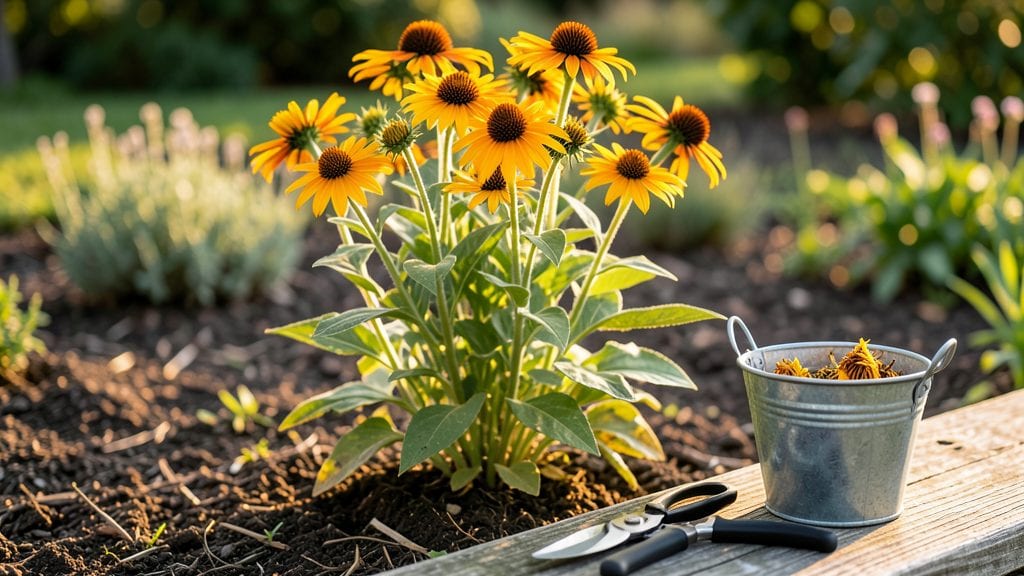
Deadheading cone flowers keeps them blooming until frost—something I learned the hard way after my first garden season when my Rudbeckias faded by July. The trick is simple: snip off spent blooms before they form seed heads, and your plants will reward you with fresh flowers for weeks longer.
I’ve deadheaded hundreds of stems now, and the difference is shocking—some varieties like 'Goldsturm' will keep producing if you stay on top of it.
You’ll need clean pruners or even your fingers (though gloves help with the prickly stems), and about 10 minutes per plant every few days during peak bloom. The key is timing: wait until the petals drop completely but act before the center turns brown and woody.
Over-pruning weakens the plant, so never cut more than a third of the stem back—just the faded flower head and a tiny bit of stem below it.
What you’ll end up with is a bush that looks fuller, blooms longer, and doesn’t waste energy on seed production. My 'Cherry Brandy' Rudbeckia now flowers from early summer straight through October, and the bees love the fresh blooms.
The best part? You’ll avoid the messy seed heads that some gardeners find unsightly by late summer.
This works for all Rudbeckia varieties, as well as Echinacea and other cone-shaped flowers. Just adjust your timing based on your climate—cooler zones may need to start deadheading earlier. Grab those shears and let’s keep those blooms coming!
📚 In This Guide
- What you need
- Instructions
- Tips and common mistakes
- Wrapping up and next steps
What you need
- ● Sharp pruning shears or garden scissors – Look for bypass-style blades (not anvil) to avoid crushing stems. A 5-inch pair works best for precision.
- ○ Gloves (optional but recommended) – Thorny stems can be a nuisance! Opt for gardening gloves with a snug fit for dexterity.
- ● Disinfectant (rubbing alcohol or bleach solution) – 1 part bleach to 9 parts water—clean tools between cuts to prevent disease.
- ● Garden twine or a small bucket – For collecting spent blooms or tying up stems if needed.
- ● Compost bin or yard waste bag – Because every flower deserves a second life!
- ● Hand pruners with ergonomic grips – If you’re deadheading daily, these reduce hand fatigue.
- ● Knee pad or small stool – For comfort when working close to the ground.
- ● Spray bottle with water – Dusty stems? A quick mist keeps tools sharp and clean.
- ● Label or plant marker – If you’re experimenting with different Echinacea varieties, keep track!
Step-by-Step instructions for deadheading cone flowers
Keep your coneflowers blooming longer with this simple, foolproof method.
Identify the Right Time to Deadhead
Wait until the flower head begins to fade and the petals start dropping naturally. You'll notice the center cone turns from vibrant green to brownish, and the petals lose their crisp edges. This is your cue—deadheading too early removes blooms that could still attract pollinators, while waiting too long means missed opportunities for new growth.
I like to check my coneflowers every 3-4 days during peak bloom season. Grab a handful of spent blooms, and if most petals have fallen or turned brown, it's time to act. The goal is to remove the old flower head while the stem is still healthy and green, not woody or dried out.
Use the Proper Technique for Cutting
Use clean, sharp pruners or scissors to make a clean cut just above the first set of healthy leaves below the spent bloom. This ensures you're not leaving a stub that could rot or attract pests. I always sterilize my tools with rubbing alcohol between plants to prevent spreading disease.
Avoid cutting too close to the base—you want to leave enough foliage to keep the plant photosynthesizing. If you cut back too far, you risk weakening the plant and reducing next year's blooms. Aim for a cut that leaves 2-3 inches of stem above the leaf node.
Encourage New Blooms with Proper Aftercare
After deadheading, give your coneflowers a light drink of water at the base to help them recover. The plant will redirect energy from seed production to growing new flower buds. You'll often see new blooms emerge from the same stem within 2-3 weeks, especially if the plant is healthy and well-fed.
I also make a point to remove any seed heads that form after the initial blooms fade. These can sap energy from the plant and reduce future flowering. Just snip them off cleanly with your pruners, and the plant will focus on producing more vibrant blooms instead.
Maintain Season-Long Blooming with Regular Checks
Deadheading isn't a one-time task—it's an ongoing process. Check your coneflowers weekly during their blooming season to keep them looking their best. The more you remove spent blooms, the longer your plants will continue producing fresh flowers.
If your coneflowers start to look leggy or overgrown, it's a sign they need a little more attention. Trim back any overly long stems to encourage bushier growth, and always cut just above a leaf node. This keeps the plant compact and encourages more blooms to form at the tips.
Tips & tricks for perfect cone flower deadheading
Here's what I've learned to keep my coneflowers looking fresh and blooming all season long.
Timing is Everything: Those 3-4 days between checks in Step 1 are crucial for catching blooms at the perfect moment. I've found that checking in the morning gives me the best light to spot fading petals. If you wait until the center cone turns completely brown, you're missing out on potential new blooms that could have formed.
Tool Prep Matters: Before you start deadheading, make sure your pruners or scissors are clean and sharp. I keep a small bottle of rubbing alcohol handy to sterilize between plants in Step 2. This simple step prevents spreading disease from one plant to another. Dull tools can also crush stems, making them more susceptible to rot.
Aftercare Boost: The 2-3 weeks mentioned in Step 3 for new blooms to emerge can be accelerated with proper care. After deadheading, I give my plants a light watering at the base and add a slow-release fertilizer. This helps the plant recover faster and redirect energy to new growth. I've seen new blooms appear in as little as 10-14 days when using this approach.
Season-Long Strategy: Don't let those weekly checks in Step 4 become a chore. I set a reminder on my phone for every Sunday during bloom season. This makes it easy to stay consistent without having to think about it. Also, I keep a small bucket nearby to collect spent blooms for composting—it's a great way to recycle garden waste.
Pro Tips for Dead Head Cone Flowers
- Here's what I've learned to keep my coneflowers looking fresh and blooming all season long.
- Timing is Everything: Those 3-4 days between checks in Step 1 are crucial for catching blooms at the perfect moment.
- Tool Prep Matters: Before you start deadheading, make sure your pruners or scissors are clean and sharp.
Frequently asked questions
Got questions about deadheading cone flowers? You’re not alone! Here are some of the most common queries—plus straightforward answers to keep your garden thriving.
When is the best time to deadhead cone flowers?
Deadhead right after the blooms fade but before they form seed heads. For most cone flowers (like echinacea or rudbeckia), this means late spring through early fall. Wait too long, and you’ll miss the prime window to encourage more blooms!
Do I need special tools to deadhead?
Not at all! Clean, sharp hand pruners or even your fingers work great. Just avoid tearing stems—smooth cuts just above a leaf node (where new growth emerges) promote healthier regrowth. A small pair of scissors can also do the trick for delicate stems.
Will deadheading kill my cone flowers?
Nope! In fact, it does the opposite. Deadheading removes spent blooms, which redirects the plant’s energy toward new growth and more flowers. Just avoid cutting into old wood or over-pruning—stick to the current season’s growth for best results.
What if my cone flowers aren’t reblooming after deadheading?
Check these three things:
- Light: Are they getting 6+ hours of sun daily?
- Water: Are they consistently moist but not soggy?
- Fertilizer: Have you added a balanced, low-nitrogen feed after deadheading?
Can I use deadheaded flowers for anything else?
Dry the seed heads for winter arrangements, compost them, or even save seeds for next year. Just avoid leaving them on the plant—those seeds signal the plant to stop blooming and focus on reproduction instead.
Wrapping up and next steps
Deadheading cone flowers is a simple yet powerful way to keep your garden vibrant and blooming longer! 🌸 By removing spent blooms regularly, you encourage fresh growth, prolong flowering, and even boost next year’s display.
Whether you’re a seasoned gardener or just starting out, this easy task will reward you with a stunning, low-maintenance garden.
Ready to put your new skills to the test? Grab your pruners and head outside—your cone flowers will thank you! 🌿